Design Nomenclature / Composition
Closure
Also called law of closure
This entry has not been translated yet and is shown in English.
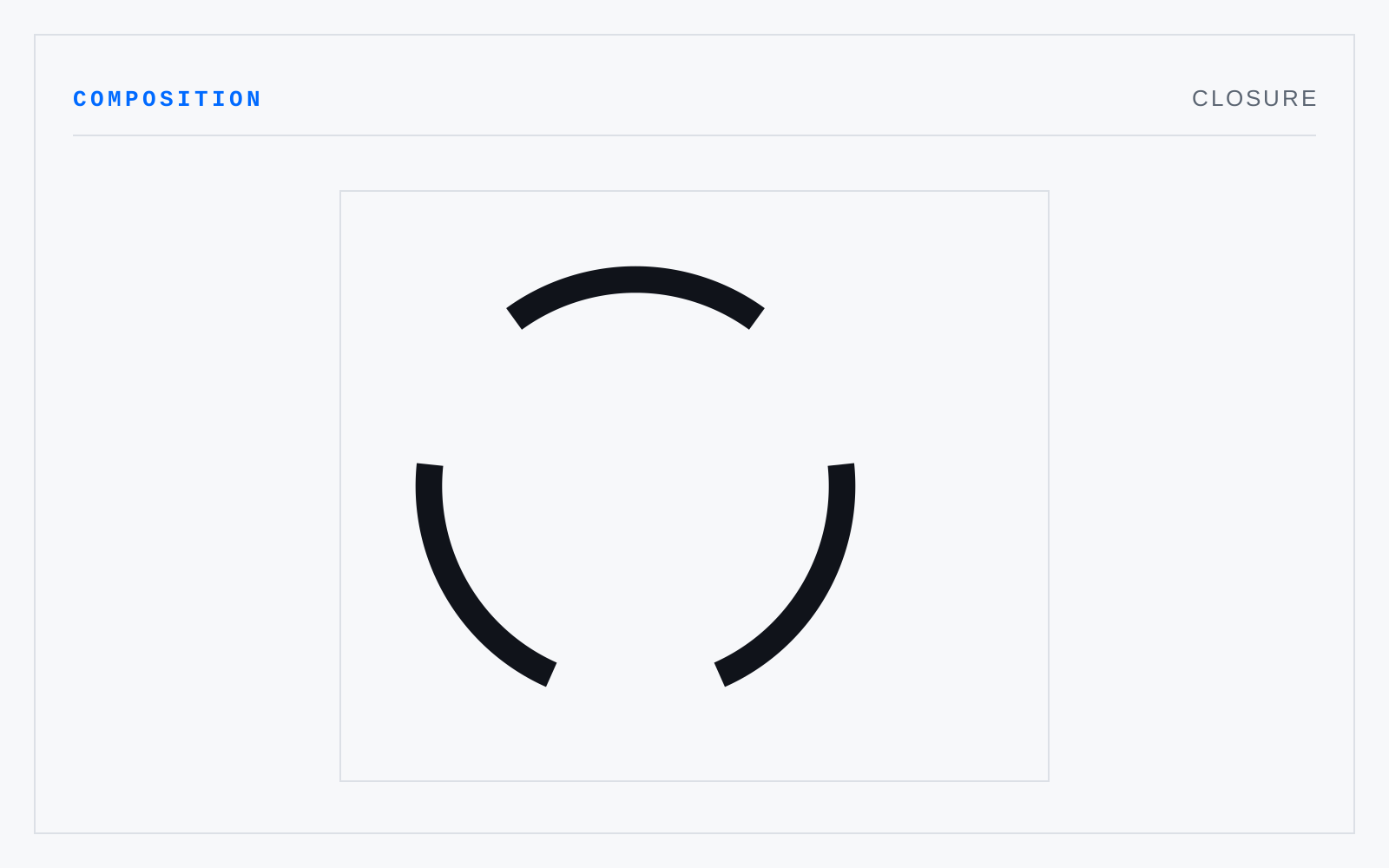
Perception completes a figure across gaps, supplying contour that was never drawn. The effect is strongest when the implied shape is simple, regular, and familiar, and it survives interruptions far larger than most designers expect — which is why a mark built from fragments still reads as one form.
Not to be confused with
- PrägnanzThe overarching gestalt claim: of the readings a stimulus permits, perception settles on the simplest, most regular, most stable one. 'Simplest' was never given an agreed metric, which is the principle's standing weakness — the information-theoretic attempts to formalize it have not settled the question.
- Good continuationElements arranged along a continuous line or smooth curve read as belonging to one another, and the path preferred is the one that changes direction least. Where two contours cross, perception carries each straight through rather than reading a corner and two branches. Smoothness does the grouping, not nearness.