Design Nomenclature / Composition
Common fate
Also called grouping by motion, synchrony
This entry has not been translated yet and is shown in English.
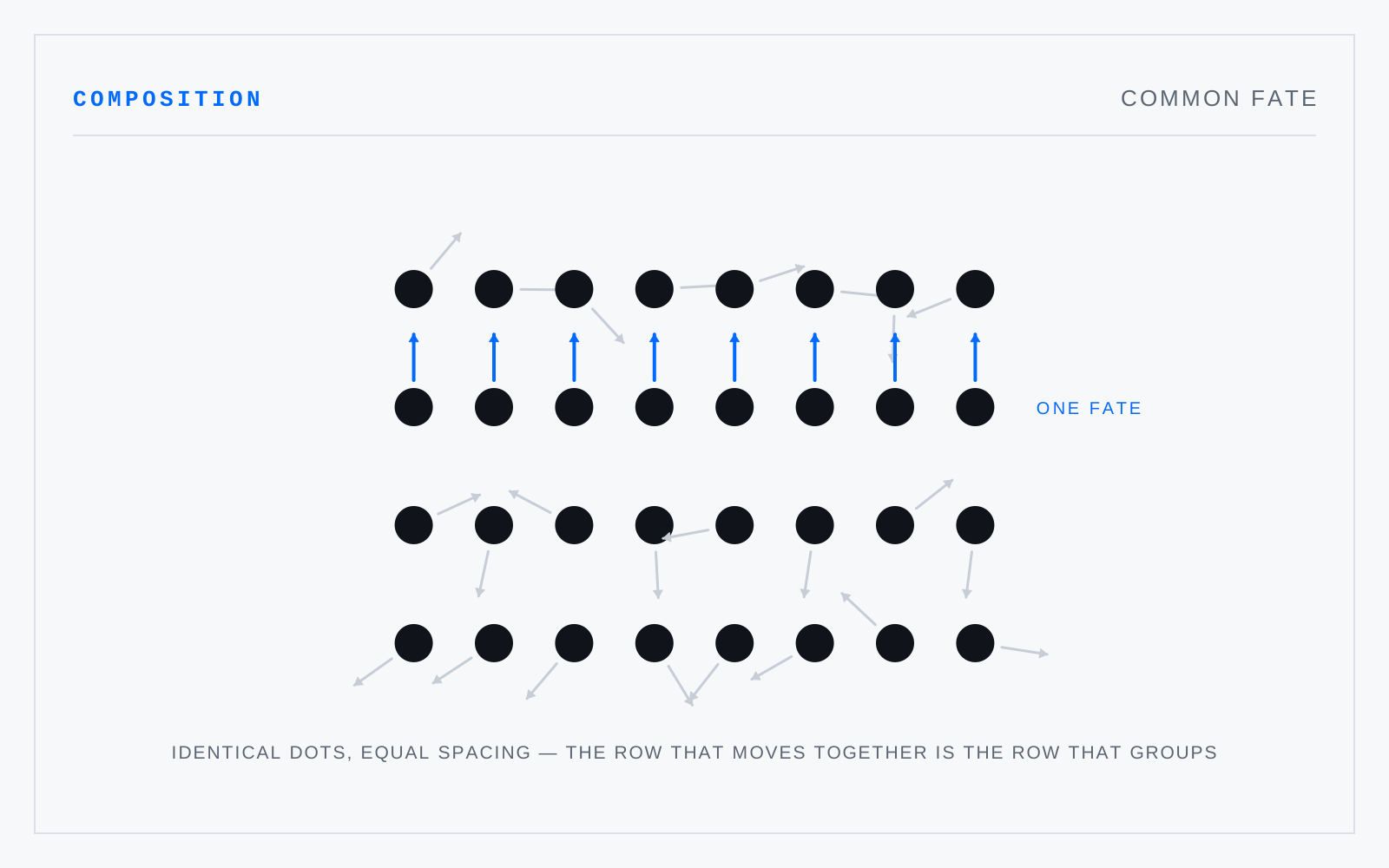
Elements moving in the same direction at the same rate group together, overriding proximity and similarity for as long as the motion lasts. The one classical principle that requires time, which made it near-theoretical in print and immediately load-bearing in interface work.
In practice
The reason a staggered entrance reads as a list and a simultaneous one reads as a slab. Motion groups harder than any static cue you can layer under it.
Not to be confused with
- Good continuationElements arranged along a continuous line or smooth curve read as belonging to one another, and the path preferred is the one that changes direction least. Where two contours cross, perception carries each straight through rather than reading a corner and two branches. Smoothness does the grouping, not nearness.
- SimilarityElements sharing a visual attribute — shape, size, value, hue, orientation, texture — group across distance. The grouping strengthens with the size of the difference from non-members rather than the closeness of members to each other, so a single distinguishing attribute, pushed far enough, outruns layout.