Design Nomenclature / Type
Counter
- Type
- 2D
This entry has not been translated yet and is shown in English.
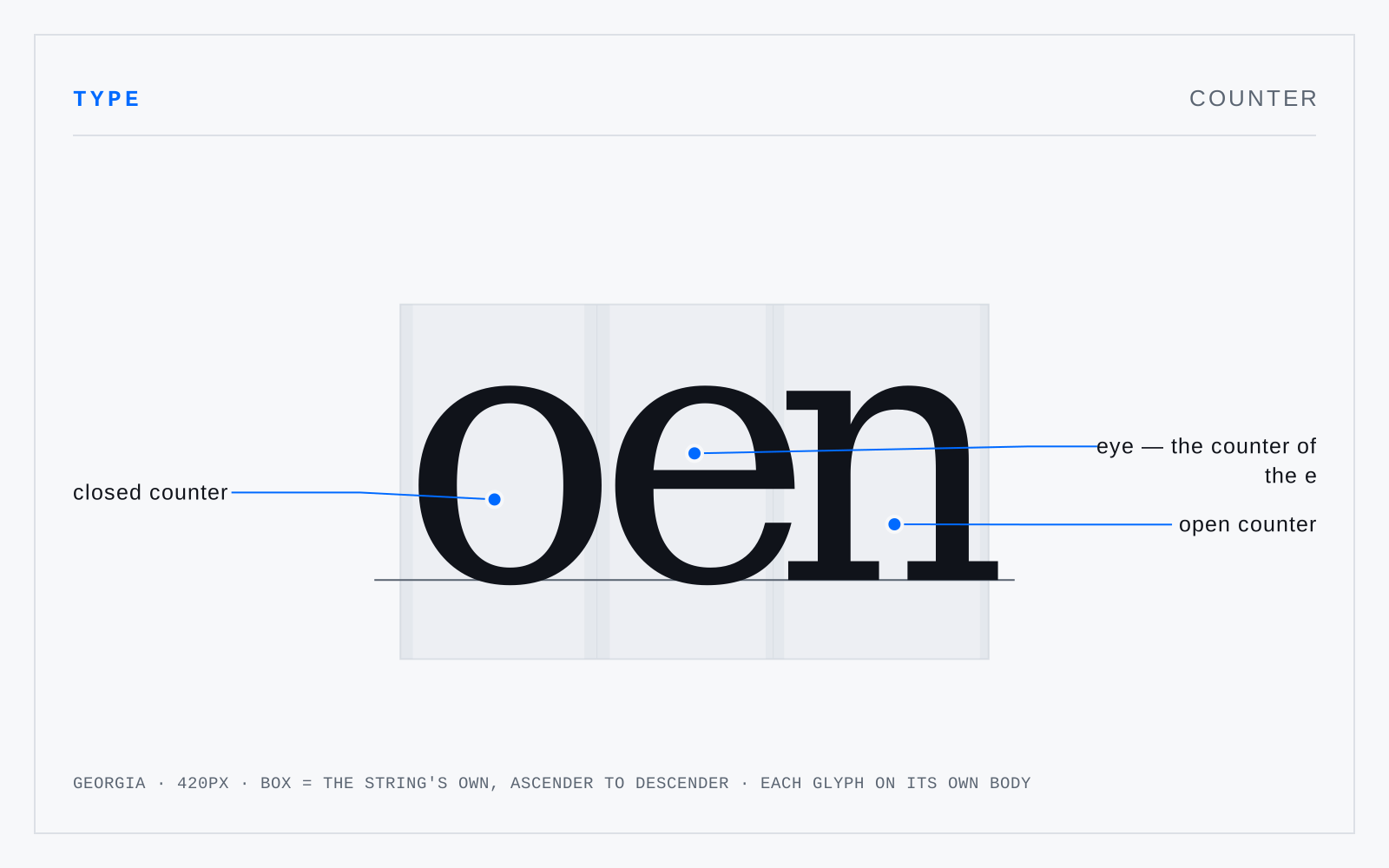
The negative space a stroke encloses or partly encloses — fully closed in o, d and the eye of e, open in n, u and c. Counter size drives apparent weight and small-size performance: as weight increases, counters are the first thing to fill in, and a face survives bolding only as far as they hold.
In practice
Counter and bowl get swapped constantly. The bowl is the stroke; the counter is the hole it makes. The counter of a lowercase e specifically is the eye.
Not to be confused with
- ApertureThe opening through which a partly enclosed counter connects to the space around the letter — the gap between the terminals of c and s, the mouth of a, e and the top of n. Open apertures keep c distinct from o and e from a under blur and at small sizes; closed, folded-in apertures lose those distinctions first.
- BowlThe curved stroke that encloses a counter — the round of b, p, D and the upper and lower rounds of a double-storey g. In faces with inclined stress the bowl's thin points fall off-axis; in didones they sit dead level with the baseline, which is a fast way to read a face's period.