Design Nomenclature / Color
Hue
Also called chromatic attribute
- Color
- Light & Optics
- 2D & 3D
This entry has not been translated yet and is shown in English.
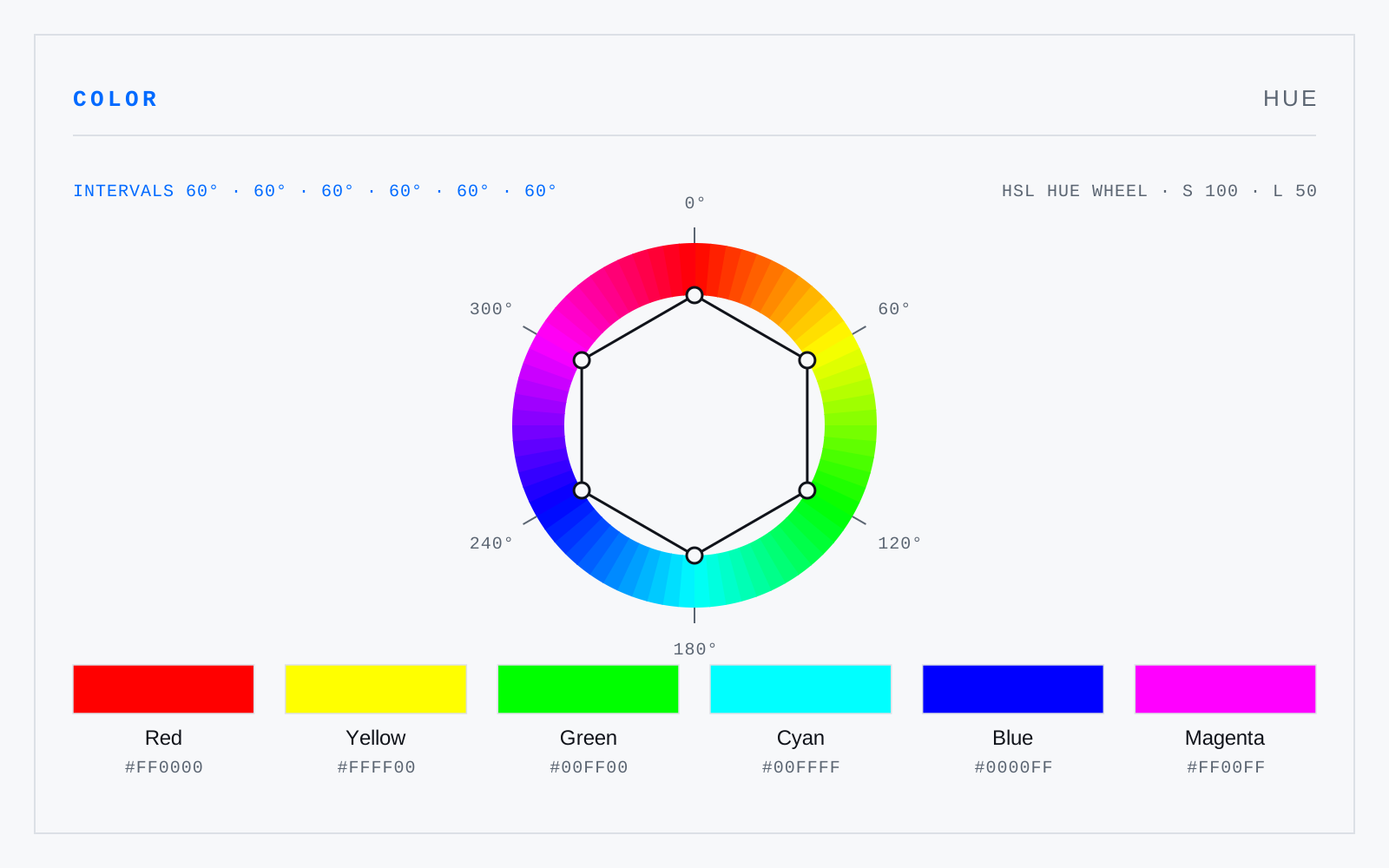
The attribute by which a color is identified as red, yellow, green, blue, or a point between — its position around the circle, set by dominant wavelength. Hue carries no information about how light or how vivid a color is: a pale pink and a fire-engine red share one, and differ in everything else.
In practice
Swapped for 'color' in conversation. Strictly, hue is one of three attributes; color is the whole percept, value and chroma included.
Not to be confused with
- TintA hue with white added — lighter and, in pigment, lower in chroma than the parent. Tinting raises value while pulling toward the achromatic axis, which is why pastels read as soft rather than merely pale: the white dilutes the colorant as it lifts it.
- SaturationChroma judged relative to the color's own brightness — how vivid it appears given how light it is. Being a ratio rather than a distance, saturation holds roughly constant down a shadow gradient where chroma falls: a red wall in shade loses chroma but keeps saturation, which is why it still reads as the same red.