Design Nomenclature / Digital Model Making
OBJ
Also called Wavefront OBJ, .obj, OBJ file
This entry has not been translated yet and is shown in English.
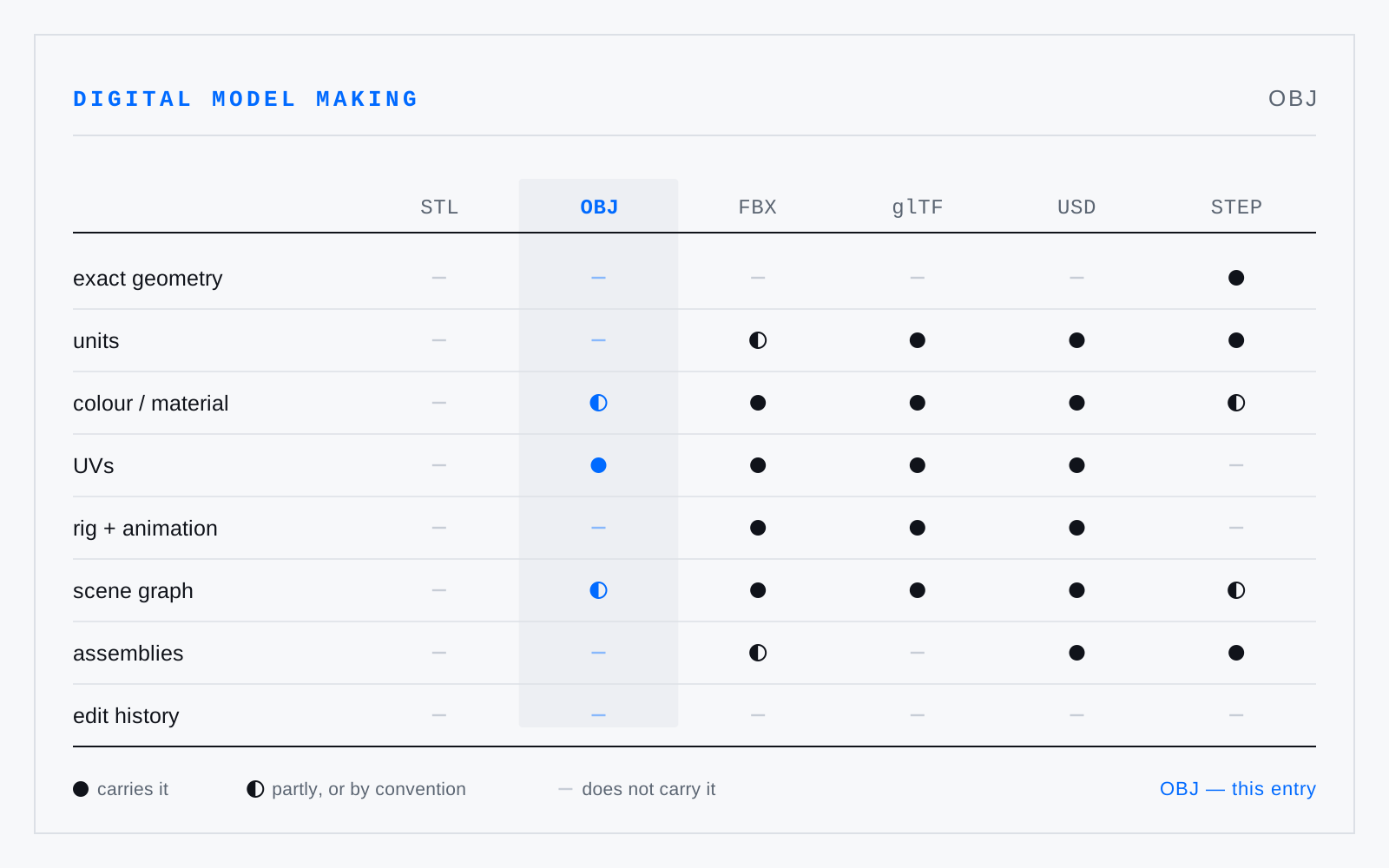
A plain-text mesh format carrying vertices, faces of any size, UVs, normals, and material references in a sidecar .mtl file. No animation, no rig, no scene hierarchy, no unit convention. Ubiquitous because it is trivial to parse and everything reads it — not because it is good at anything.
In practice
The default “just send me the mesh” format. Watch for the missing .mtl, the missing textures, and the fact that up-axis is a per-application guess.
Not to be confused with
- STLAn unstructured list of triangles, each written as three vertices and a normal. That is all: no units, no scale, no colour, no materials, no assemblies, no curves, and no shared vertices — a point is repeated once per triangle touching it. Nothing in the format requires the triangles to form a closed solid.
- FBXA scene format carrying meshes, hierarchies, materials, cameras, lights, skinning, and animation — the industry's working interchange for two decades. It is proprietary, versioned, and only partly documented; two applications' exporters disagree on units, axes, and material mapping often enough that an FBX round-trip is a task, not a step.
- glTFAn open delivery format for runtime 3D: meshes, PBR materials, skins, animation, and a scene graph, held in JSON with binary buffers laid out for direct GPU upload. Deliberately not an authoring format — no history, no NURBS, no editable construction — which is why it loads fast and round-trips badly.