Design Nomenclature / Composition
Page canon
Also called Van de Graaf canon, canonical page construction, secret canon, Villard's diagram
This entry has not been translated yet and is shown in English.
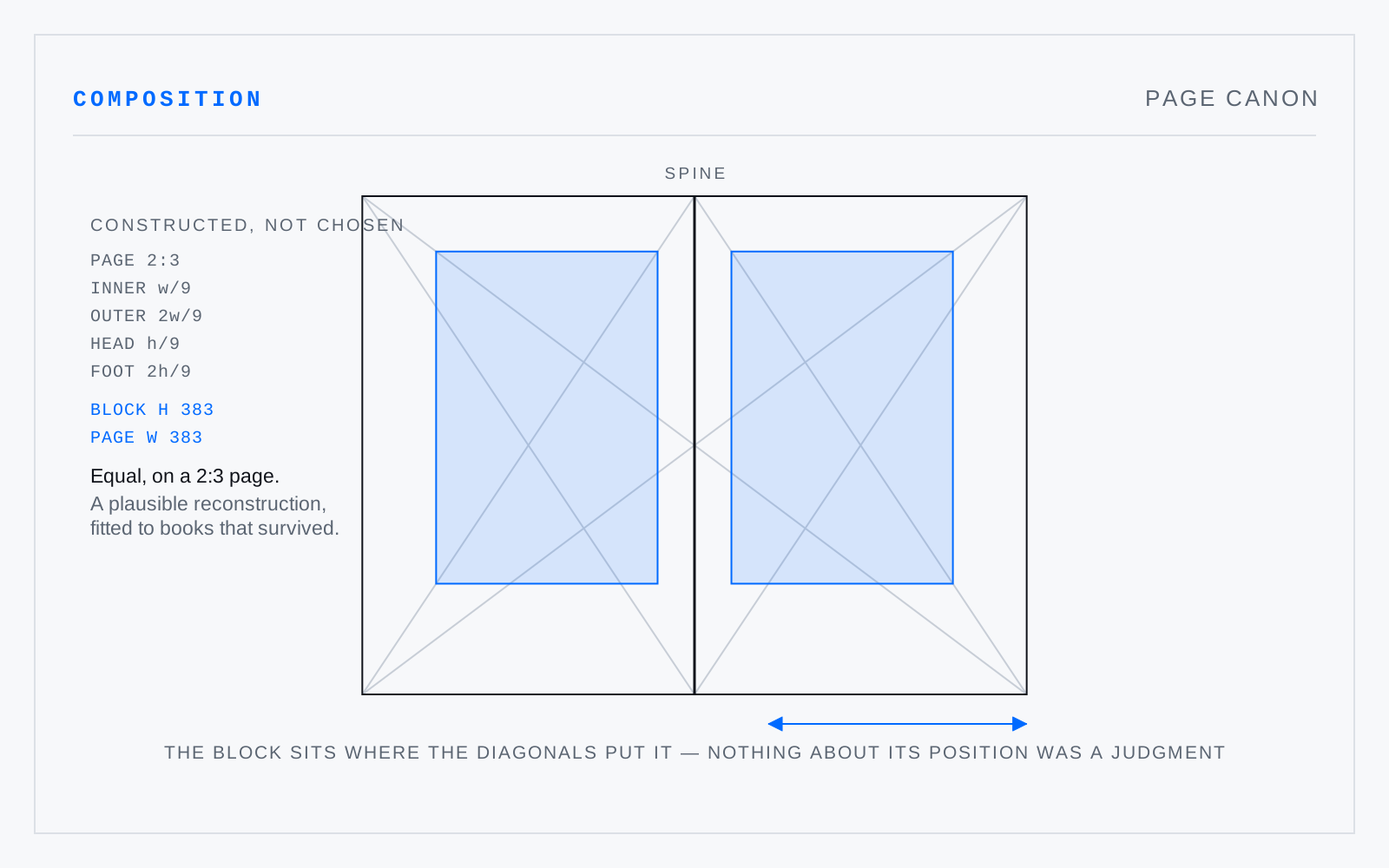
A ruler-and-compass construction deriving text-block position and margin proportion from the page's own proportions, using diagonals drawn across the spread. Van de Graaf reverse-engineered it in 1946 from surviving manuscripts and Tschichold popularized it; on a 2:3 page it yields a block whose height equals the page width.
In practice
Presented as recovered medieval law. It is a plausible reconstruction fitted to books that survived, not a rule anyone is documented as having been taught.
Not to be confused with
- Golden ratioThe ratio 1:1.618…, in which the whole stands to the larger part as the larger part stands to the smaller. A rectangle carrying it subdivides indefinitely into a square and another such rectangle — a genuinely useful self-similar property, and the honest reason to reach for it.
- Rule of thirdsA convention placing the frame's divisions at one-third and two-thirds on each axis and subjects near the four intersections. It is a coarse approximation of off-centre placement that happens to be easy to remember and easy to overlay on a viewfinder. No perceptual finding stands behind it.