Design Nomenclature / Light & Optics
Penumbra
Also called shadow fringe, soft edge
This entry has not been translated yet and is shown in English.
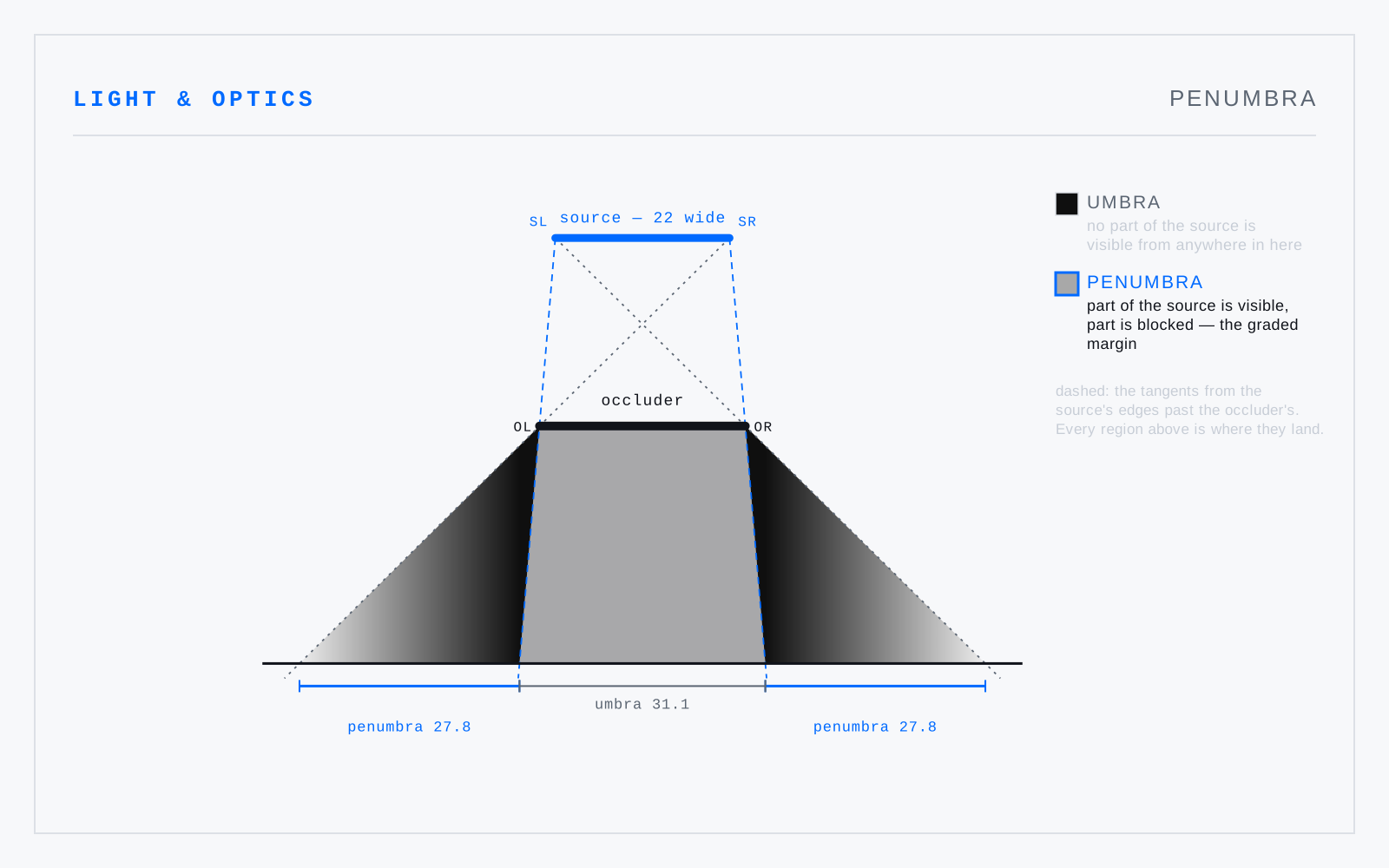
The graded margin of a shadow from which part of the source is visible and part is blocked. Its width grows with the source's angular size and with the distance from occluder to receiver — the whole of what is called a soft shadow is simply this region being wide.
Not to be confused with
- UmbraThe part of a shadow from which the source is completely hidden — no direct light arrives from any point on the emitter. With a finite source it is the fully dark core; with an ideal point source it is the entire shadow, which is why point lights give shadows a knife edge.
- AntumbraThe region beyond the umbra's apex, where the occluder sits entirely inside the source's disc and is ringed by light on every side. It exists only where the blocker's angular size is smaller than the source's — the geometry that makes an annular eclipse rather than a total one.
- Shadow softnessHow wide a shadow's penumbra is, governed by one quantity: the angular size the source subtends from the point in shadow. A source is hard or soft only relative to a distance — the same softbox is soft at a metre and hard at twenty.
Origin
Latin paene (almost) and umbra (shade) — the almost-shadow. Coined by Kepler in 1604 to describe eclipse geometry.