Design Nomenclature / Light & Optics
Refraction
Also called Snell's law, bending
This entry has not been translated yet and is shown in English.
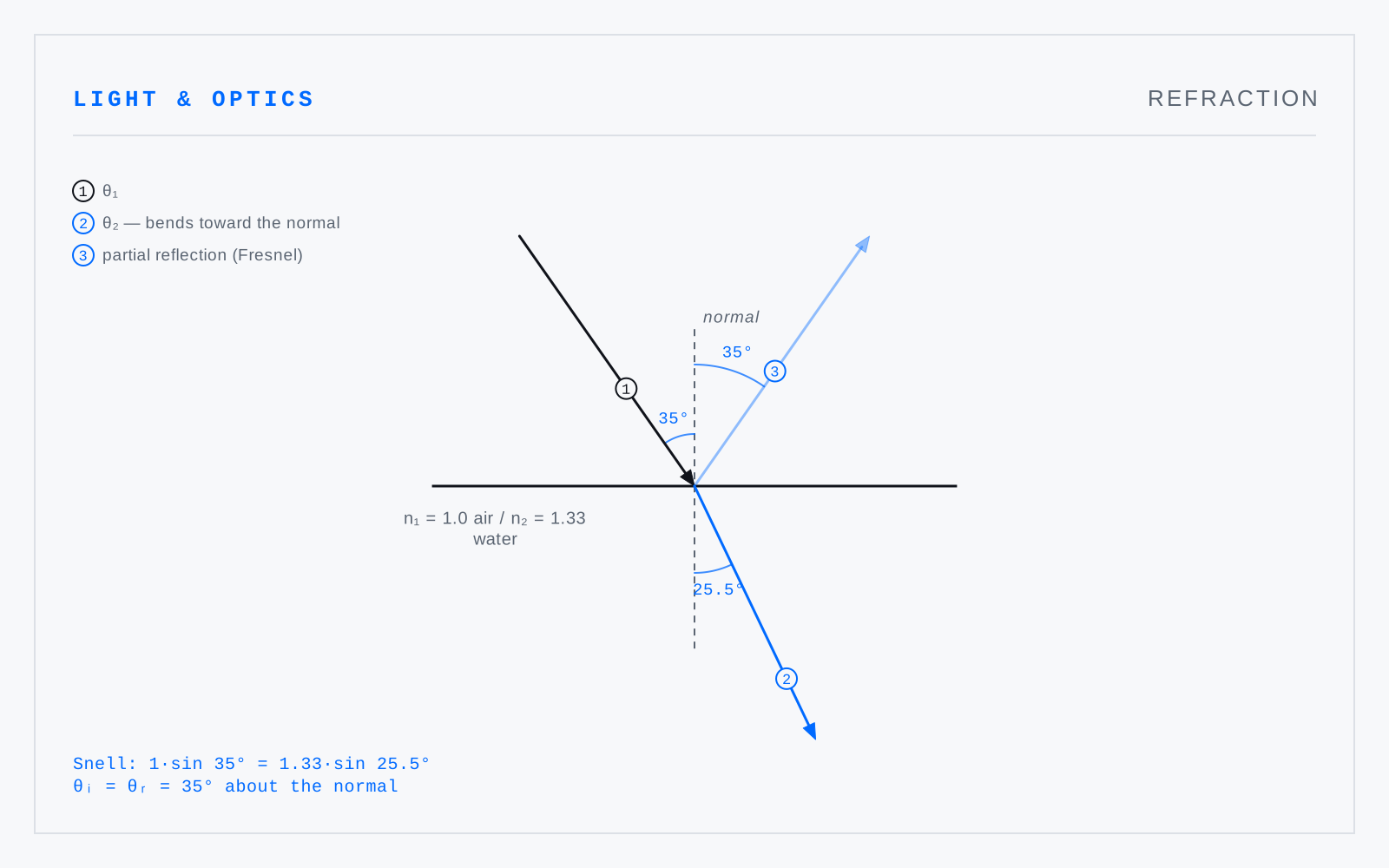
The bending of light as it crosses between media of differing index, because its phase velocity changes; Snell's law fixes the new angle from the ratio of the two indices. It is what makes a submerged rod look broken and what gives a lens any power at all.
Not to be confused with
- DispersionThe dependence of refractive index on wavelength, so a single refraction sends each wavelength off at a slightly different angle. It is what a prism does, what builds a rainbow, and — inside a lens — what chromatic aberration is: the same image formed at slightly different scales per colour.
- Total internal reflectionBeyond a critical angle, light travelling from a denser medium toward a less dense one stops refracting out and reflects entirely back inside. It is why the underside of a water surface reads as a mirror, why fibre optics work, and why a cut gem returns light instead of leaking it.
- DiffractionThe spreading and interference of light as it passes an edge or aperture — a wave effect rather than a ray one. It sets the resolution floor of any optical system, puts the star points on a stopped-down aperture, and produces the rainbow sheen on a disc's pitch.