Design Nomenclature / Light & Optics
Tone mapping
Also called tone curve, display transform, filmic curve
- Light & Optics
- Color
- 2D & 3D
This entry has not been translated yet and is shown in English.
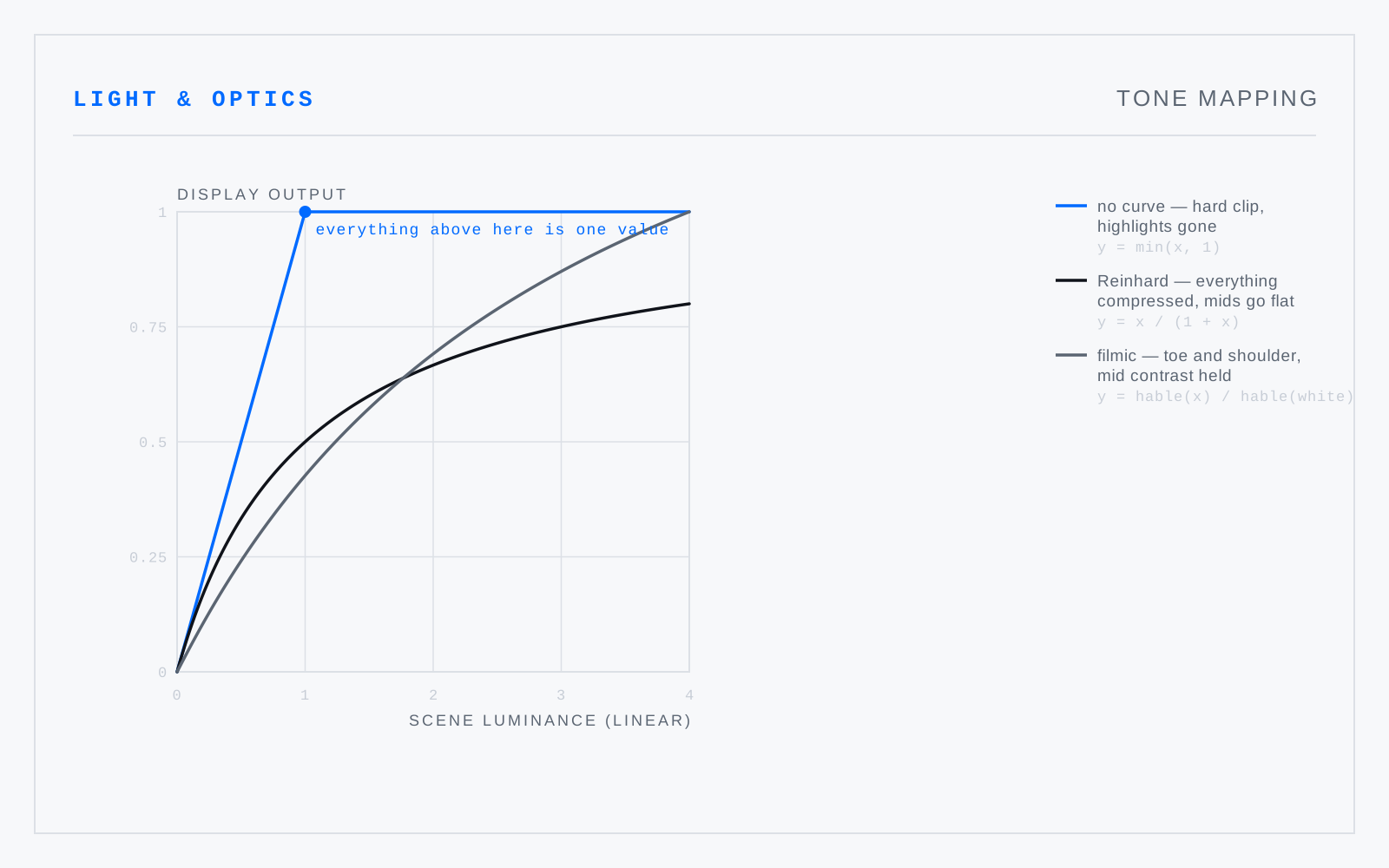
The transform fitting a scene's luminance range into what a display can show — compressing highlights, holding mid-tone contrast, and deciding where things clip. It is neither a colour correction nor optional: some curve is always applied, and choosing none means choosing a hard clip.
In practice
The filmic and ACES curves people argue about are this. The disagreement is aesthetic — where the shoulder starts — dressed up as a technical one.
Not to be confused with
- HDRAs imaging, storing luminance in floating point so nothing clips. As a display standard, a higher peak luminance, a perceptual transfer function — PQ or HLG — in place of a gamma curve, and a wider gamut, with values carried in absolute nits rather than relative to a reference white.
- Dynamic rangeThe ratio between the largest and smallest luminance a scene, sensor, or display can carry, usually quoted in stops of doubling. A real scene may span twenty; a good sensor fourteen; an SDR display under ten. Everything difficult about photography lives in that gap.
- GammaThe power-law transfer function between encoded code values and light — historically the CRT's own response near 2.2, now kept deliberately because it spends limited bits where the eye discriminates most finely. sRGB's is piecewise, with a linear toe, averaging roughly 2.2 overall. It is also one of the three things that fix an RGB space, with primaries and white point.
- ExposureStrictly, the illuminance on the sensor multiplied by the time it is collected — lux-seconds, set by aperture and shutter alone. It determines how much light was actually recorded; ISO merely scales what gets done with the result afterwards.