Design Nomenclature / Color
Analogous
Also called adjacent scheme, neighbouring hues
- Color
- Composition
- 2D & 3D
This entry has not been translated yet and is shown in English.
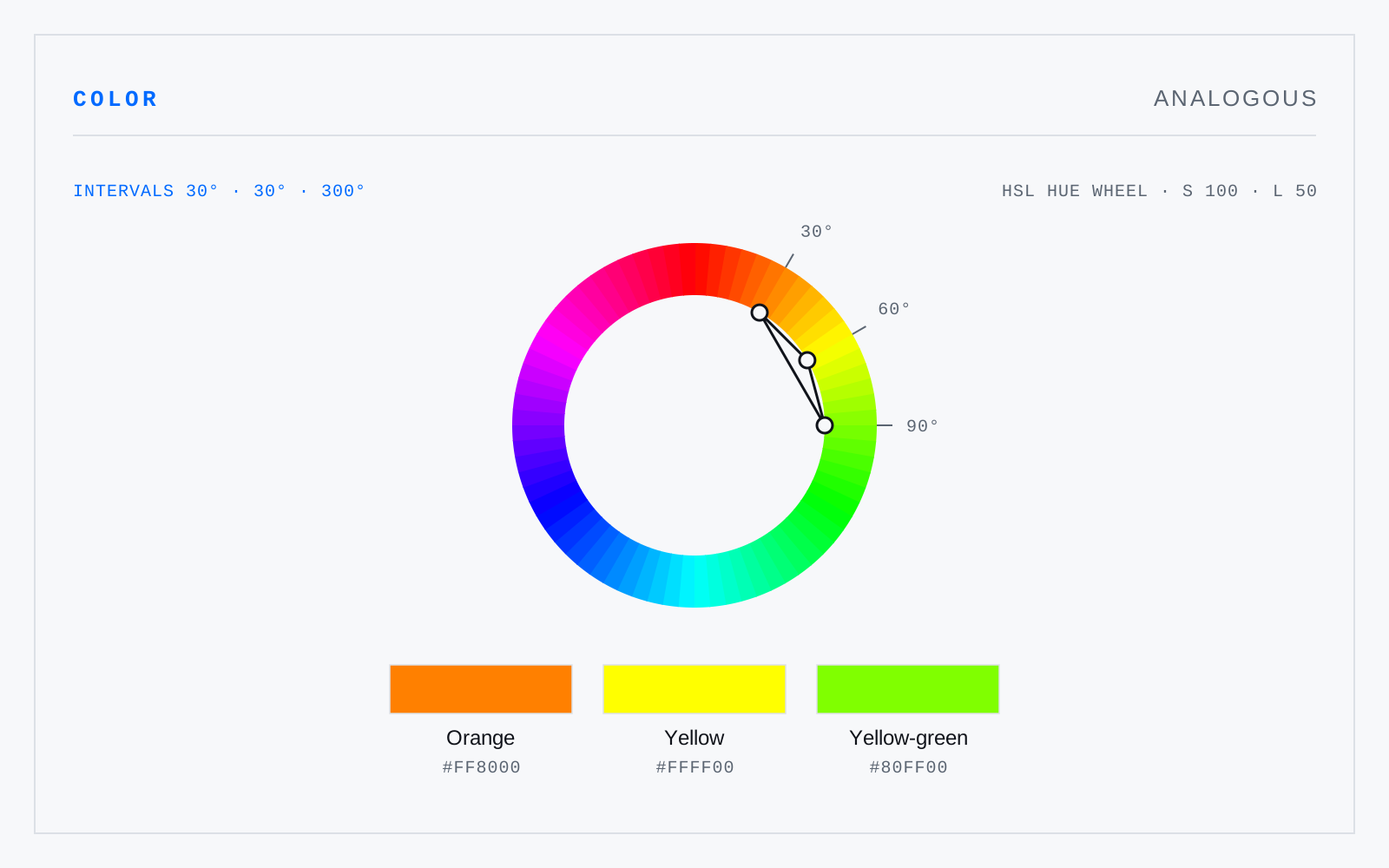
A scheme of hues adjacent on the wheel, typically spanning thirty to sixty degrees. Adjacency guarantees agreement and withholds tension, so an analogous palette needs a firm value structure or one small foreign accent to keep from going flat. Nature supplies most of the convincing examples.
Not to be confused with
- MonochromaticA scheme built from one hue, varied only in value and chroma. It cannot fail on harmony, since there is no second hue to disagree with, and so it fails instead on monotony — monochromatic work lives or dies on the value spread it is willing to use.
- ComplementaryA pair of hues opposite one another on a color wheel — but which pair depends entirely on the wheel. In RYB, blue opposes orange; in additive light, blue opposes yellow; in an opponent space, opposition is the negation of both axes. The schoolroom red-green pairing is a pigment convention, not a fact about light.