Design Nomenclature / Light & Optics
Bokeh
Also called boke, blur quality, out-of-focus rendering
- Light & Optics
- Composition
- 2D & 3D
This entry has not been translated yet and is shown in English.
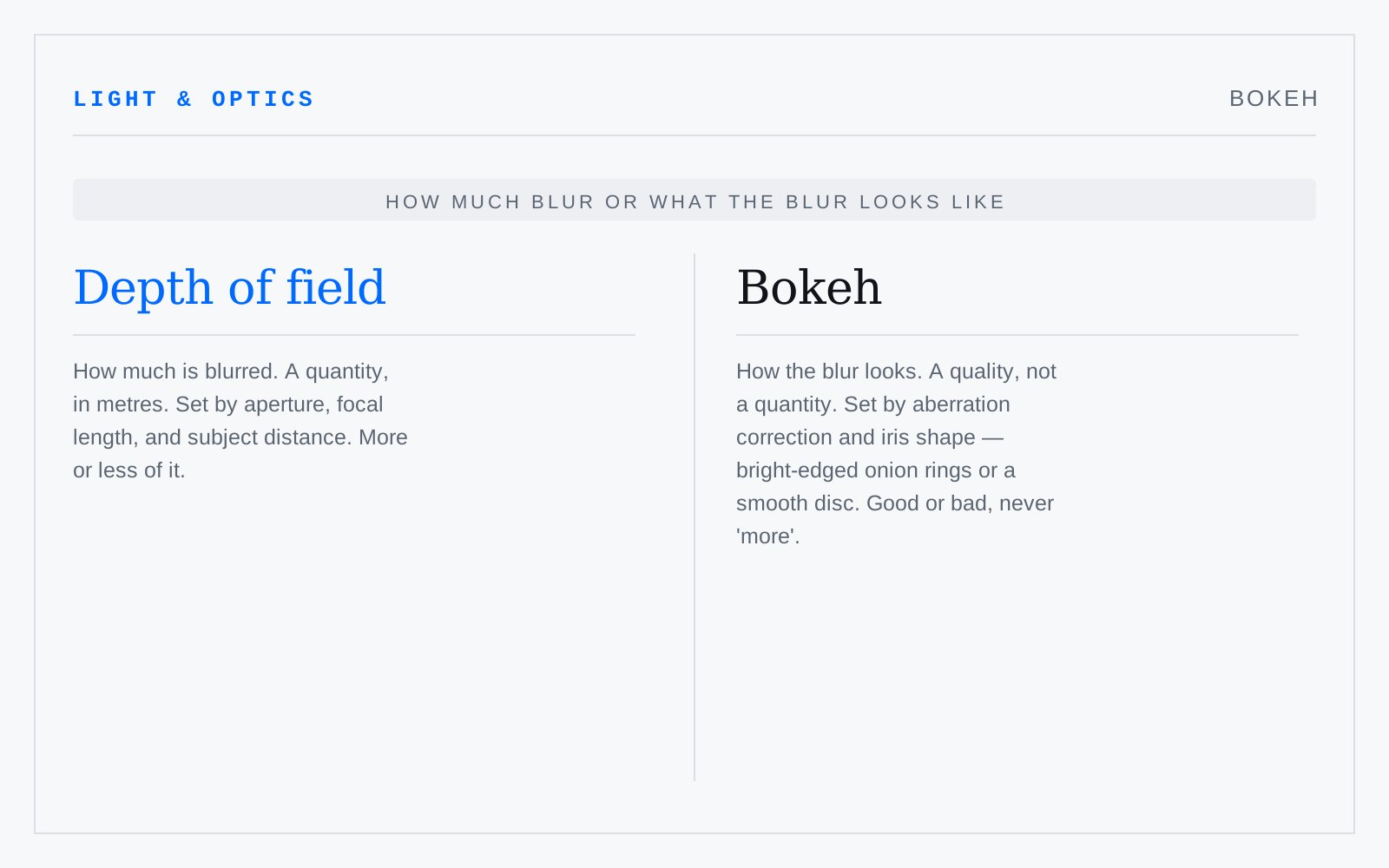
The character of the out-of-focus rendering — how a blur circle is filled, whether its edge goes bright or soft, whether it turns to onion rings or cats' eyes toward the corners. A judgement about quality, set by the lens's aberration correction and the shape of its iris.
In practice
Not the amount of blur. Lots of bokeh is a category error the whole internet now makes; the phrase wanted is shallow depth of field.
Not to be confused with
- Depth of fieldThe band of subject distances rendering acceptably sharp — where the blur circle stays under a chosen threshold. Exactly one plane is truly in focus; everything else is a compromise about how much unsharpness passes. It narrows with wider apertures, longer lenses, and closer subjects.
- Circle of confusionThe disc a point source projects onto the sensor when it sits away from the focus plane. Depth of field is entirely a decision about how large this may grow before it reads as unsharp — a threshold set by print size, viewing distance, and eyesight, not by physics.
Origin
Japanese boke (ボケ), blur or haze. Anglicized with an added h in Photo Techniques in 1997, to stop English speakers rhyming it with broke.