Design Nomenclature / Color
OKLCh
Also called Oklch, OK LCH
This entry has not been translated yet and is shown in English.
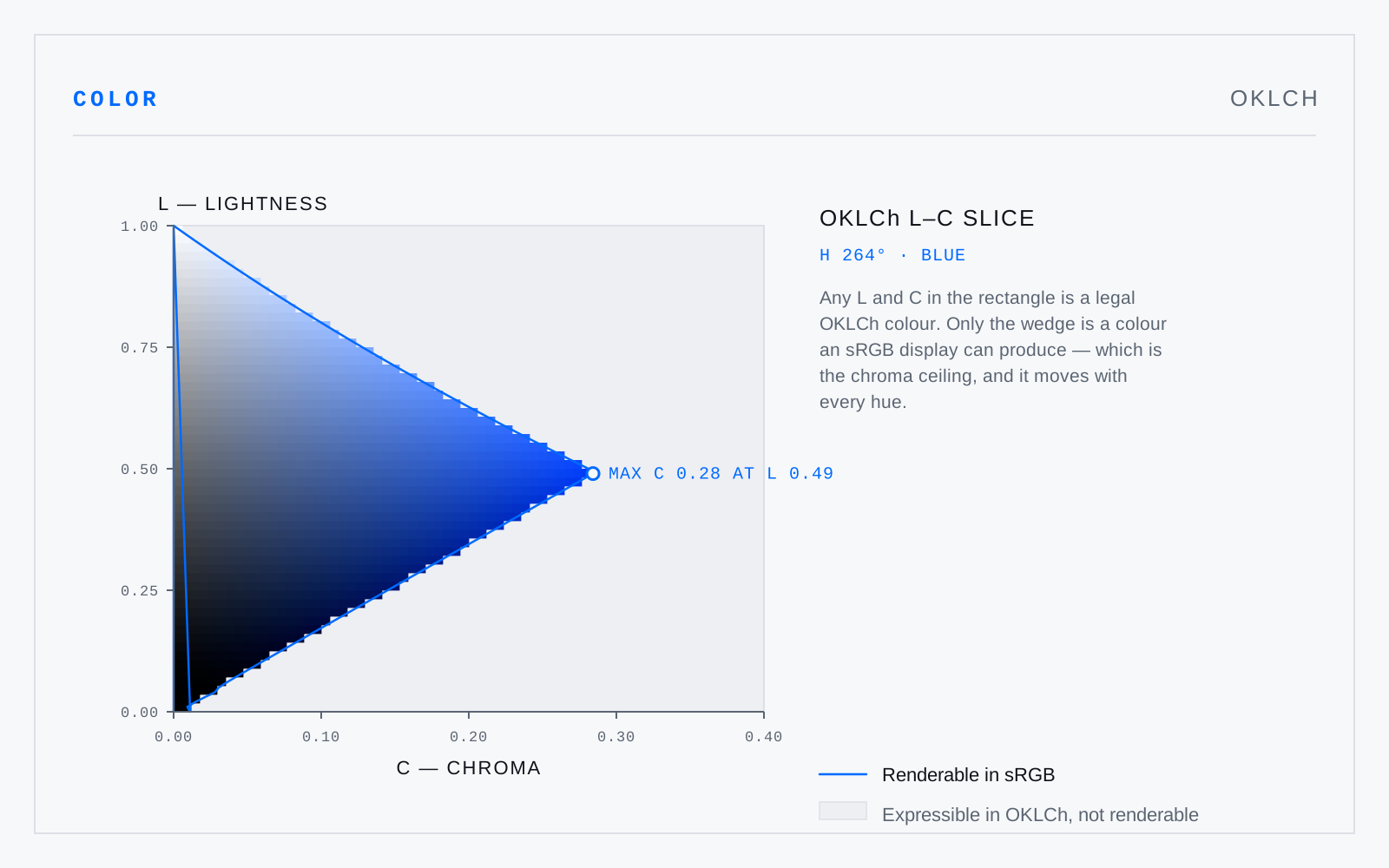
OKLab in cylindrical coordinates — lightness, chroma, hue angle. The arrangement designers actually want: hold L and sweep H and the swatches share an apparent lightness; hold H and drop C and the hue survives the fade. It is the first perceptual model to reach CSS with real browser support behind it.
In practice
The working default for palettes and value ramps. Mind the chroma ceiling — high-C values are freely expressible in OKLCh and simply not renderable on an sRGB display.
Not to be confused with
- HSLA cylindrical remapping of RGB into hue, saturation, and lightness, with L running 0 to 100% and every fully saturated hue landing at L 50%. That is a fact about the geometry, not about perception: HSL yellow and HSL blue at L 50% differ enormously in the lightness anyone actually sees.
- HSBRGB remapped to hue, saturation, and brightness, where B 100% is the brightest the display can render that hue — so pure yellow and pure blue both sit at B 100%. The model is a hexcone where HSL is a bicone. Neither is perceptual, and their S channels are not the same quantity.
- CIELABA device-independent opponent space — L* for lightness, a* green to red, b* blue to yellow — built so equal numeric distances approximate equal perceived differences. Its polar form, LCh, restates a* and b* as chroma and hue angle. Both inherit a documented flaw: the blue region bends, so hue drifts along a ramp that should hold it.