Design Nomenclature / Light & Optics
Radiance
Also called L, watts per steradian per square metre
This entry has not been translated yet and is shown in English.
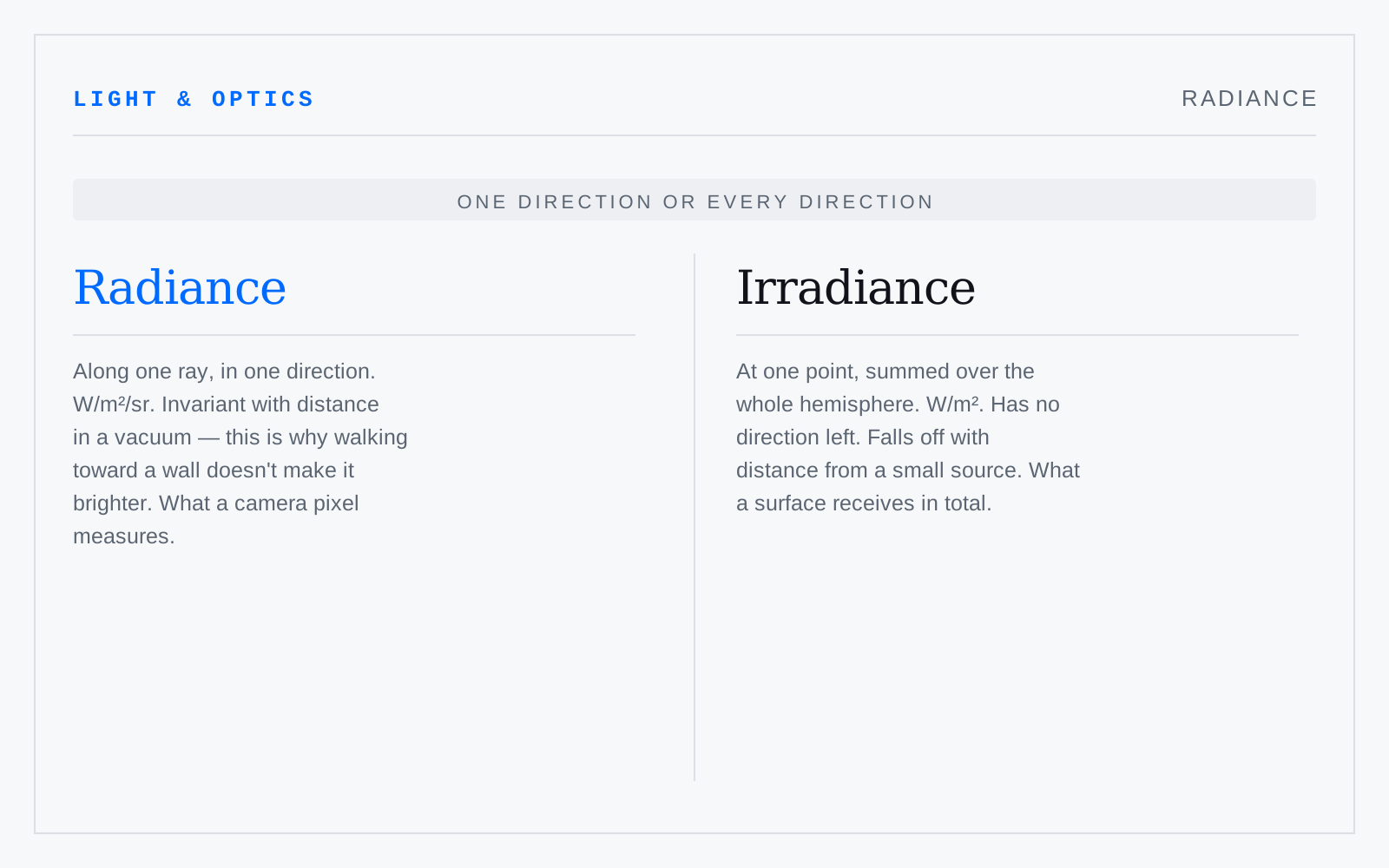
Power per unit projected area per unit solid angle — the quantity carried along a single ray. It is constant along that ray in a vacuum, which is why a surface does not dim as you walk toward it, and why the sky's brightness is the same at any altitude.
In practice
The quantity every renderer actually integrates. The brightness slider on a light is almost never radiance; it is flux or intensity, scaled.
Not to be confused with
- IrradiancePower arriving per unit area of a surface, in watts per square metre — the cosine-weighted integral of incoming radiance over the hemisphere above it. It is a property of a location, retains no direction, and collapses everything arriving there into a single number.
- LuminanceRadiance weighted by the eye's photopic sensitivity and integrated over wavelength — candela per square metre. It measures light leaving a surface toward the observer, is what a display's peak-brightness spec quotes, and is linear in energy, so equal steps in it are not equal steps in appearance.
- RadiosityStrictly, a finite-element method that divides a scene into patches, computes form factors between them, and solves the resulting linear system for diffuse interreflection — view-independent, no speculars, and effectively unused since the 1990s. Loosely, and confusingly, the same word gets thrown at global illumination in general.