Design Nomenclature / Physical Model Making
Solvent weld
Also called solvent cement, plastic cement, dichloromethane, Weld-On, MEK, Tenax
This entry has not been translated yet and is shown in English.
Not glue. The solvent dissolves both faces and they fuse into one piece of plastic as it flashes off. Works only where a solvent for the polymer exists — acrylic, styrene, ABS and PVC yes; polyethylene, polypropylene and PTFE never. Capillary action pulls it into a tight joint, so fit matters far more than pressure.
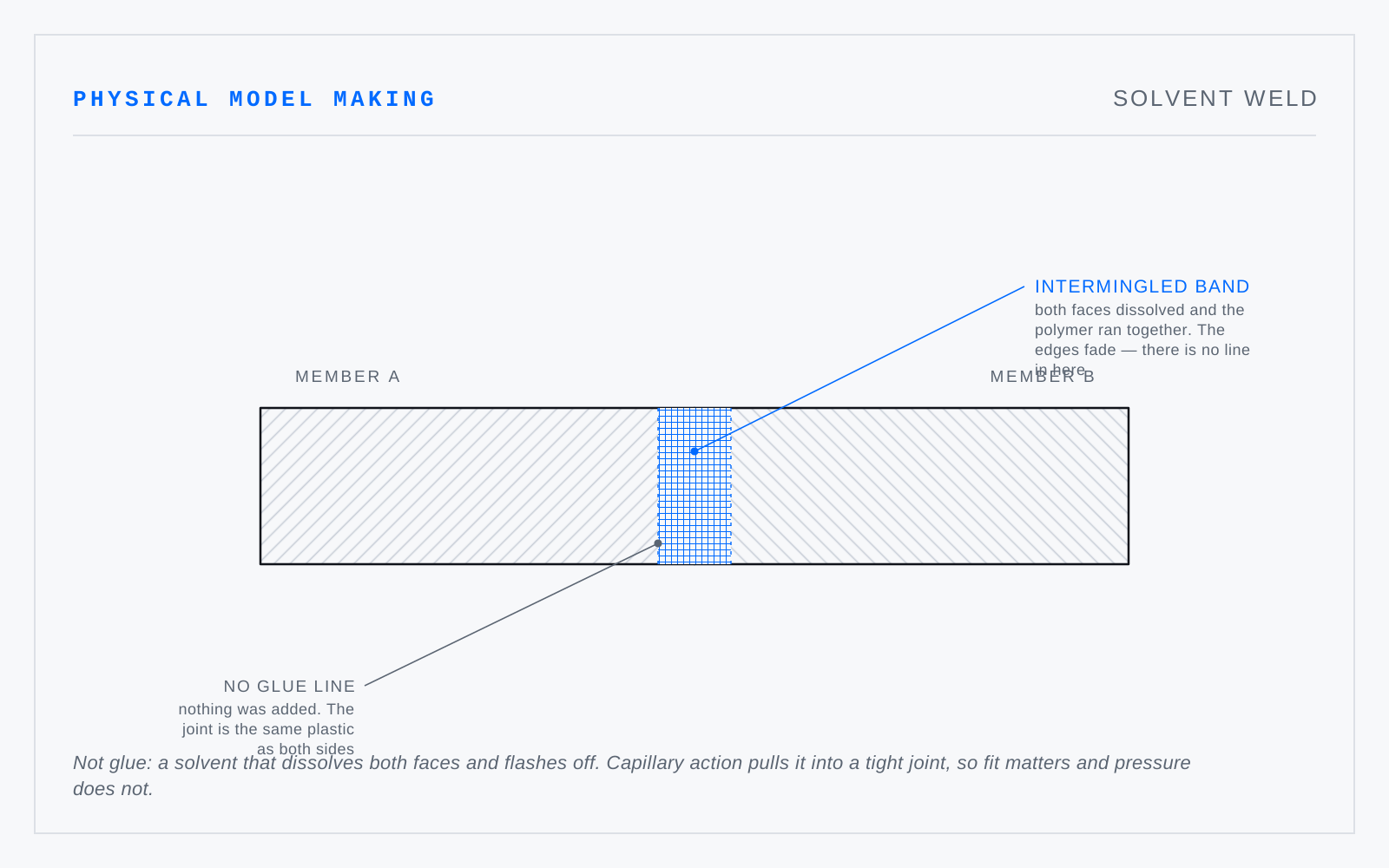
In practice
It is run into an assembled, clamped joint with a brush or needle, not applied to a face and pressed together. Doing it the glue way melts the surface and joins nothing.
Not to be confused with
- EpoxyA resin and a hardener that co-react rather than dry, so it cures inside a gap and will fill one. Strong on nearly everything, slow, and unforgiving of mix ratio — off-ratio epoxy stays soft forever and cannot be rescued, only removed. Nothing else bonds dissimilar materials as reliably.
- CA glueA one-part adhesive that polymerises on contact with trace surface moisture. Instant, brittle, and gap-intolerant — it wants two surfaces already touching. Accelerator kicks it in seconds at the cost of strength and leaves a white bloom around the joint. In a model shop it is a clamp substitute far more than a structural bond.
- WeldingJoining metals by melting the parent material of both parts so they fuse into one, usually with filler of the same alloy. The joint is as strong as the metal because it is the metal. It also distorts the work as it cools: heat is the process, and warping is the bill it sends.