Design Nomenclature / Color
sRGB
Also called standard RGB
This entry has not been translated yet and is shown in English.
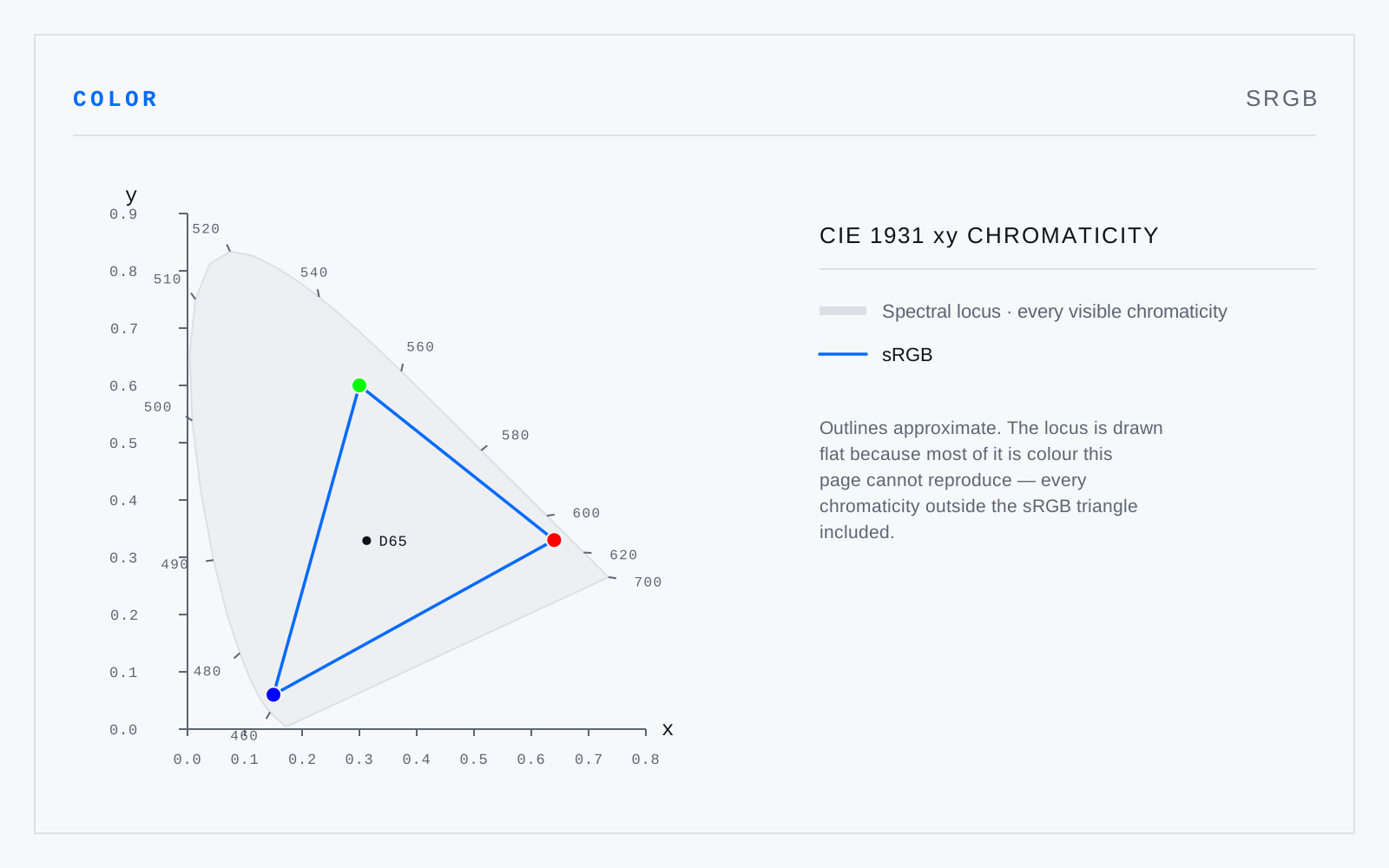
The 1996 HP and Microsoft standard, written to describe a typical CRT and still the default assumption of the untagged web. Its gamut is small — it cannot reach a saturated cyan or a traffic-cone orange — but ubiquity made it the floor everything else gets measured against.
In practice
Untagged images and bare hex values are treated as sRGB by every browser. That assumption is what keeps the web coherent, and what makes wide-gamut assets look wrong the moment a tag is dropped.
Not to be confused with
- RGBAn additive model addressing color as amounts of red, green, and blue primaries. RGB by itself specifies nothing absolute: the same triplet means different colors on different devices until a space pins down the primaries, the white point, and the transfer curve. RGB without a profile is a coordinate with no map.
- Display P3Apple's display space: DCI-P3's primaries carrying sRGB's D65 white point and transfer curve. Roughly twenty-five percent more volume than sRGB, nearly all of it in the reds and greens, and the default panel on most current laptops and phones. Colors specified in it clip visibly where a viewer's display cannot reach them.
- GamutThe set of colors a device or space can actually produce — a volume rather than an area, since reach changes with lightness. Every gamut is a subset of what the eye sees, and none contains another entirely: sRGB holds blues and greens no press can approach, while coated CMYK reaches yellows and cyans that fall outside sRGB.