Design Nomenclature / Color
Bezold effect
Also called spreading effect, von Bezold spreading effect
This entry has not been translated yet and is shown in English.
A color's appearance changing when a small amount of a second color is interlaced through it. Unlike simultaneous contrast, which pushes a field away from its surround, spreading pulls it toward the intruding color — at fine grain the eye averages rather than opposes. Wilhelm von Bezold found it in rug patterns.
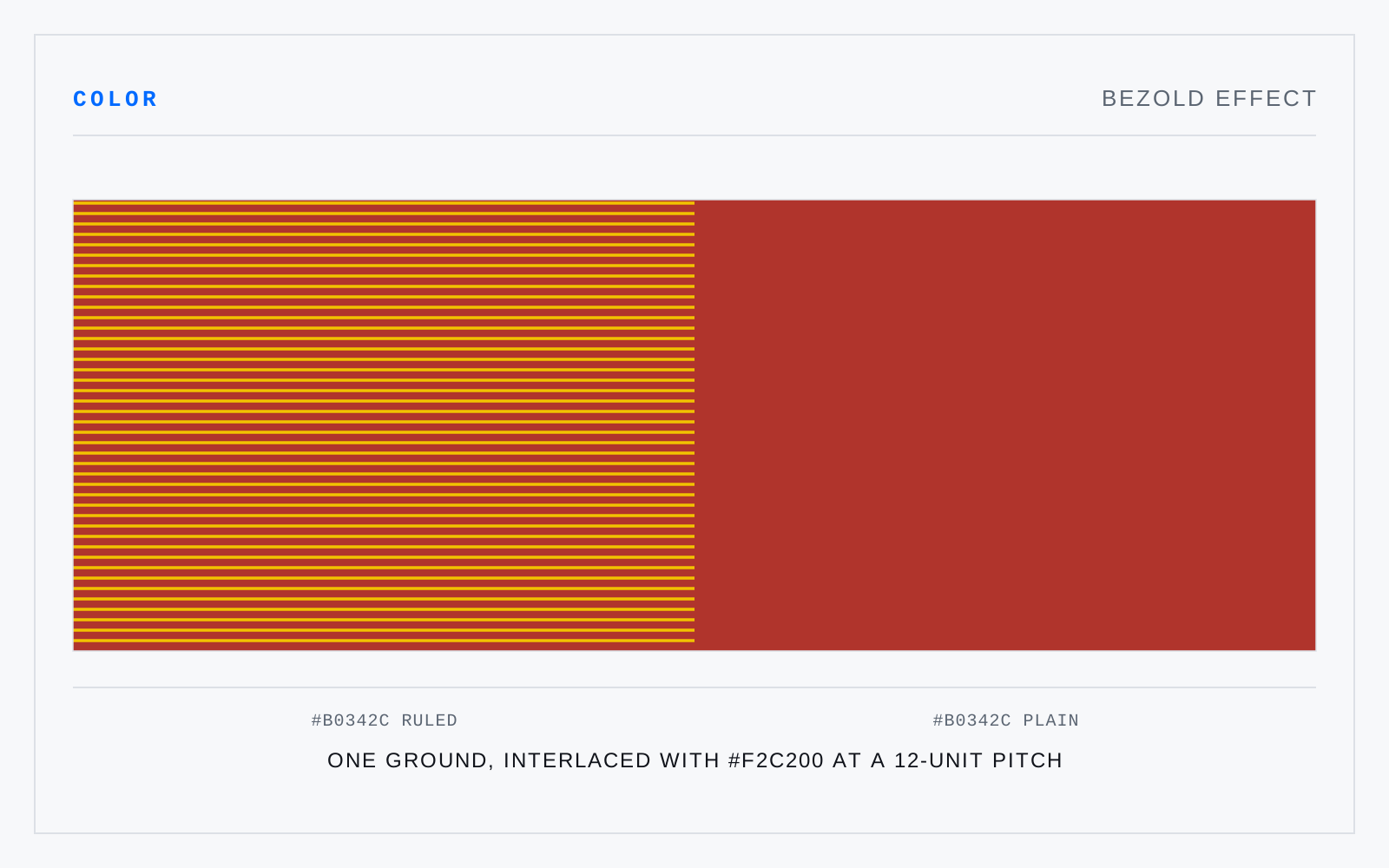
In practice
Explains why a hairline rule, a screen tint, or thin type in a second color shifts a whole field's apparent value. Scale is the threshold: coarse enough and it flips back to contrast.
Not to be confused with
- Simultaneous contrastA color's appearance shifting according to what surrounds it: a grey patch on red takes a greenish cast, the same grey on green turns faintly pink. The eye induces the complement of the surround into the field. Nothing about the patch changes — the measurement is identical, the percept is not.
- Partitive mixingMixing that happens in the eye rather than in the medium: marks too small to resolve individually average into one percept, weighted by the area each occupies. Neither additive nor subtractive — no light is summed and no colorant is combined. Halftone, pointillism, weaving, and every RGB subpixel depend on it.