Design Nomenclature / Type
Cap height
Also called capital height
- Type
- 2D
This entry has not been translated yet and is shown in English.
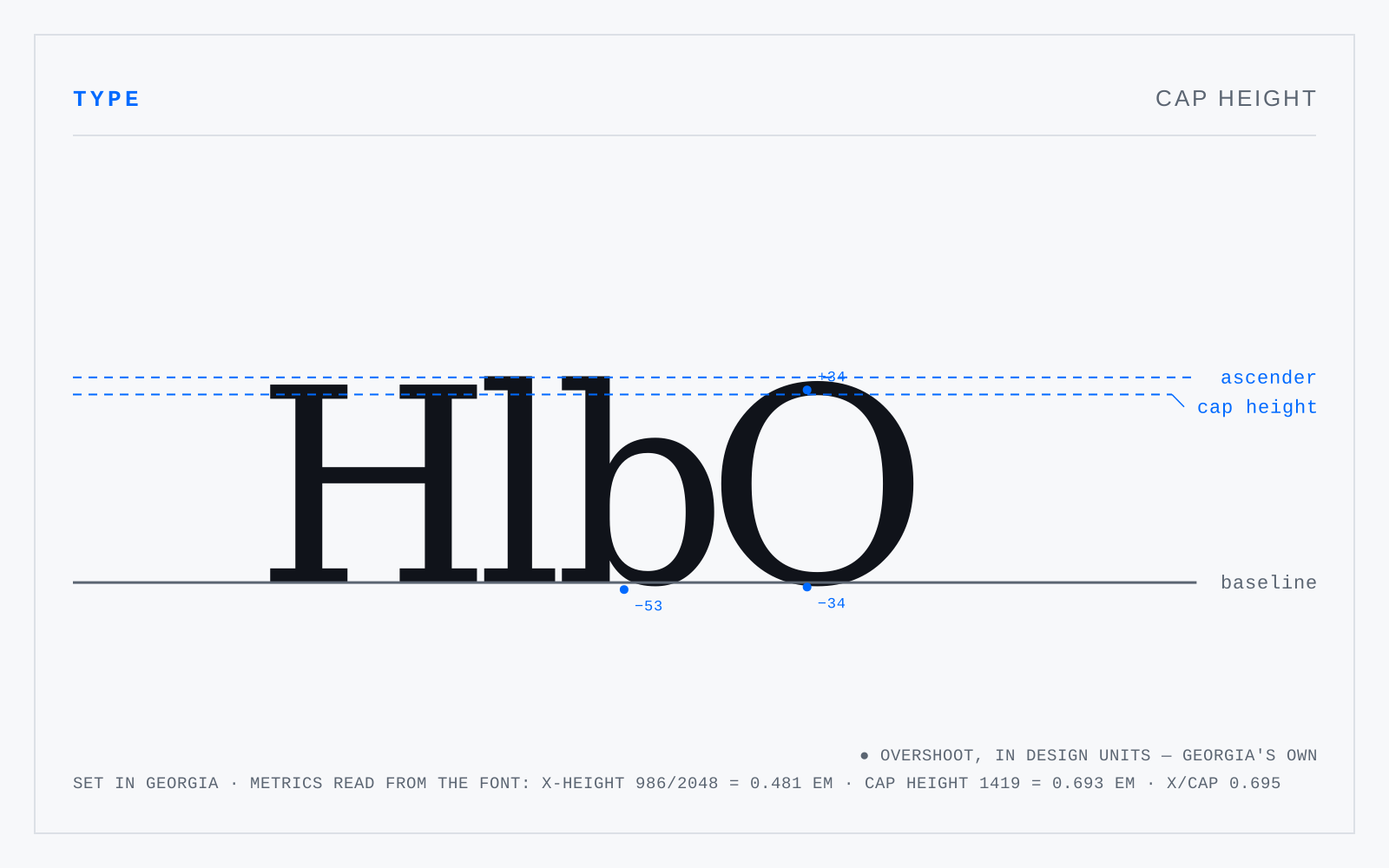
The distance from the baseline to the top of a flat-topped capital such as H or E. Round capitals like O and S overshoot it slightly. In most Latin faces the cap height sits a little below the ascender line, which is why a lowercase l typically rises above an adjacent H.
Not to be confused with
- AscenderThe part of a lowercase letter rising above the mean line — b, d, f, h, k, l, and the upper stroke of t. Ascender length is a design variable rather than a fixed quantity: long ascenders read as classical and demand more leading; short ones buy a larger x-height on the same body.
- X-heightThe height of the lowercase x — flat-topped and flat-bottomed, so it measures cleanly — taken from the baseline to the mean line. It is the best single predictor of how large a face reads at a given point size, and the ratio of x-height to cap height largely sets a face's apparent scale and small-size legibility.