Design Nomenclature / Digital Model Making
CSG
Also called constructive solid geometry, CSG tree
This entry has not been translated yet and is shown in English.
A scheme in which form is a tree of primitives combined by set operations, and the tree — not the resulting surface — is the model. Evaluate it and you get geometry; keep it and you can still change the radius of a hole from twenty steps back.
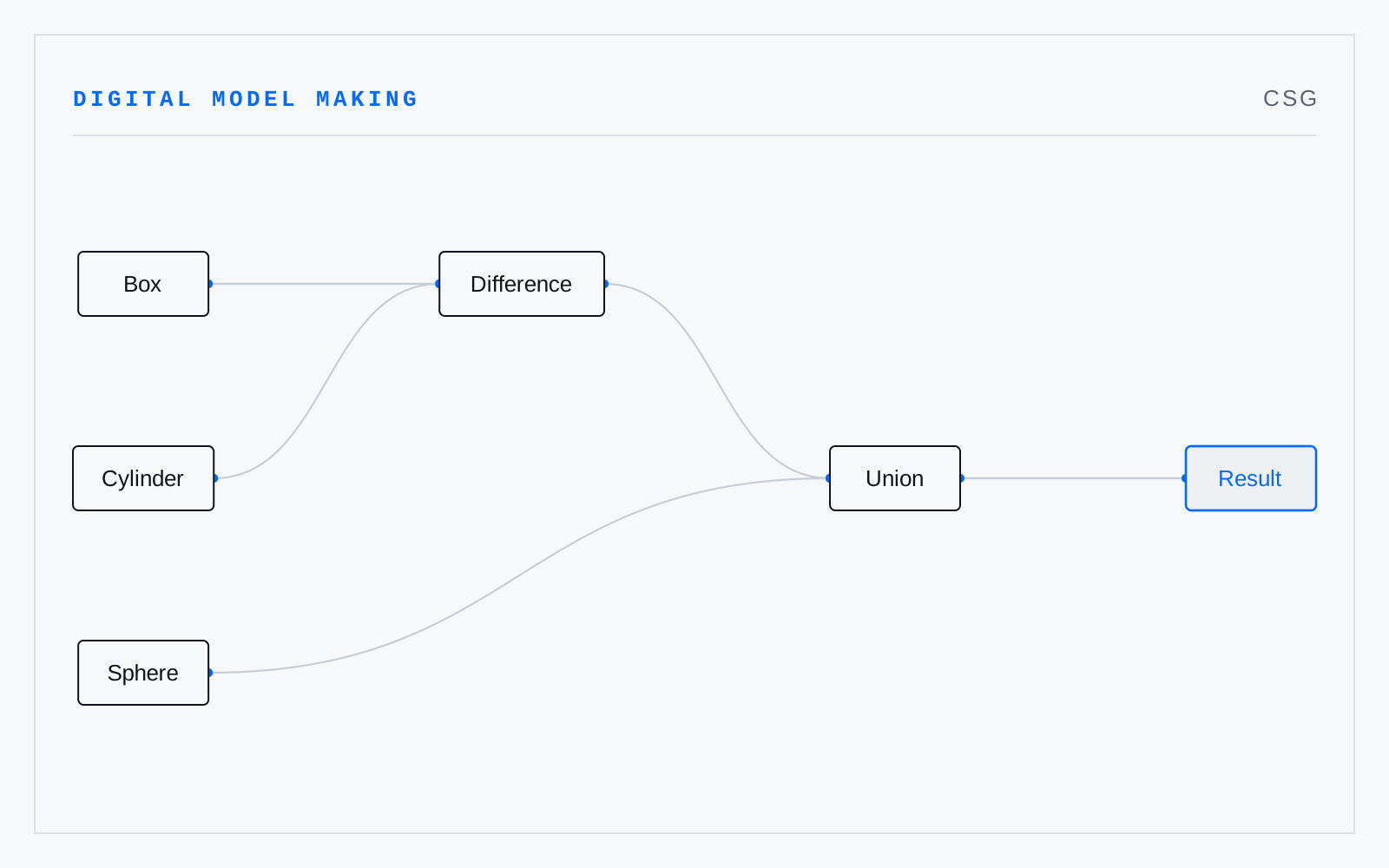
In practice
Used loosely for any boolean workflow, which loses the point. CSG is the persistent tree; a one-off mesh boolean throws it away and keeps the crumbs.
Not to be confused with
- BooleanA set operation — union, difference, intersection — between two volumes. It is only well defined on closed, manifold, non-self-intersecting input; give it an open mesh and the result is whatever the implementation guesses. Mesh booleans also leave n-gons and coincident geometry along the cut, which is legal and still needs cleanup.
- Solid ModelingRepresenting a part as a closed watertight volume: trimmed faces stitched along shared edges, with an inside and an outside the kernel can guarantee. Volume, mass, and interference become computable. Every operation is validated against that closure, which is why a CAD boolean either succeeds cleanly or refuses.
- SDFForm defined as a function returning the distance from any point to the nearest surface — negative inside, positive outside. The surface is the zero level set and is never stored. Booleans become min and max, offsets become addition, blends become a smooth minimum, and the result is watertight by construction.