Design Nomenclature / Light & Optics
HDR
Also called high dynamic range, HDR10, PQ, HLG, SDR
This entry has not been translated yet and is shown in English.
As imaging, storing luminance in floating point so nothing clips. As a display standard, a higher peak luminance, a perceptual transfer function — PQ or HLG — in place of a gamma curve, and a wider gamut, with values carried in absolute nits rather than relative to a reference white.
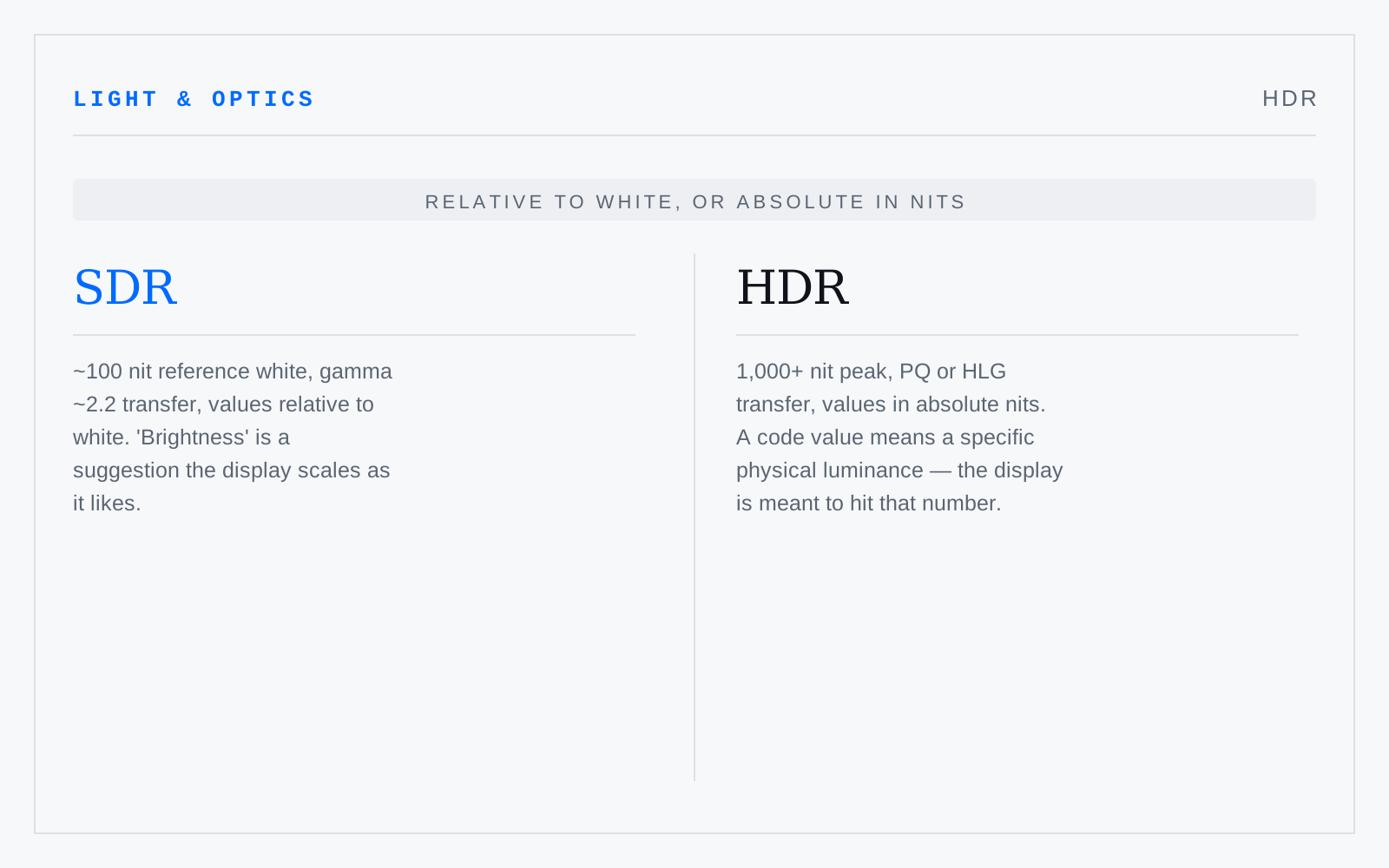
In practice
The phone camera's HDR button means neither: it is a multi-exposure merge, tone-mapped straight back down to SDR. Three unrelated meanings wearing one badge.
Not to be confused with
- Tone mappingThe transform fitting a scene's luminance range into what a display can show — compressing highlights, holding mid-tone contrast, and deciding where things clip. It is neither a colour correction nor optional: some curve is always applied, and choosing none means choosing a hard clip.
- Dynamic rangeThe ratio between the largest and smallest luminance a scene, sensor, or display can carry, usually quoted in stops of doubling. A real scene may span twenty; a good sensor fourteen; an SDR display under ten. Everything difficult about photography lives in that gap.
- HDRIA photographic capture of the whole sphere of incident radiance at a point, stored in floating point so the sun stays thousands of times brighter than the sky rather than clipping to white. Used as a source, it supplies direction, colour, softness, and reflection from a real location at once.
- GammaThe power-law transfer function between encoded code values and light — historically the CRT's own response near 2.2, now kept deliberately because it spends limited bits where the eye discriminates most finely. sRGB's is piecewise, with a linear toe, averaging roughly 2.2 overall. It is also one of the three things that fix an RGB space, with primaries and white point.