Design Nomenclature / Light & Optics
Illuminance
Also called incident light level, lux level
- Light & Optics
- Systems & Spec
- 2D & 3D
This entry has not been translated yet and is shown in English.
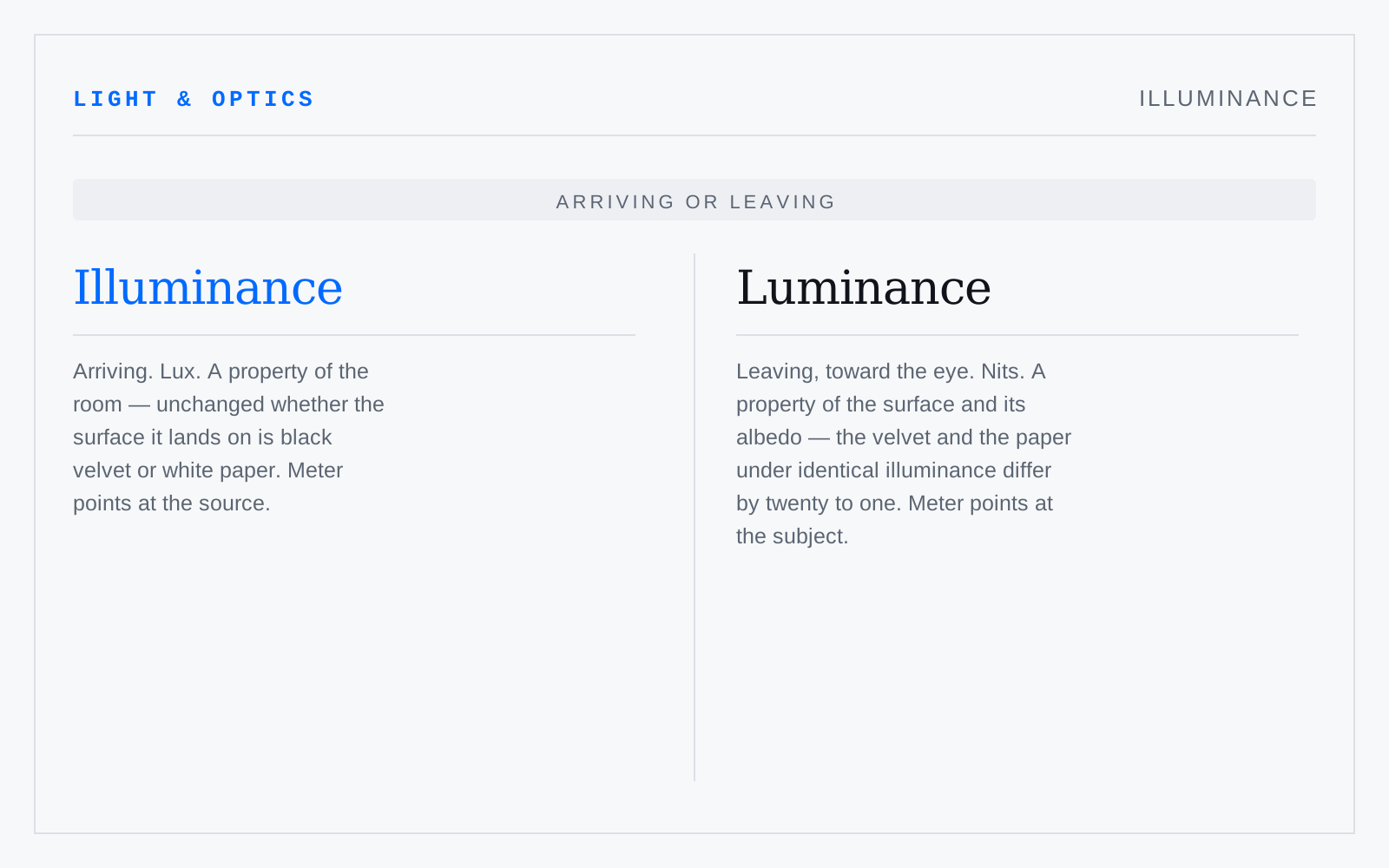
Luminous flux arriving per unit area, measured in lux — the photometric counterpart of irradiance. It describes light falling onto a surface, says nothing about what that surface then does with it, and is what a handheld meter reads when pointed back at the source.
In practice
Building codes and workplace standards are written in illuminance because it is a property of the room, not of the paint. What anyone actually sees is the luminance that results.
Not to be confused with
- LuminanceRadiance weighted by the eye's photopic sensitivity and integrated over wavelength — candela per square metre. It measures light leaving a surface toward the observer, is what a display's peak-brightness spec quotes, and is linear in energy, so equal steps in it are not equal steps in appearance.
- IrradiancePower arriving per unit area of a surface, in watts per square metre — the cosine-weighted integral of incoming radiance over the hemisphere above it. It is a property of a location, retains no direction, and collapses everything arriving there into a single number.
- LuxOne lumen per square metre — the unit of illuminance. Overcast daylight runs around 1,000 lux, an office 300 to 500, full sun past 100,000. The foot-candle is the same quantity per square foot, and one foot-candle is 10.76 lux.