Design Nomenclature / Systems & Spec
Pica
Also called pc, pica em
This entry has not been translated yet and is shown in English.
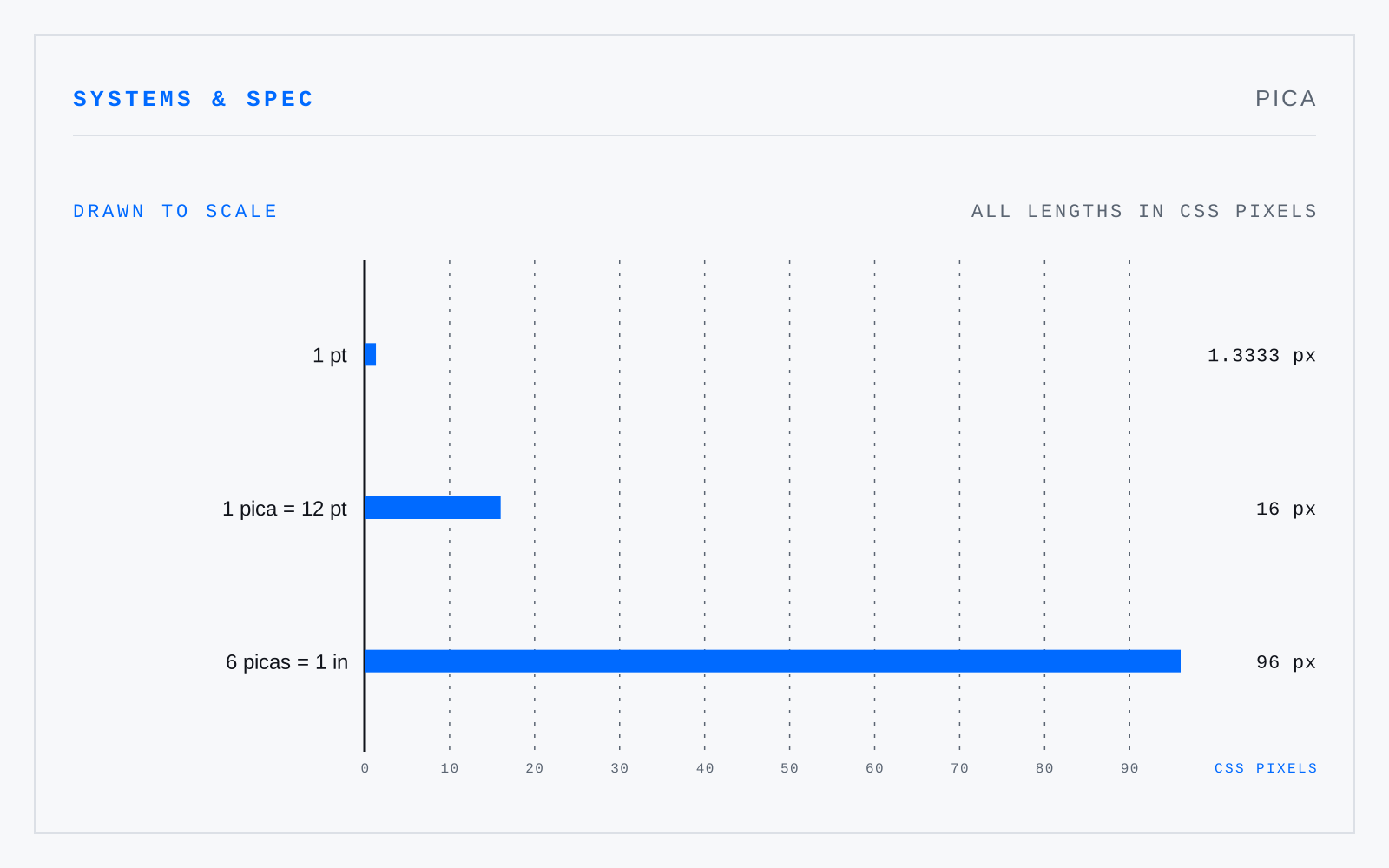
Twelve points, and under the PostScript convention a sixth of an inch — six picas to the inch, seventy-two points. The unit column widths, margins, and page grids were specified in before millimetres took over. Distinct from the typewriter's pica, which meant ten characters to the inch.
In practice
The measuring sense survives because a 21-pica column is more natural to a compositor than 3.5 inches. The older sense names a body size of about twelve points rather than a distance, and is now met only in old specimens.
Not to be confused with
- PointThe unit of type size, standardised as exactly 1/72 inch by PostScript and every application since. Historically it was never one thing: the Anglo-American point ran near 1/72.27 inch, the Didot point near 0.376 mm, Fournier's smaller again — which is why old specimens don't convert cleanly to anything.
- EmA relative unit equal to the current type size: at 16px, one em is 16px. It is not the width of an M and never was a measurement of any glyph — it is the height of the body the type is set on, which historically was square at the M's cast width. Every other type metric is expressed as a fraction of it.
Origin
Named after a body size of type, traditionally traced to the pica or pie — the medieval church ordinal said to have been printed at it. The derivation is inherited rather than proven. The typewriter's pica borrowed the word for an unrelated measure.