Design Nomenclature / Surface & Material
Translucency
Also called translucence, diffuse transmission
This entry has not been translated yet and is shown in English.
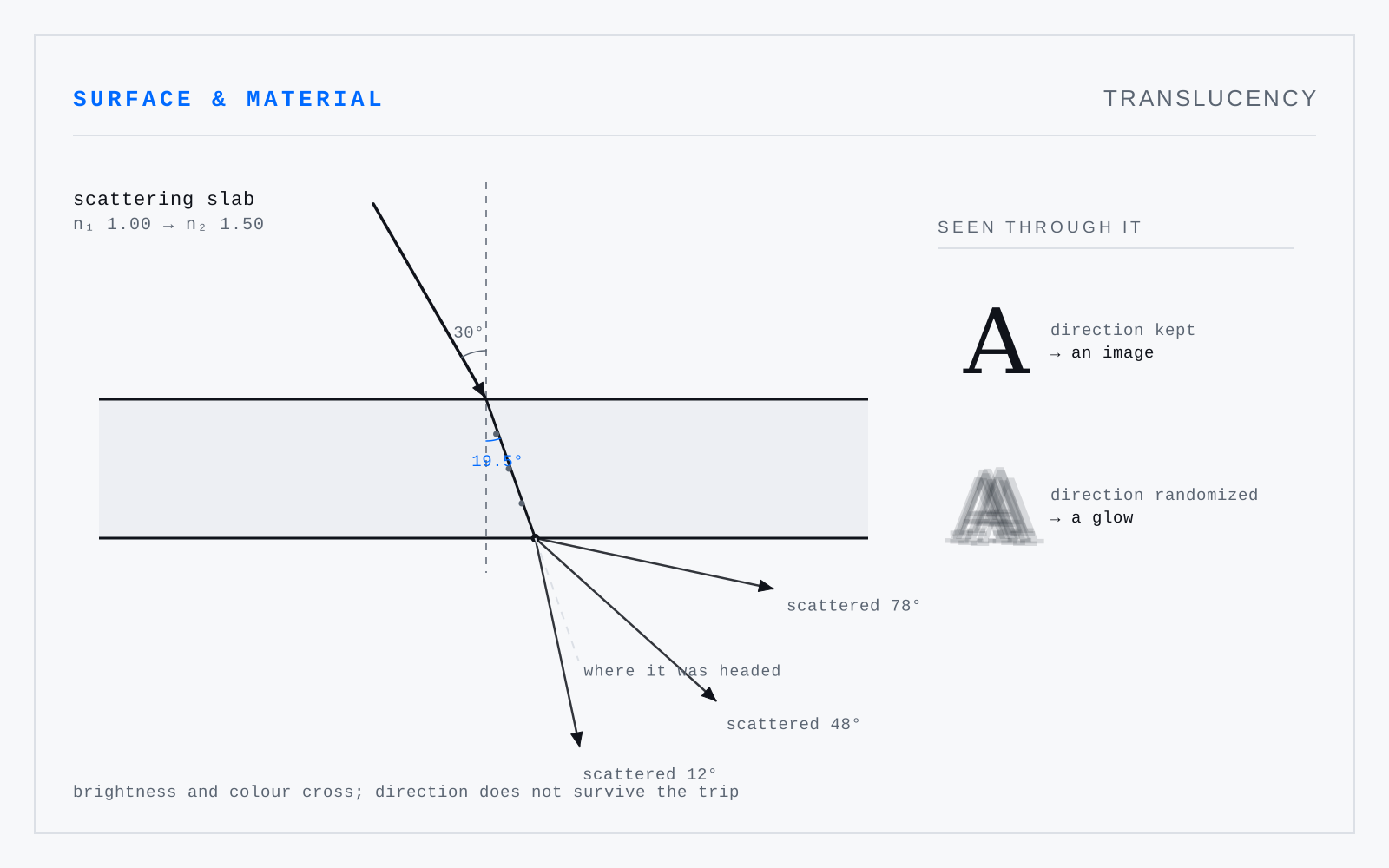
Transmission with scattering: light passes through but its direction is randomized on the way, so the material glows without carrying an image. Frosted glass, vellum, thin marble, a paper lampshade. What survives is brightness and color; what does not is anything you could focus or read.
Not to be confused with
- TransparencyTransmission without scattering: light crosses the material with its direction preserved — bent by the IOR, but coherently — so an image survives the trip and stays legible. Clear glass, water, acrylic. Any loss of clarity is haze or absorption creeping in, not a lower degree of transparency.
- Subsurface scatteringLight entering a translucent medium, bouncing repeatedly below the surface, and leaving at a different point — skin, marble, milk, leaves, wax. Governed by mean free path and phase function, both wavelength-dependent. Its signatures are softened shading terminators and colored bleed through thin sections: ears, fingers, petals.
- OpacityHow much a surface blocks light passing through it, stored per texel or set per material. A compositing quantity rather than a physical one: it blends the surface over what lies behind without refracting, tinting by path length, or conserving energy. Real glass is transmission; opacity is a stencil that happens to look like glass.