Design Nomenclature / Digital Model Making
USD
Also called Universal Scene Description, .usd, .usdz, OpenUSD
This entry has not been translated yet and is shown in English.
A scene description with a composition engine: layers referenced, overridden, and combined non-destructively, so lighting can override an asset without editing it and hundreds of shots can share one source. It describes scenes rather than storing them — which is what makes “just export a USD” a misunderstanding of the format.
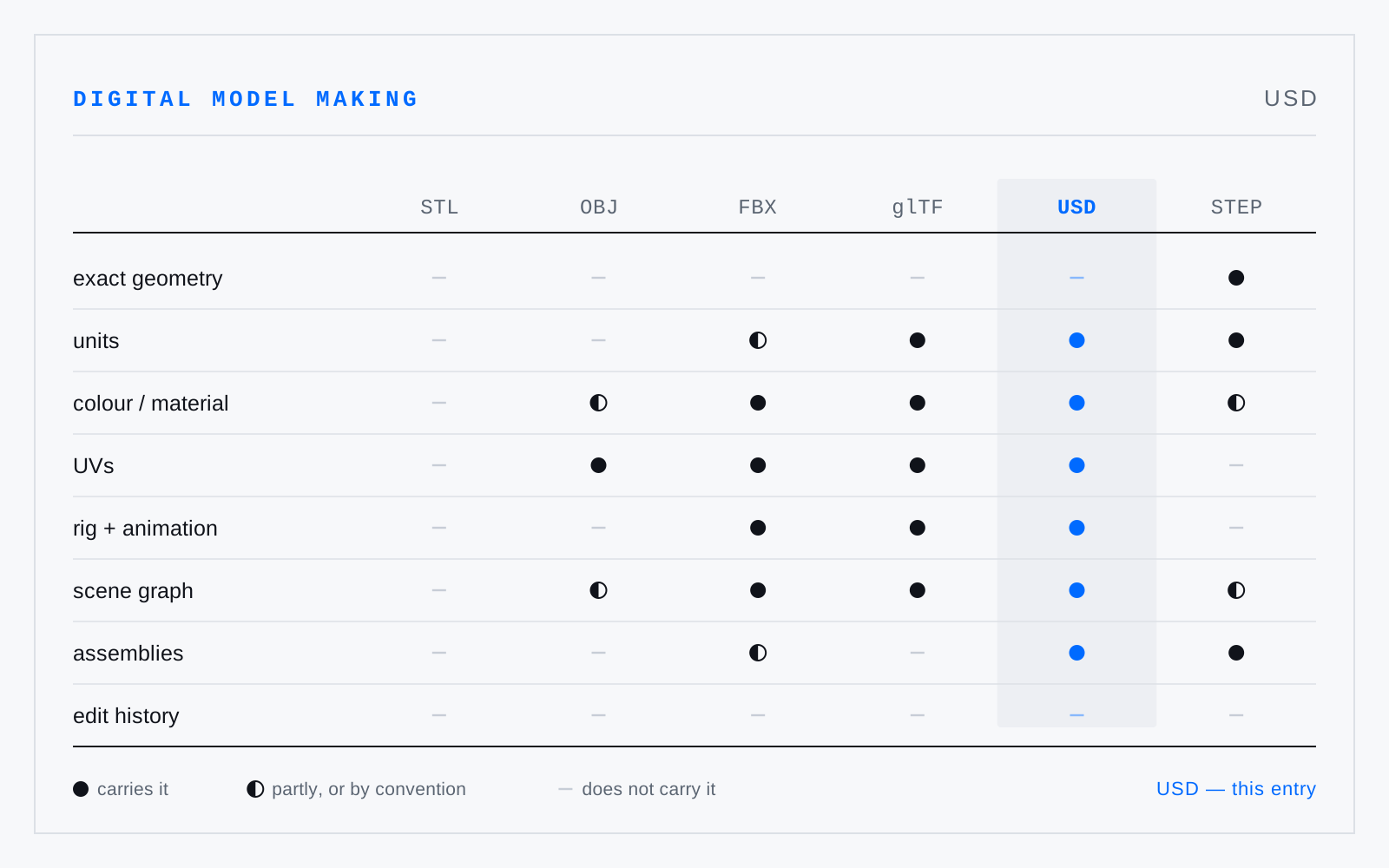
In practice
Pixar's, now an alliance's. Most people meet it as .usdz, a zipped single-asset payload for AR viewers, which uses almost none of what the format exists for.
Not to be confused with
- FBXA scene format carrying meshes, hierarchies, materials, cameras, lights, skinning, and animation — the industry's working interchange for two decades. It is proprietary, versioned, and only partly documented; two applications' exporters disagree on units, axes, and material mapping often enough that an FBX round-trip is a task, not a step.
- glTFAn open delivery format for runtime 3D: meshes, PBR materials, skins, animation, and a scene graph, held in JSON with binary buffers laid out for direct GPU upload. Deliberately not an authoring format — no history, no NURBS, no editable construction — which is why it loads fast and round-trips badly.