Design Nomenclature / Physical Model Making
CA glue
Also called superglue, cyanoacrylate, CA, Krazy Glue, zap
This entry has not been translated yet and is shown in English.
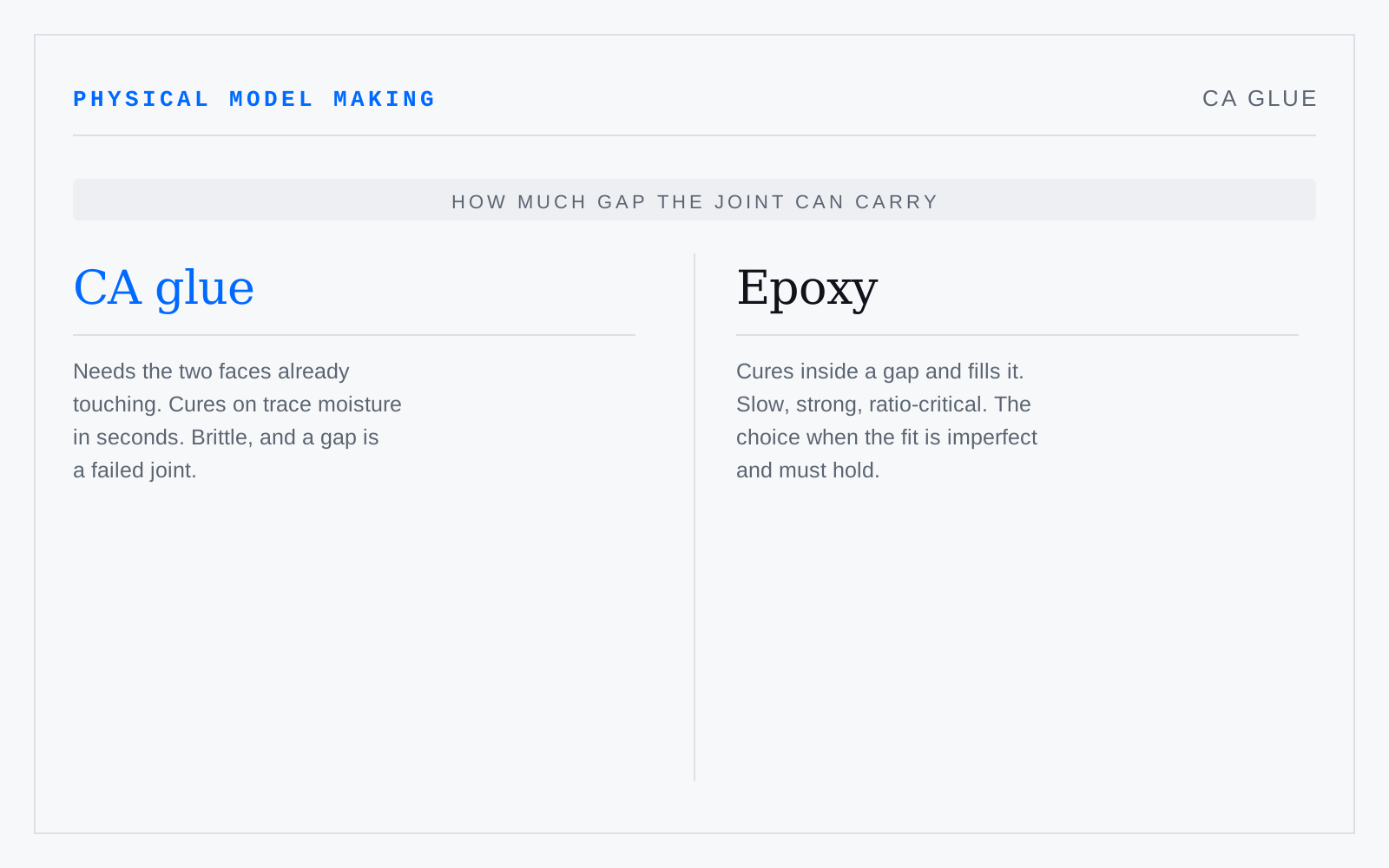
A one-part adhesive that polymerises on contact with trace surface moisture. Instant, brittle, and gap-intolerant — it wants two surfaces already touching. Accelerator kicks it in seconds at the cost of strength and leaves a white bloom around the joint. In a model shop it is a clamp substitute far more than a structural bond.
In practice
Woodworkers thicken it with sawdust; modellers pack the gap with baking soda and hit it with CA to make a filler that mills. Neither use is on the bottle.
Not to be confused with
- EpoxyA resin and a hardener that co-react rather than dry, so it cures inside a gap and will fill one. Strong on nearly everything, slow, and unforgiving of mix ratio — off-ratio epoxy stays soft forever and cannot be rescued, only removed. Nothing else bonds dissimilar materials as reliably.
- Solvent weldNot glue. The solvent dissolves both faces and they fuse into one piece of plastic as it flashes off. Works only where a solvent for the polymer exists — acrylic, styrene, ABS and PVC yes; polyethylene, polypropylene and PTFE never. Capillary action pulls it into a tight joint, so fit matters far more than pressure.