Design Nomenclature / Light & Optics
Light probe
Also called irradiance probe, reflection probe, chrome ball
This entry has not been translated yet and is shown in English.
A sample of the incident light at a chosen point, stored so shading elsewhere can look it up instead of tracing rays. An irradiance probe keeps the low-frequency hemisphere, usually as spherical harmonics; a reflection probe keeps a cubemap sharp enough to serve glossy reflection.
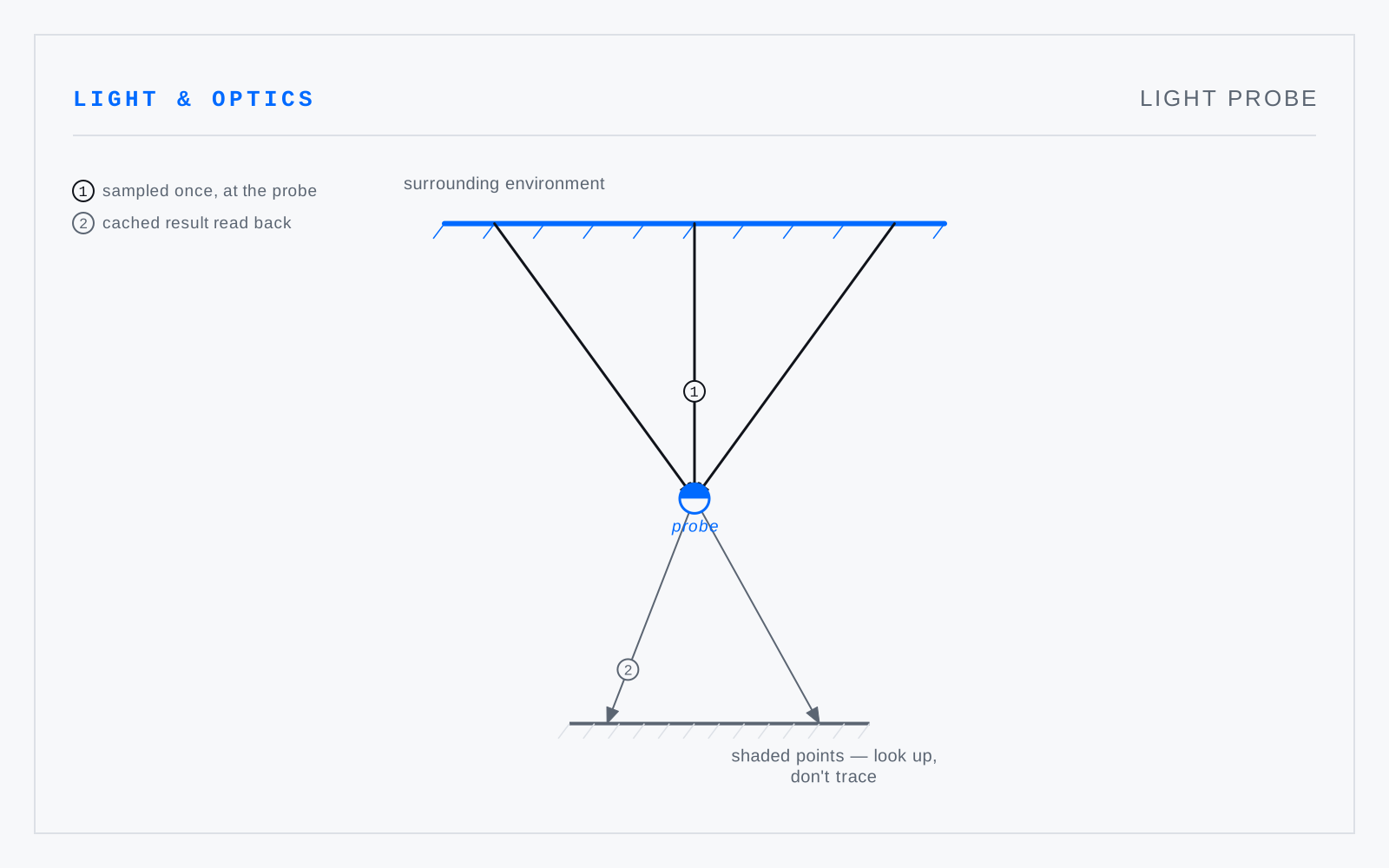
In practice
The phrase also means the physical chrome ball shot on set — which is what an HDRI gets captured from. Same idea, opposite direction.
Not to be confused with
- HDRIA photographic capture of the whole sphere of incident radiance at a point, stored in floating point so the sun stays thousands of times brighter than the sky rather than clipping to white. Used as a source, it supplies direction, colour, softness, and reflection from a real location at once.
- IrradiancePower arriving per unit area of a surface, in watts per square metre — the cosine-weighted integral of incoming radiance over the hemisphere above it. It is a property of a location, retains no direction, and collapses everything arriving there into a single number.