Design Nomenclature / Physical Model Making
SLA
Also called stereolithography, DLP, MSLA, resin printing, vat photopolymerisation
This entry has not been translated yet and is shown in English.
Curing liquid photopolymer layer by layer with light. Resolution is set by optics rather than a nozzle, so fine detail and smooth walls come easily. The trade is real: parts arrive wet with uncured resin, need washing and a post-cure to reach final properties, and stay brittle and UV-sensitive for life.
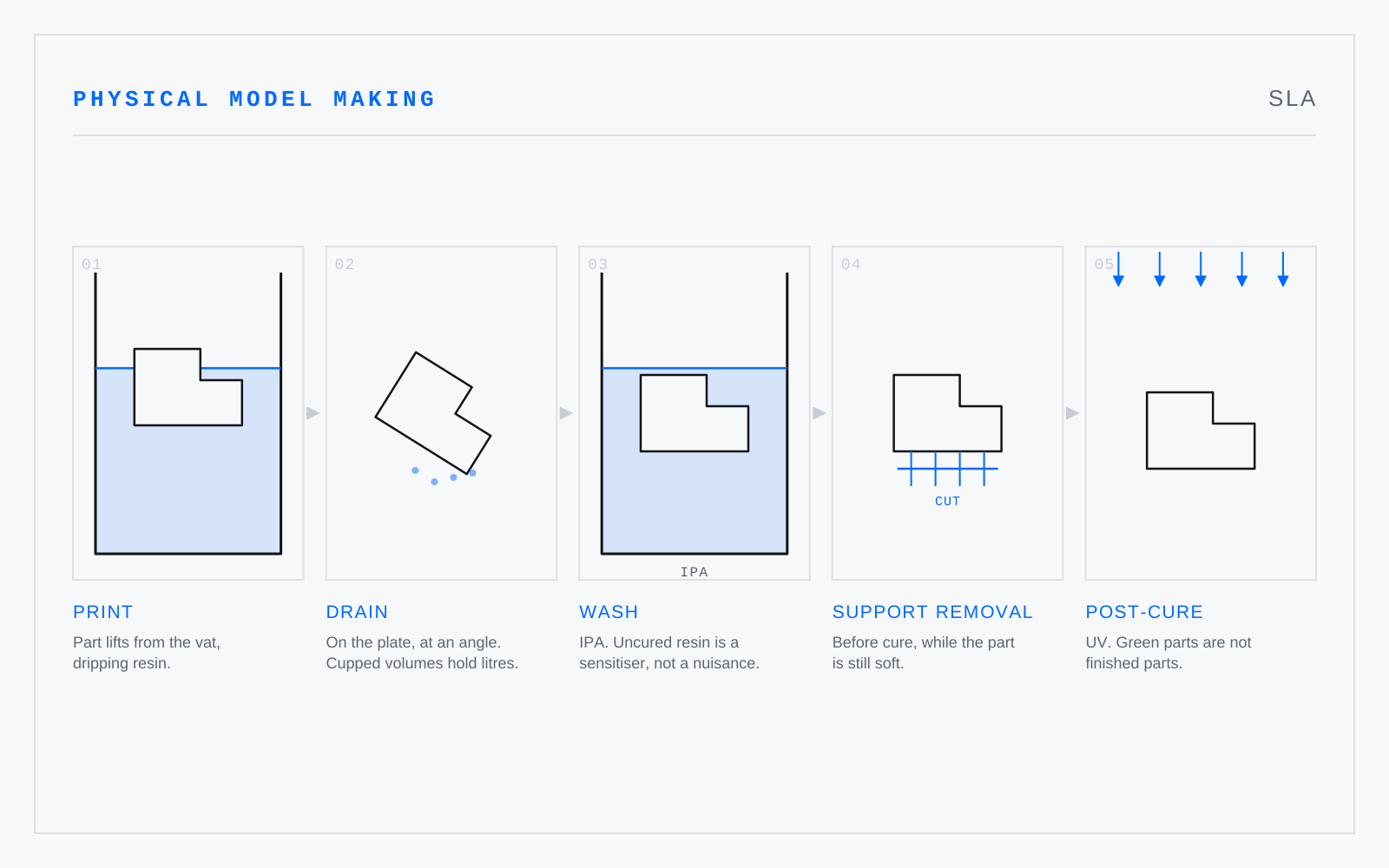
In practice
The shop says "resin printer" for SLA, DLP and LCD alike. The difference is the light source; the workflow, the smell and the mess are identical.
Not to be confused with
- FDMExtruding molten thermoplastic in stacked paths. Cheap, forgiving, dimensionally decent. But the part is a stack of welded beads: strong along the paths, roughly half as strong across them. Layer lines are visible, overhangs need support, and the first layer decides whether the print survives the night at all.
- SLSFusing nylon powder in a heated bed layer by layer, with the unfused powder supporting the part. No support structures at all, so geometry no other process can build comes out in one piece: living hinges, captive parts, deep undercuts. Surfaces are uniformly matte and slightly porous — they dye beautifully and paint badly.