Design Nomenclature / Surface & Material
Tactility
Also called hand-feel, hand, haptic quality
This entry has not been translated yet and is shown in English.
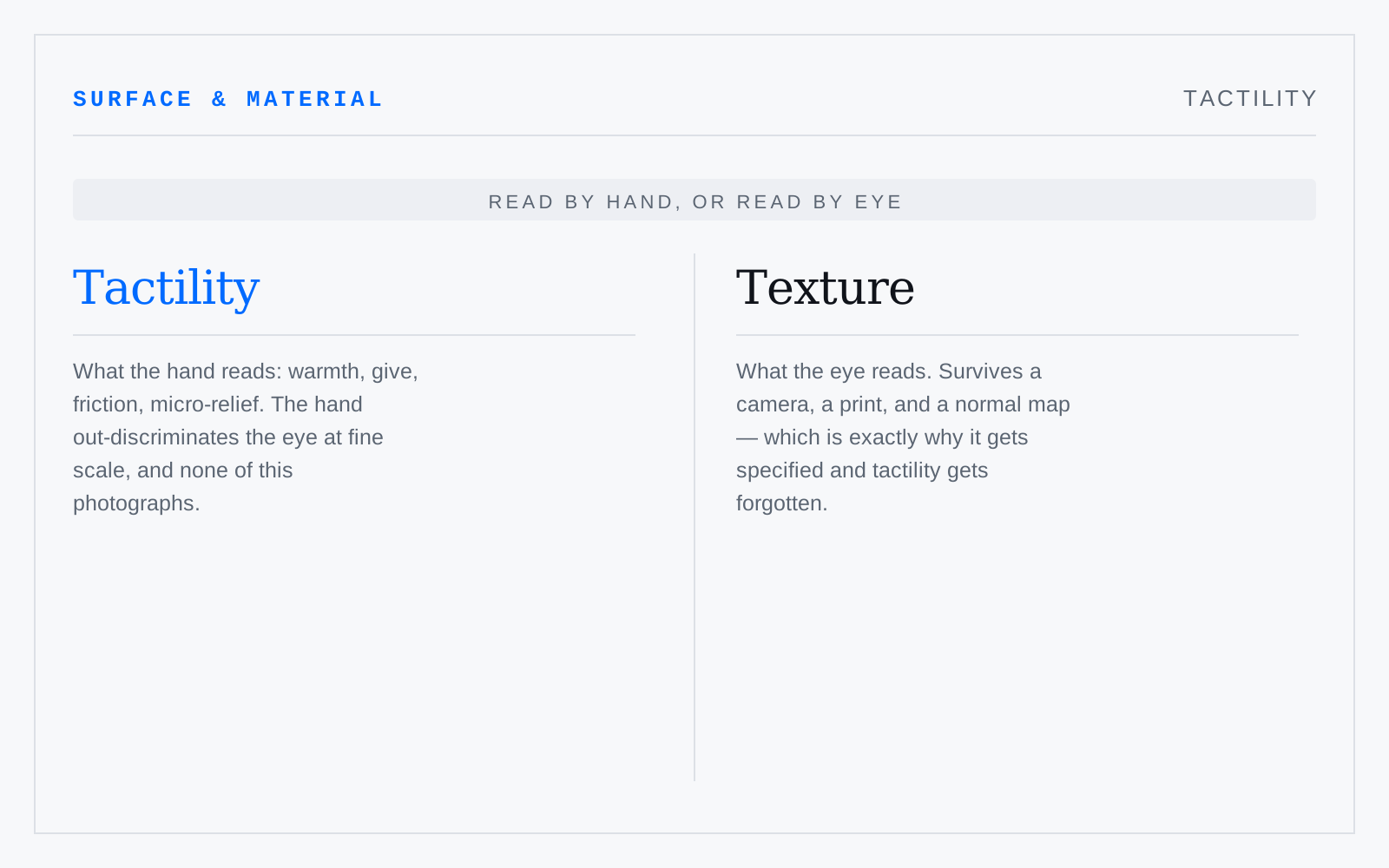
How a surface reads to the hand: thermal conductivity, compliance, friction, micro-relief. Largely uncoupled from appearance — two surfaces that photograph identically can feel nothing alike, and the hand out-discriminates the eye at fine scale. Almost always specified by reference sample, because the vocabulary is far weaker than the perception.
In practice
Textile people say "hand" and mean the whole gestalt. The nearest thing to a number is a coefficient of friction, which captures almost none of it.
Not to be confused with
- TextureThe character of a surface at a scale finer than its form — either tactile, meaning real relief the hand can register, or visual, meaning pattern with no relief at all. The distinction earns its keep because photography, print, and normal maps all exist to convert the first into the second.
- LusterThe character of a surface's reflected light rather than its quantity. Mineralogy names the kinds — vitreous, metallic, waxy, resinous, greasy, silky, adamantine, dull — and they are not points on one scale. Two surfaces can meter identical gloss and read as entirely different materials, because luster folds in transparency, subsurface scattering, and structure.