Design Nomenclature / Color
Triadic
Also called triad
- Color
- Composition
- 2D & 3D
This entry has not been translated yet and is shown in English.
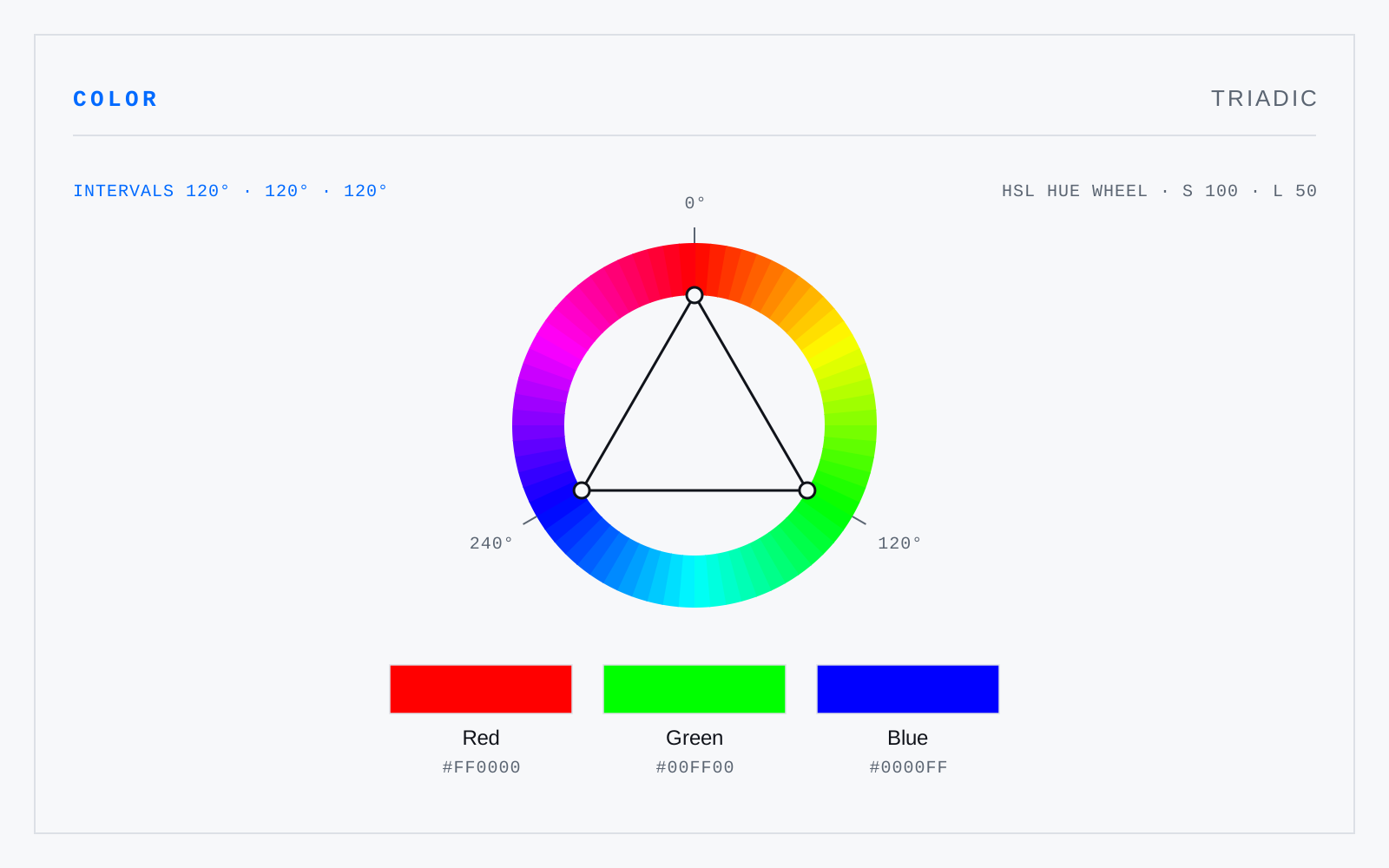
Three hues spaced 120 degrees apart: maximum spread with perfect symmetry, which is also the difficulty. Three equally strong hues compete for the same job, so a triad only resolves once one hue takes the field by area and the other two are demoted to accents.
Not to be confused with
- Split-complementaryA hue paired with the two hues flanking its complement, roughly 150 and 210 degrees away. It keeps the tension of a complementary pair while removing the vibration of true opposites, which makes it the most forgiving three-hue scheme: hard to make ugly, hard to make memorable.
- TetradicTwo complementary pairs together, arranged as a square at ninety degrees or as a rectangle at unequal intervals. Four hues is more than most compositions can carry, so the scheme needs a firm hierarchy and in practice collapses to one dominant hue, its complement, and two accents.