Design Nomenclature / Physical Model Making
Welding
Also called fusion welding, TIG, MIG, arc welding
This entry has not been translated yet and is shown in English.
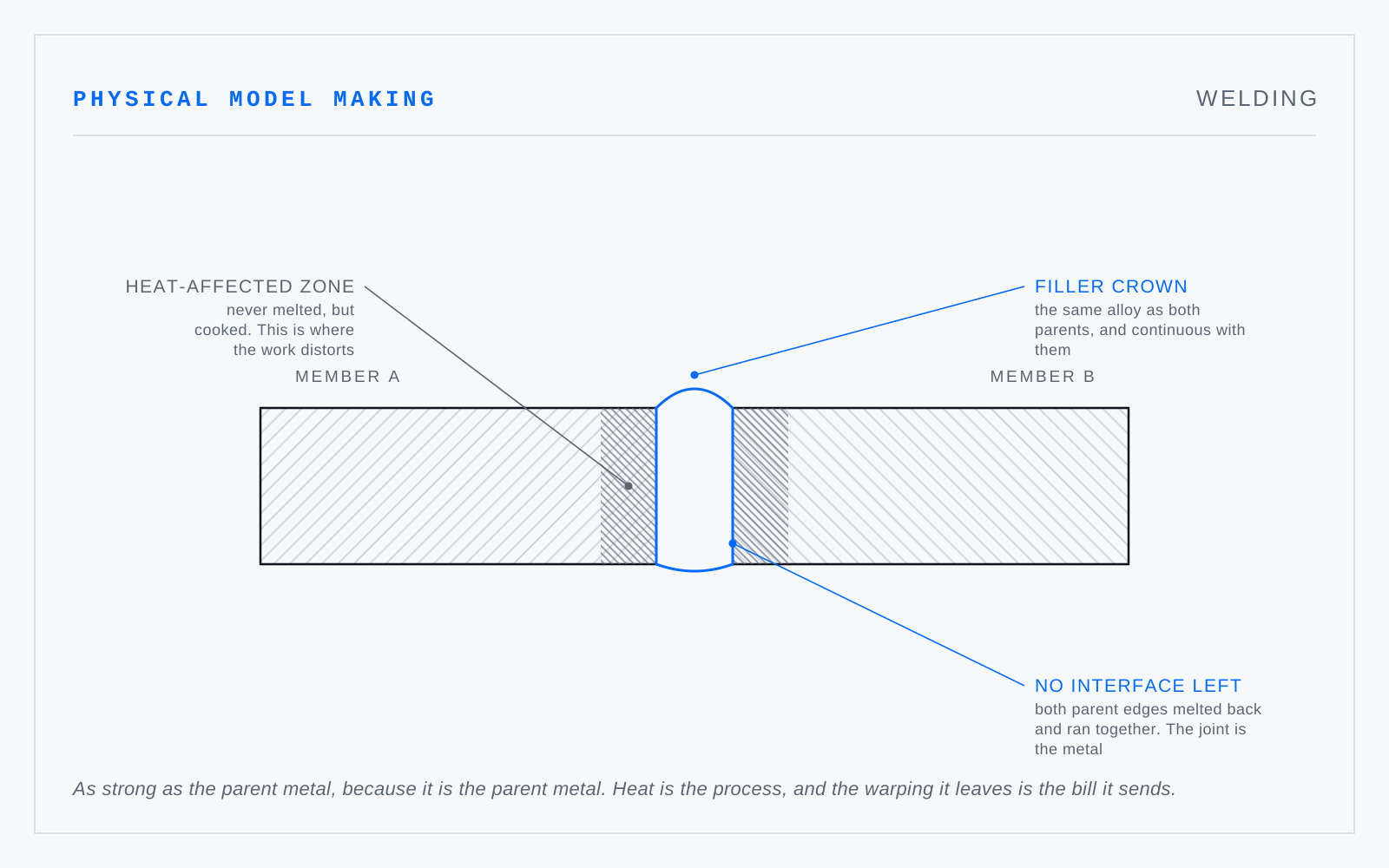
Joining metals by melting the parent material of both parts so they fuse into one, usually with filler of the same alloy. The joint is as strong as the metal because it is the metal. It also distorts the work as it cools: heat is the process, and warping is the bill it sends.
Not to be confused with
- BrazingJoining with a filler that melts above roughly 450 °C while the parent metal stays solid throughout. The filler wets both surfaces and capillary action draws it into the gap, so strength depends on clearance — a few thousandths, no more. It joins dissimilar metals that cannot be welded to one another.
- SolderingJoining with a filler melting below roughly 450 °C, wetting surfaces that flux has cleaned. The result is a mechanical and electrical connection, not a structural one — solder is far weaker than anything it joins. Cold joints come from a cold workpiece: heat the parts and let them melt the wire.
- Solvent weldNot glue. The solvent dissolves both faces and they fuse into one piece of plastic as it flashes off. Works only where a solvent for the polymer exists — acrylic, styrene, ABS and PVC yes; polyethylene, polypropylene and PTFE never. Capillary action pulls it into a tight joint, so fit matters far more than pressure.