Design Nomenclature / Composition
Balance
- Composition
- 2D & 3D
This entry has not been translated yet and is shown in English.
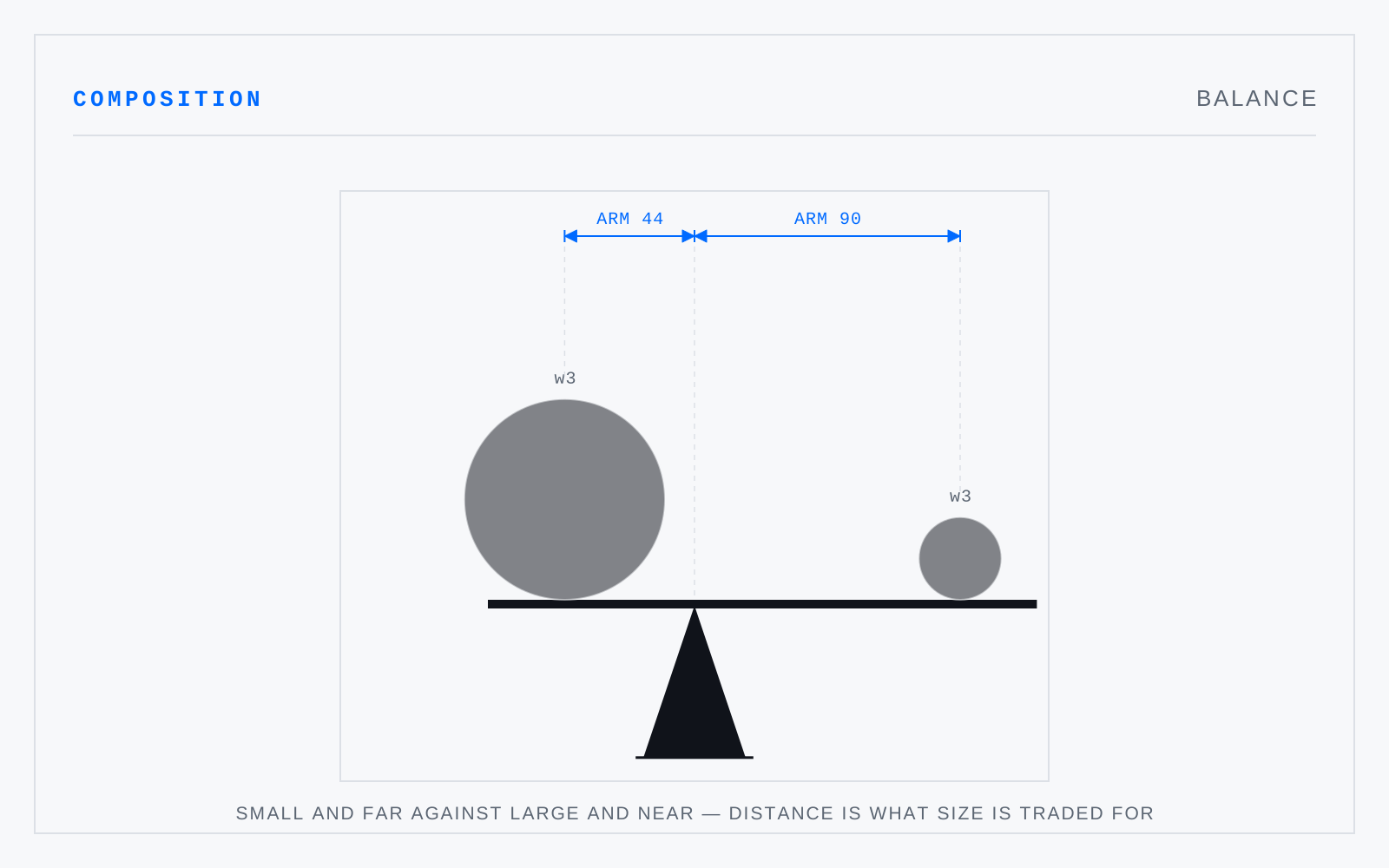
The distribution of visual weight about an axis or a centre so that no part of the field seems to fall. It is judged, not measured. Bilateral balance works across an axis, radial balance around a point, asymmetrical balance by trading a small dense element against a large quiet one.
In practice
Two unrelated senses collide. Compositional balance is weight about an axis; colour balance is a white-point correction. Nothing connects them but the word.
Not to be confused with
- SymmetryCorrespondence of parts across an axis, a centre, or a translation. As a compositional principle it buys immediate stability and reads as order, formality, or stillness; it also flattens hierarchy, since parts that mirror each other cannot easily rank each other. Vertical-axis symmetry is detected fastest.
- Visual weightThe apparent pull of an element — how much of the eye it takes. Size, value contrast against the ground, saturation, density, complexity, isolation, and distance from centre all feed it. No formula combines them, which is why weight is compared between elements rather than assigned to one.