Design Nomenclature / Composition
Bleed
Also called full bleed, bleed allowance
This entry has not been translated yet and is shown in English.
Artwork extended past the trim line so that trim variance never leaves a white sliver at the edge — conventionally 3mm or one-eighth inch. 'Full bleed' names the intended result, ink to the edge, which is only achieved by printing beyond the edge and cutting the surplus off.
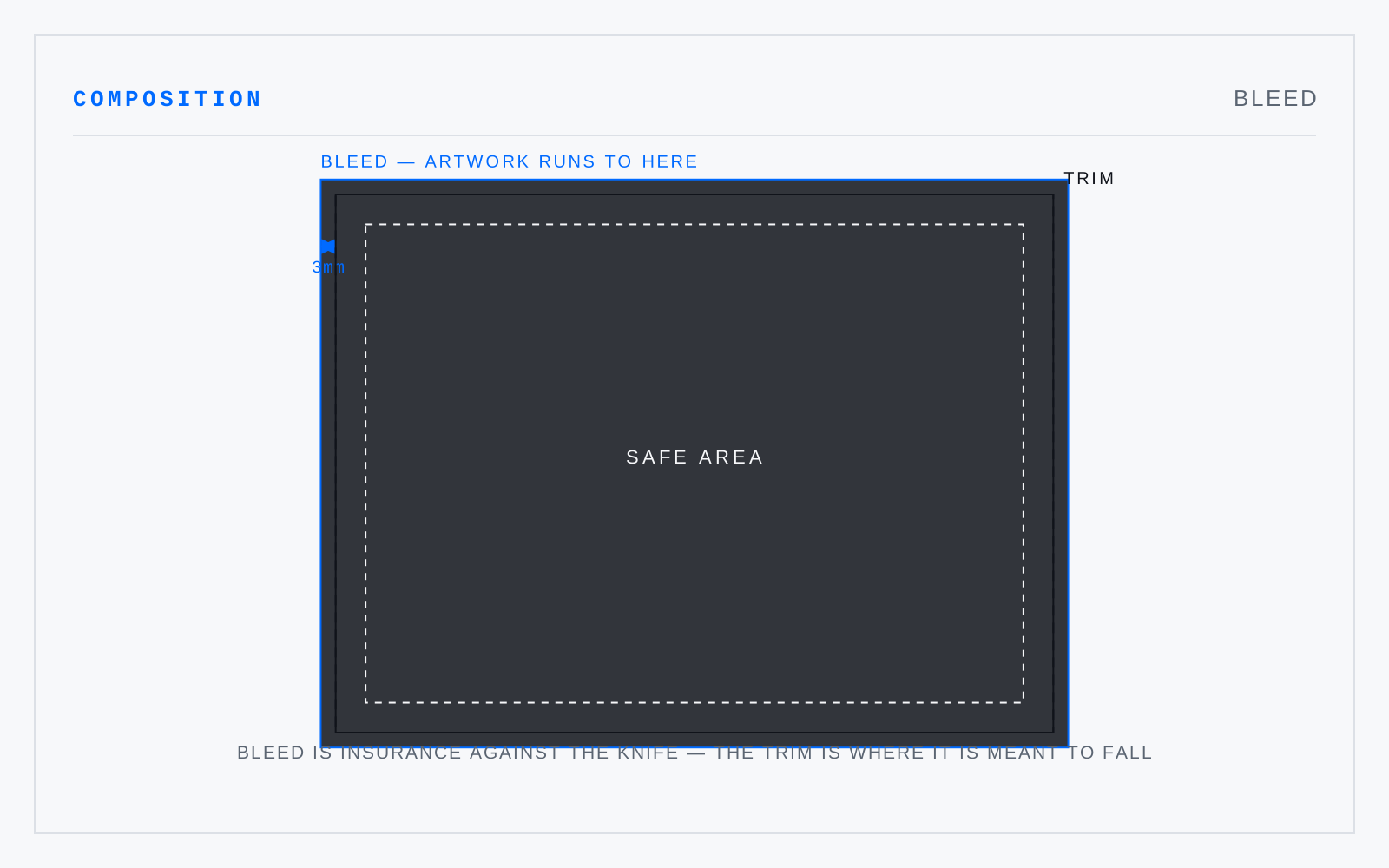
In practice
Screen work borrowed 'full bleed' for edge-to-edge with no trim involved. Harmless, but there is no allowance and nothing gets cut — the word is doing metaphor there.
Not to be confused with
- CropThe decision of what the frame excludes. Cropping changes scale, weight, and reading all at once — a face cut at the crown reads closer than one with air above it — and it operates on the image's content. What is cut is as compositional as what is kept.
- MarginThe unmarked band between the live area and the trim. Margins are not leftover: they hold the block in place optically, absorb trim variance, and give hands somewhere to sit. Classical page canons set them by ratio, with outer and foot larger than inner and head.
Origin
From ink bleeding past a boundary. The printer's term names the deliberate overrun that guarantees coverage once a stack of sheets is trimmed with real-world tolerance.