Design Nomenclature / Physical Model Making
Buck
Also called forming buck, hammerform, plug, form
This entry has not been translated yet and is shown in English.
A rigid form that sheet material is shaped over — vacuum-formed, hammered, or laid up against. It carries the outside surface of the part and absorbs all the abuse, so it gets built from MDF, tooling board or laminated ply rather than anything anyone would miss.
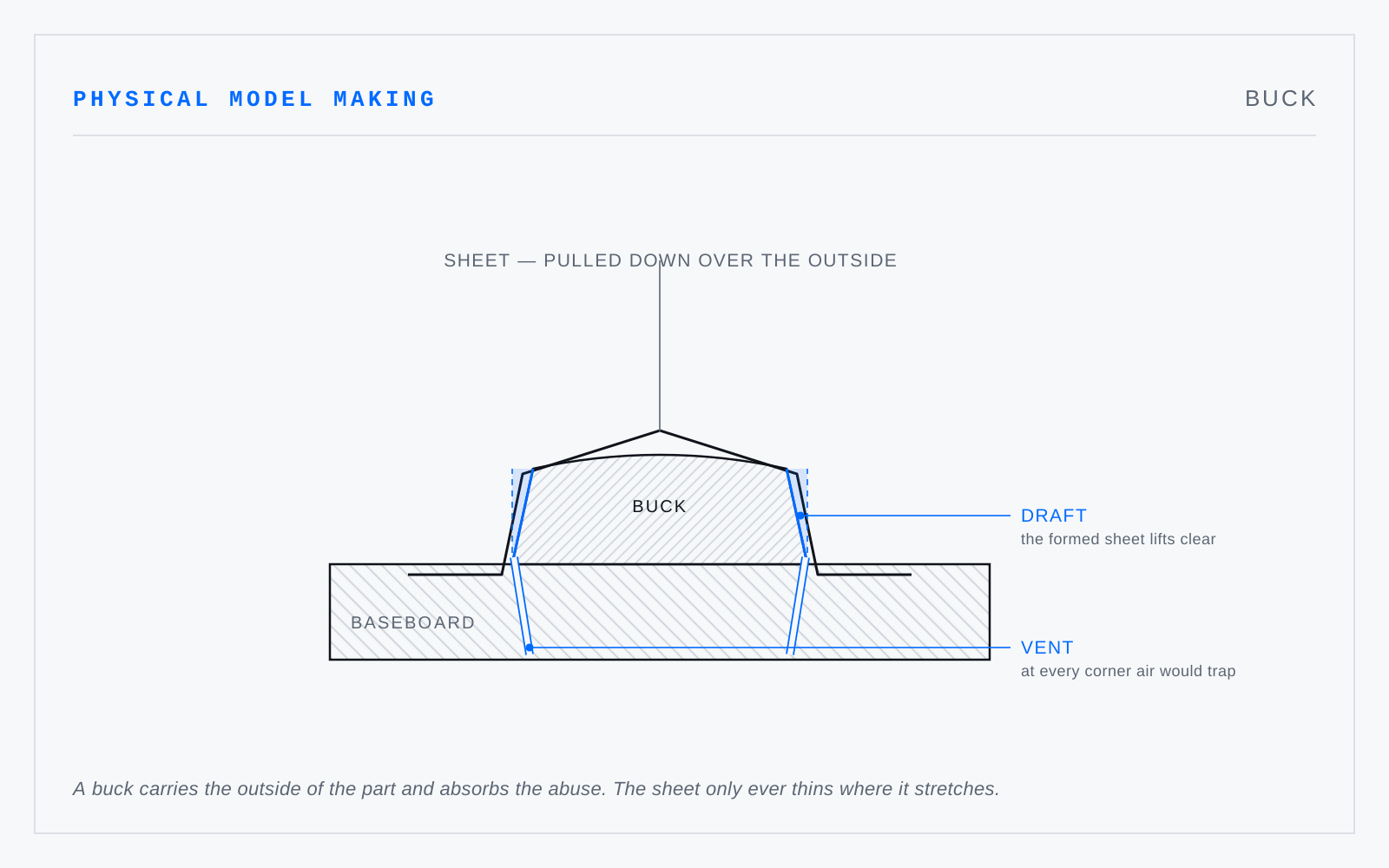
Not to be confused with
- PatternThe object a mould is made from. It carries every surface the casting will have, plus the allowances the casting will not: draft so it releases, and extra size to cover shrinkage. A pattern is tooling, not a deliverable — it can be crude everywhere it does not touch the mould.
- MoldThe negative that gives cast or formed material its shape. One-part block moulds suit simple forms with a flat back; two-part moulds split along a parting line; glove moulds are thin silicone skins backed by a rigid mother mould, used where a solid block of rubber would cost more than the job is worth.
Origin
From coachbuilding: the wooden skeleton a body was beaten over was the buck. The sense is a sawbuck's — a frame that holds work — not the animal and not the dollar.