Design Nomenclature / Digital Model Making
Catmull-Clark
Also called Catmull-Clark subdivision, CC subdivision
This entry has not been translated yet and is shown in English.
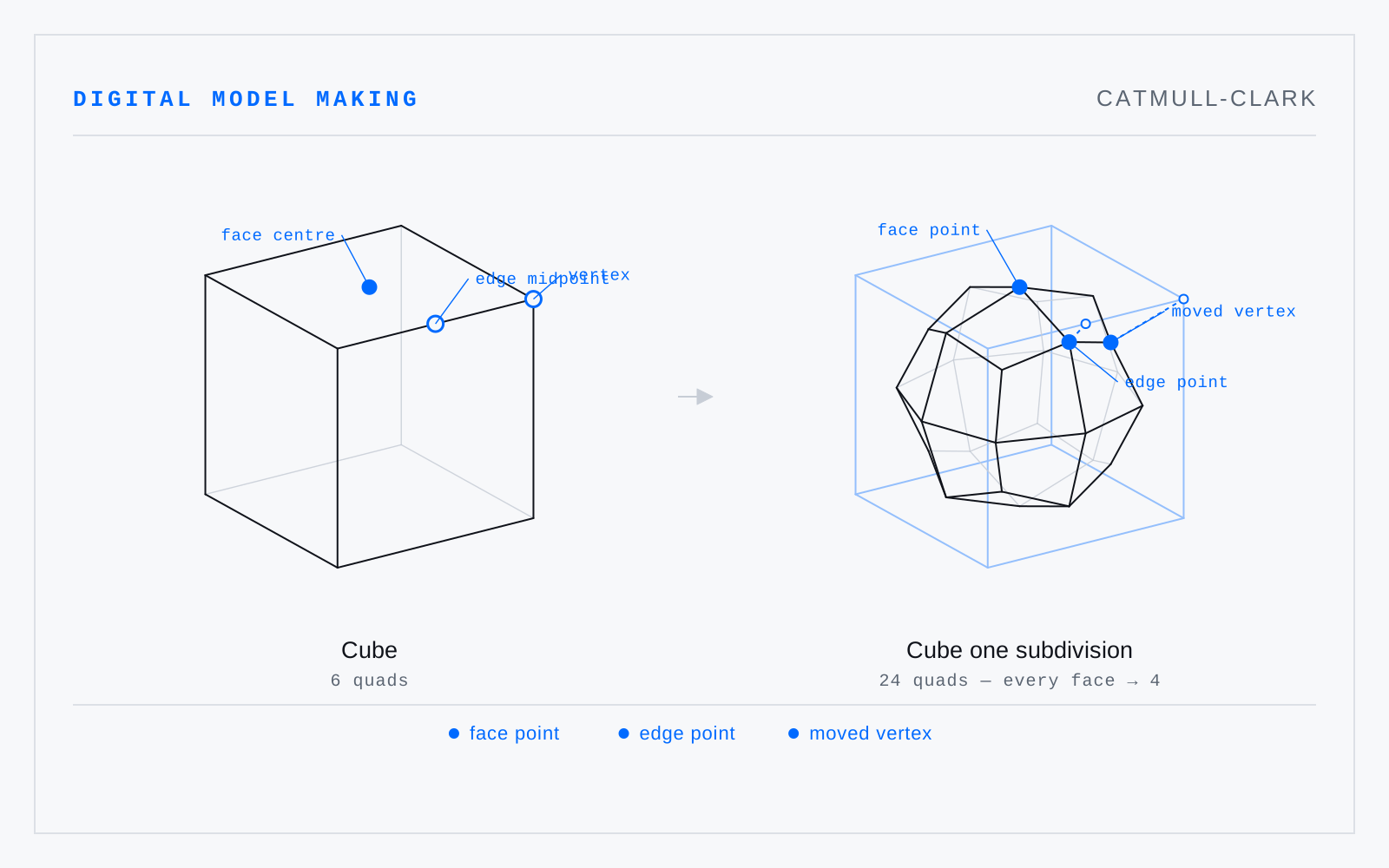
The subdivision rule for quad-dominant meshes: each face yields a face point, each edge an edge point, and original vertices move toward the average of their neighbours. Every face becomes a quad after one step, whatever the input — triangles and n-gons are converted, not preserved.
In practice
Loop subdivision is the triangle-mesh equivalent, named for Charles Loop — not for edge loops. That coincidence misleads people constantly.
Not to be confused with
Origin
Published in 1978 by Edwin Catmull and Jim Clark, who went on to found Pixar and Silicon Graphics respectively. Two surnames, one hyphen, one algorithm — not a description of anything it does.