Design Nomenclature / Surface & Material
Emissive
Also called emission, emissive map, self-illumination, glow
This entry has not been translated yet and is shown in English.
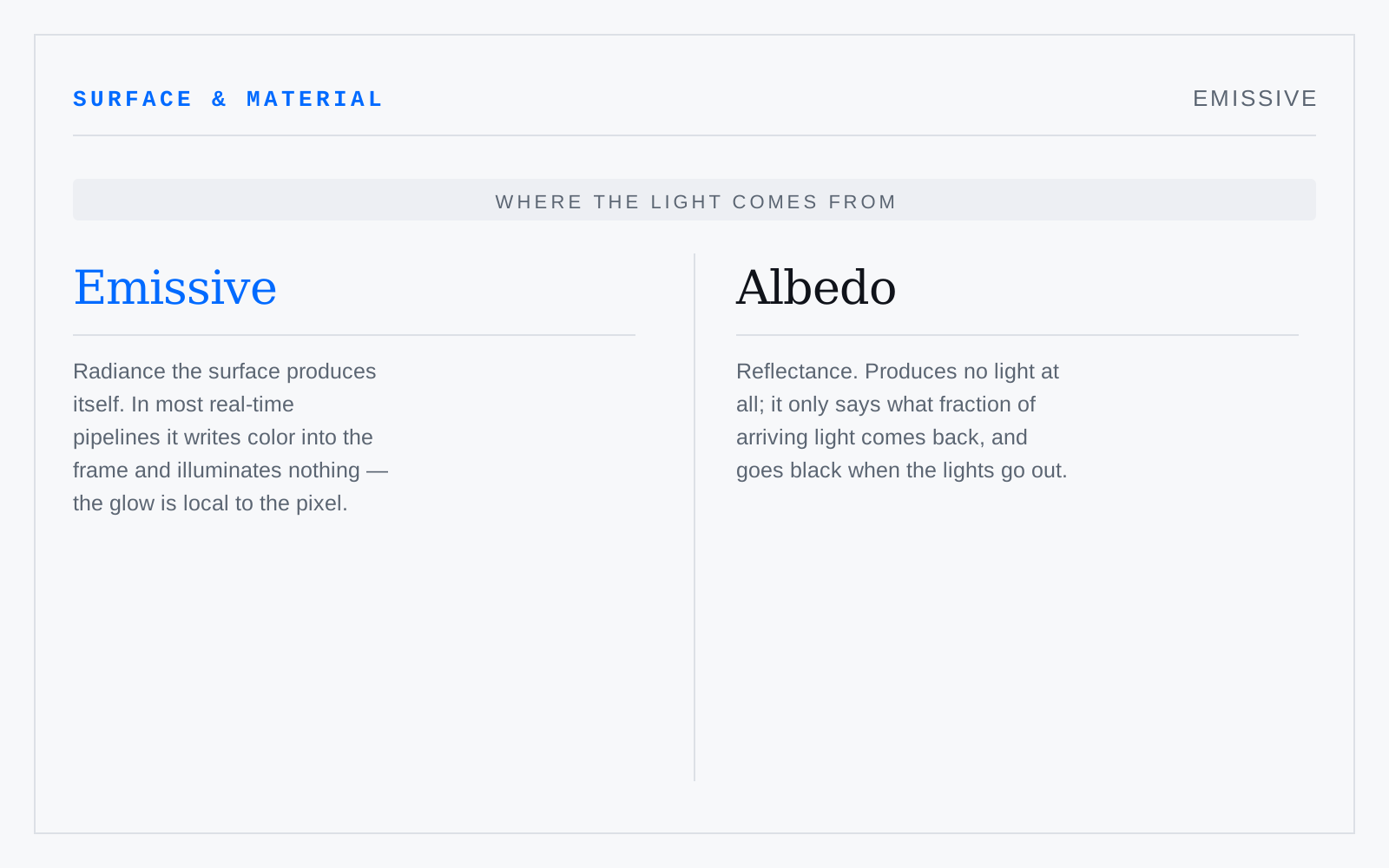
Radiance a surface produces on its own, independent of anything illuminating it — a screen, an LED, hot metal. In most real-time pipelines it only writes color into the frame and lights nothing around it. Whether it acts as an actual light source is a property of the renderer, not the material.
In practice
Routinely doubled up with a real light at the same position, because the map alone will not cast. Everyone does it; nobody calls it a workaround.
Not to be confused with
- Energy conservationThe constraint that a surface cannot return more light than it receives. Diffuse and specular responses draw on one budget, so a brighter highlight implies a dimmer body. Enforced by normalizing the BRDF, not by the artist. Pre-PBR shaders violated it freely, which is why they fell apart under new lighting.
- AlbedoThe fraction of incident light a surface returns by diffuse scattering, per wavelength band — the color light acquires after entering a dielectric, bouncing, and leaving. Bounded in practice: real materials rarely exceed 0.9 or fall below 0.03. Under metal/rough conventions the same channel supplies conductors' normal-incidence specular reflectance instead.