Design Nomenclature / Composition
Grid
Also called layout grid, typographic grid
This entry has not been translated yet and is shown in English.
A structure of repeated divisions — columns, rows, gutters, margins — fixing where elements may start and stop. Its value is decisional rather than aesthetic: it turns each placement from a judgment into a lookup, so a body of pages holds together across time and across hands.
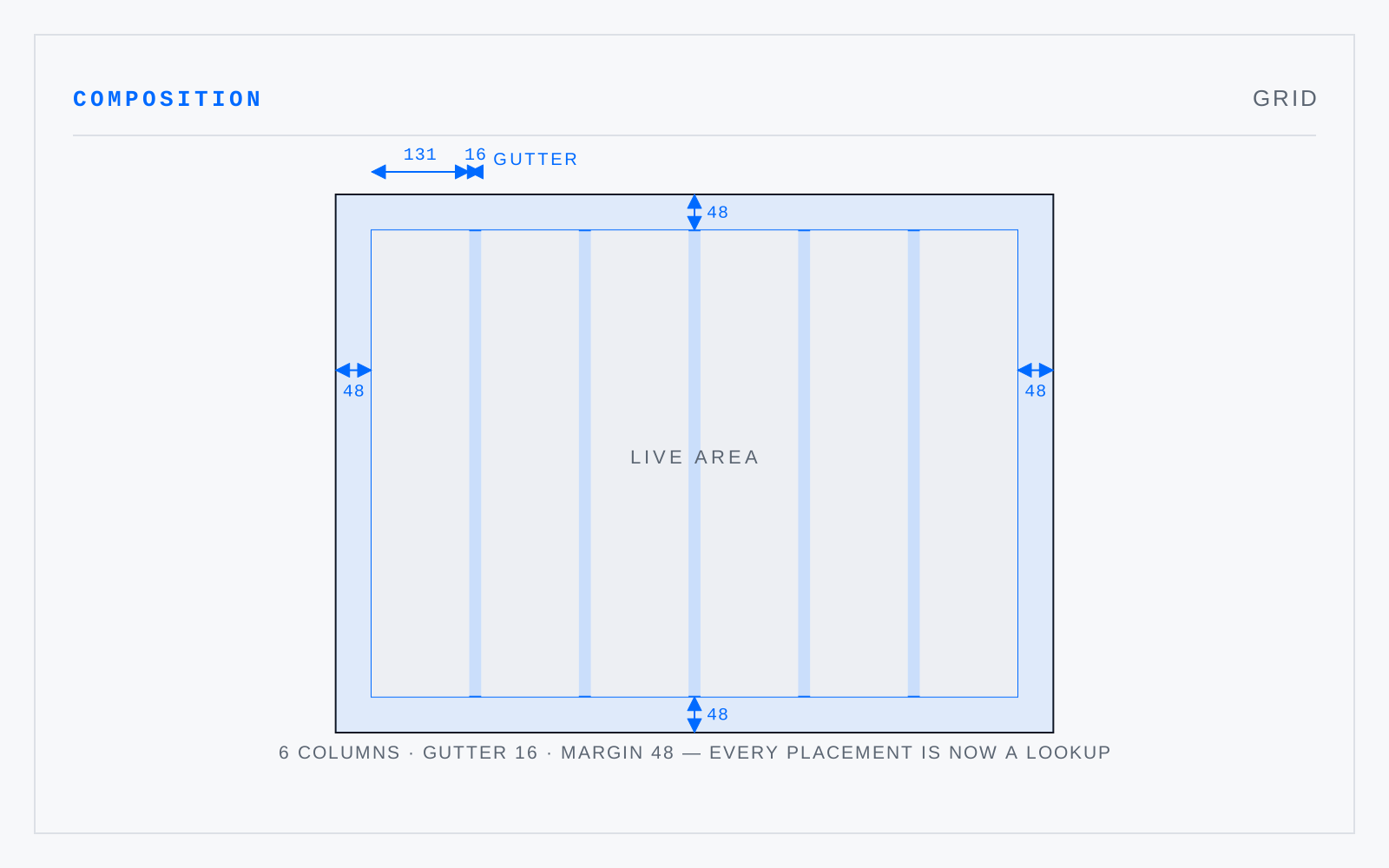
In practice
'On the grid' often means only that left edges align. A grid is a decision-reduction device; if it isn't reducing decisions, it's decoration.
Not to be confused with
- AlignmentThe sharing of an edge or an axis by elements not otherwise connected. Alignment creates an implied line the eye follows and structure it can trust, and it is binary: elements align or they do not. Near-alignment is the most common and most visible error in layout.
- Baseline gridAn invisible ruling at a fixed interval to which every baseline in a layout snaps, so text in adjacent columns aligns line for line and headings, images and rules land on the same increments. On the web it is enforced by making every vertical measurement a multiple of the body line-height rather than by an actual grid.