Design Nomenclature / Type

OpenType

Also called OTF, OpenType features, otf

This entry has not been translated yet and is shown in English.

The font format in universal use since the late 1990s, holding either TrueType or PostScript/CFF outlines in one file, Unicode-mapped, cross-platform, and — the part designers care about — carrying layout tables. GSUB substitutes glyphs, GPOS positions them; between them they drive ligatures, small caps, figure sets, alternates and kerning.
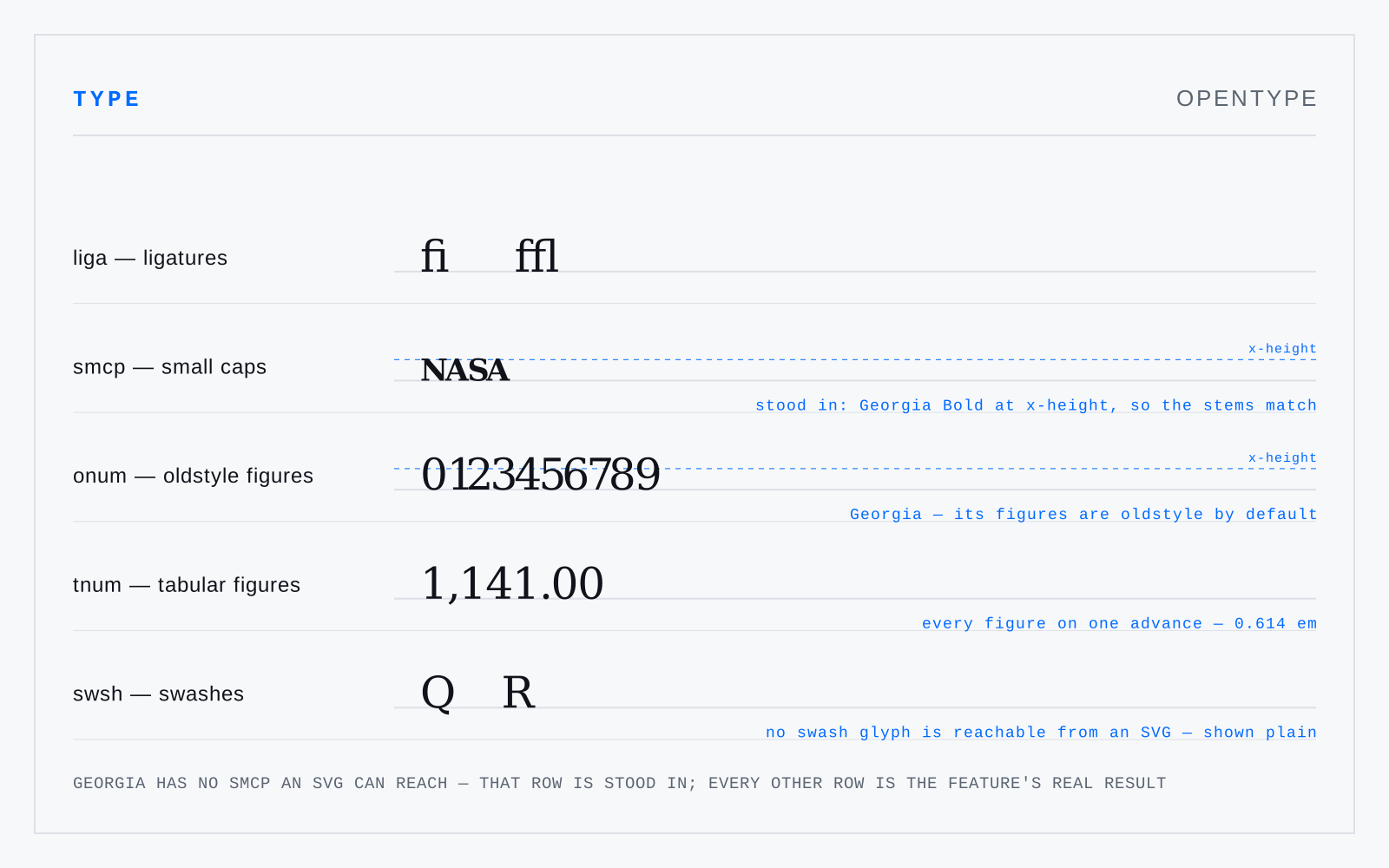
Five rows, each labelled with its four-letter OpenType tag and showing what that tag produces — the result only, not a default beside it, since an SVG cannot switch GSUB on. liga sets Georgia's real fi and ffl glyphs. smcp sets NASA in Georgia Bold at x-height, noted as a stand-in because no small-cap glyph is reachable. onum sets 0123456789 in Georgia's own figures, which are oldstyle by default — 6 and 8 ascend, 3 4 5 7 9 drop. tnum sets 1,141.00 with every figure on one 0.614 em advance. swsh sets a plain Q and R, noted as unreachable.

In practice

"OpenType features" in a specimen means the GSUB/GPOS tags: liga, dlig, smcp, onum, tnum, swsh. In CSS, reach for font-variant-* first and font-feature-settings only when there's no property for what you need.

Not to be confused with

How this term connects

DevanagariFaux small capsFontItalicKerningLigatureLining figuresOldstyle figuresRight-to-leftScriptSmall capsSubsettingTabular figuresTypefaceUnits per emVariable fontOpenType
Related Confused with