Design Nomenclature / Color
Posterization
Also called posterisation, tone separation, quantization
- Color
- Digital Model Making
- 2D & 3D
This entry has not been translated yet and is shown in English.
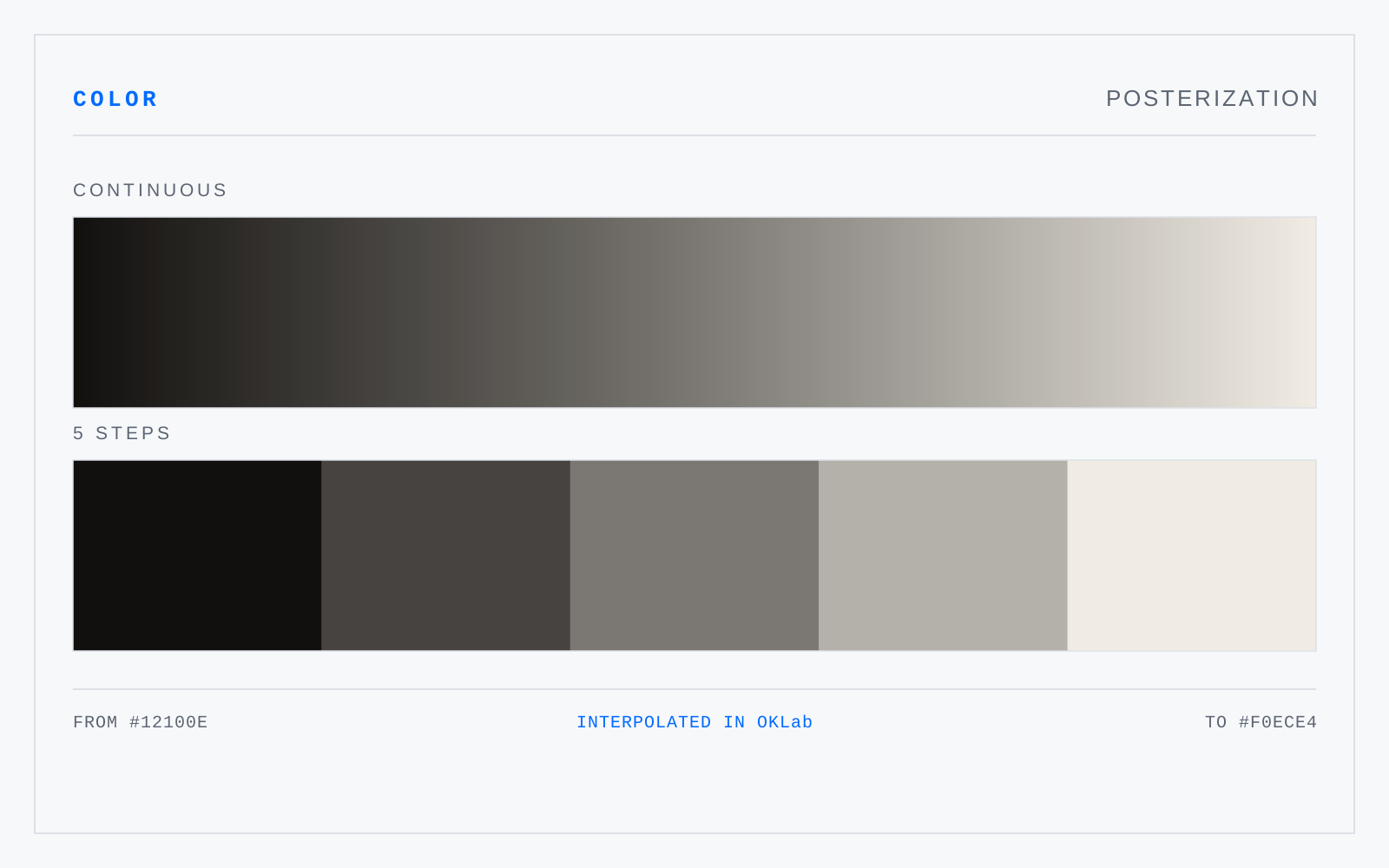
Reduction of a continuous tonal range to a small number of flat steps, named after the flat-inked poster it imitates. As an effect it is a decision; as an artifact it is the same operation arriving uninvited — which is why the word does duty for both a technique and a defect and gets argued about accordingly.
In practice
When it happens by accident most people call it banding. The distinction worth keeping: posterization is the quantization, banding is what you see when the quantization is too coarse.
Not to be confused with
- BandingVisible steps in a gradient that should read as continuous, caused by too few code values across the range being covered — eight-bit encoding over a long shallow ramp is the usual culprit. Mach banding compounds it: the eye exaggerates edges, so each step acquires an illusory dark and light lip it does not have.
- DitheringDistributing quantization error across neighbouring pixels so a limited palette approximates colors it does not contain. Ordered dithering thresholds against a fixed matrix and shows its grid; error diffusion pushes each pixel's residue onto its unprocessed neighbours and looks organic. Both trade visible noise for the banding that plain rounding would give.