Design Nomenclature / Color
RGB
Also called red green blue
This entry has not been translated yet and is shown in English.
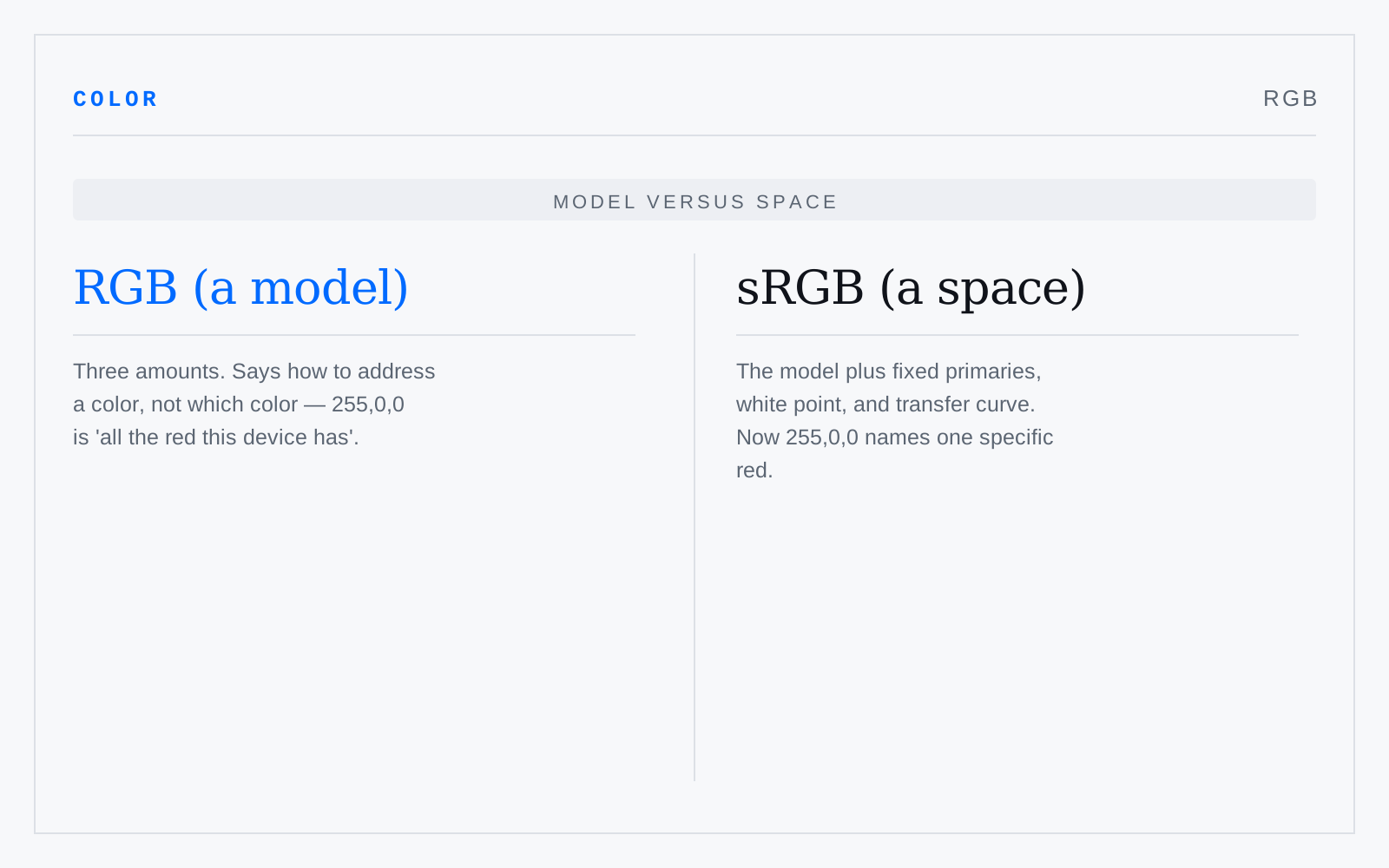
An additive model addressing color as amounts of red, green, and blue primaries. RGB by itself specifies nothing absolute: the same triplet means different colors on different devices until a space pins down the primaries, the white point, and the transfer curve. RGB without a profile is a coordinate with no map.
In practice
Used loosely to mean sRGB, which by default it usually is — an assumption that breaks the moment wide-gamut displays or camera raw enter the room.
Not to be confused with
- sRGBThe 1996 HP and Microsoft standard, written to describe a typical CRT and still the default assumption of the untagged web. Its gamut is small — it cannot reach a saturated cyan or a traffic-cone orange — but ubiquity made it the floor everything else gets measured against.
- CMYKThe subtractive process set: cyan, magenta, yellow, and a key black. Black is there because real inks are impure and CMY overprint gives a muddy brown, and because laying three wet inks where one would do is slow to dry, expensive, and blurs anything as fine as text.
- Additive colorMixing by summing emitted light: red, green, and blue primaries combine toward white, and every addition raises luminance. Screens, stage lighting, and projection work this way. The primaries were chosen to address the eye's three cone types — there is nothing special about those wavelengths in the physics.