Design Nomenclature / Physical Model Making
Mold
Also called mould, tool, die, cavity, negative
This entry has not been translated yet and is shown in English.
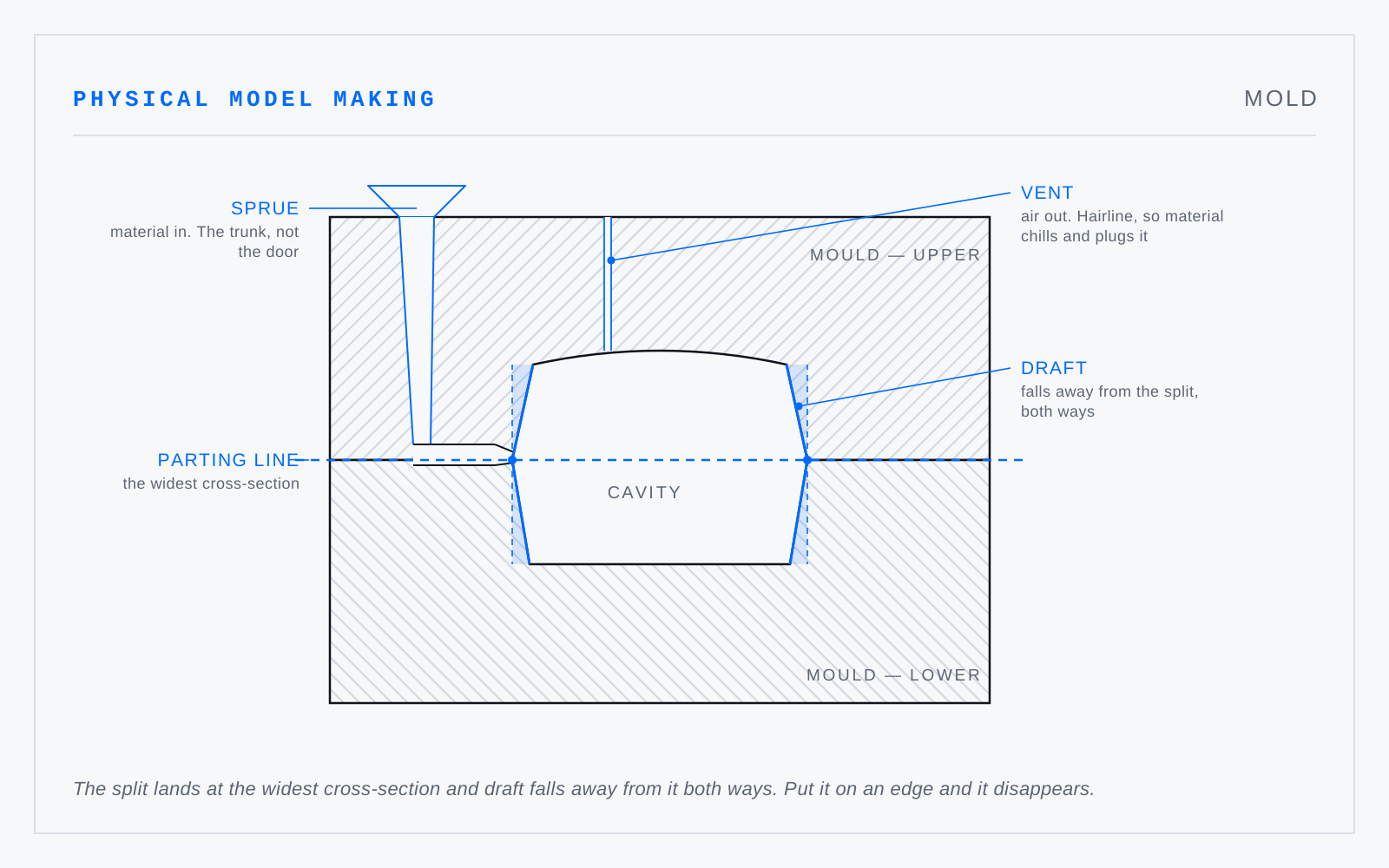
The negative that gives cast or formed material its shape. One-part block moulds suit simple forms with a flat back; two-part moulds split along a parting line; glove moulds are thin silicone skins backed by a rigid mother mould, used where a solid block of rubber would cost more than the job is worth.
In practice
Injection people say "tool," stamping people say "die," casting people say "mould" — one object, three trades. Anyone who says "the tool" and means a cutter is in a fourth.
Not to be confused with
- PatternThe object a mould is made from. It carries every surface the casting will have, plus the allowances the casting will not: draft so it releases, and extra size to cover shrinkage. A pattern is tooling, not a deliverable — it can be crude everywhere it does not touch the mould.
- MasterThe finished original a mould is taken from when the goal is copies of that exact object — usually the appearance model itself, surfaced and painted before moulding. Where a pattern is built in order to be moulded, a master is built to be looked at, and gets moulded because it came out well.