Design Nomenclature / Surface & Material
Nap
Also called pile, raised nap, flocking
This entry has not been translated yet and is shown in English.
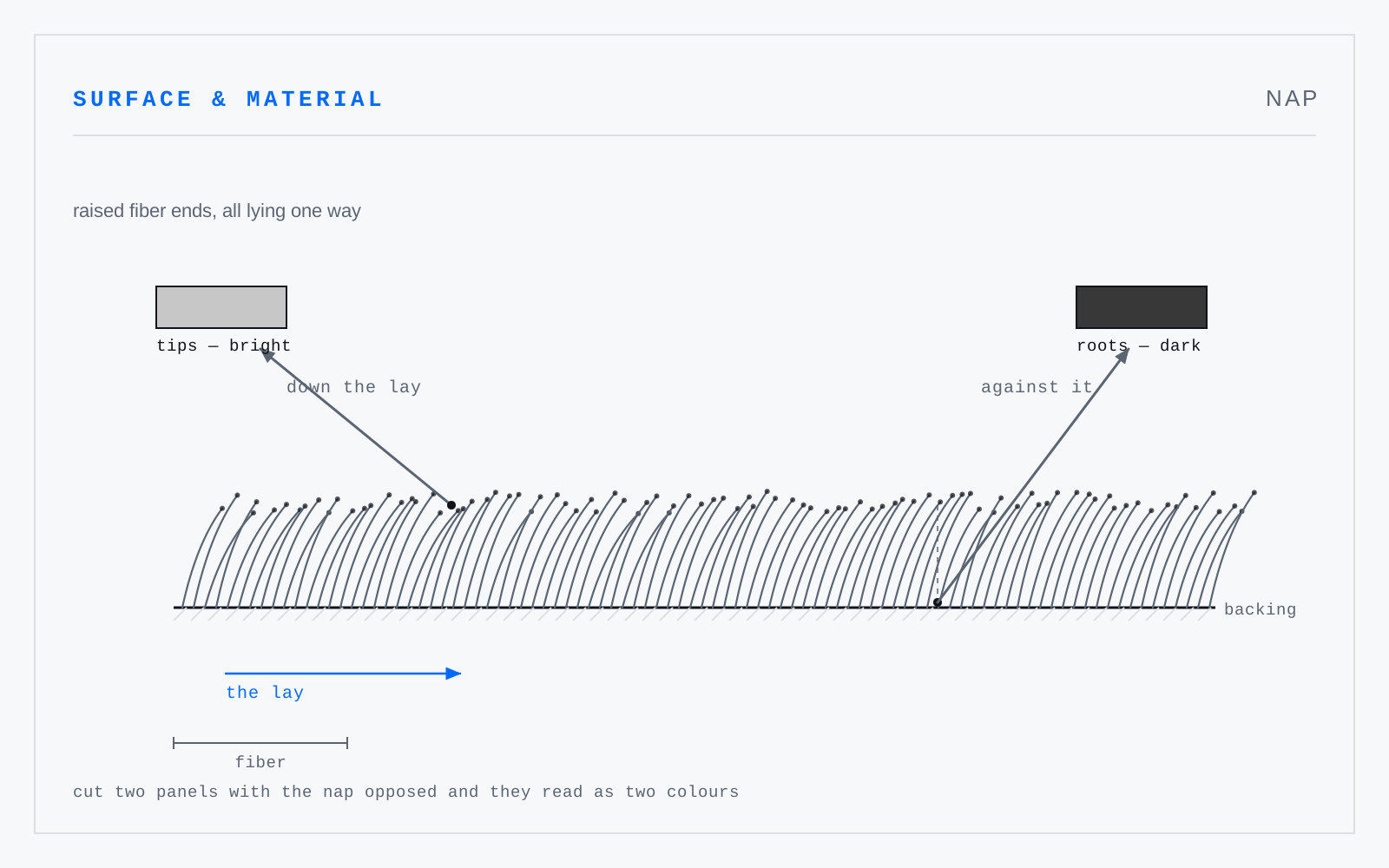
Raised fiber ends standing off a textile or paper and lying in one direction, so the surface reflects and feels different with the lay and against it. Velvet, suede, corduroy, flocking. Cut two panels of a garment with the nap running opposite ways and they will read as two different colors.
Not to be confused with
- GrainThe directional structure a material carries from how it was made — fibers aligned in wood and paper, silver halide in film, the rolling direction in sheet metal. Because it is directional it has a with and an against, which is why paper tears straight one way and wood planes clean one way and tears out the other.
- ToothThe fine mechanical roughness that lets a medium grab a substrate. Pastel, charcoal, and ink hold to a sheet's tooth; primer keys to a sanded panel. It is finite — a surface takes a limited number of layers before the tooth loads up and stops accepting more, which is a working constraint, not a defect.
- SheenAn extra grazing-angle lobe layered over the base response to approximate the soft bloom of fabric, where light catches the protruding ends of fibers standing off the surface. In the Disney formulation it is a tuned artistic control with no measured referent; later fiber-scattering models give it a physical basis it did not originally have.
Origin
Middle English noppe, the fuzz on cloth, from Middle Dutch. Napping was a finishing step — raising the fibers deliberately — long before it named the result.