Design Nomenclature / Composition
Optical center
Also called optical centre, visual center, visual centre
This entry has not been translated yet and is shown in English.
The point a viewer takes for the centre of a field, which sits above the geometric centre — conventionally by around five percent of the height, more in tall formats. Anything centred by measurement therefore reads as low, and has to be raised in order to look centred.
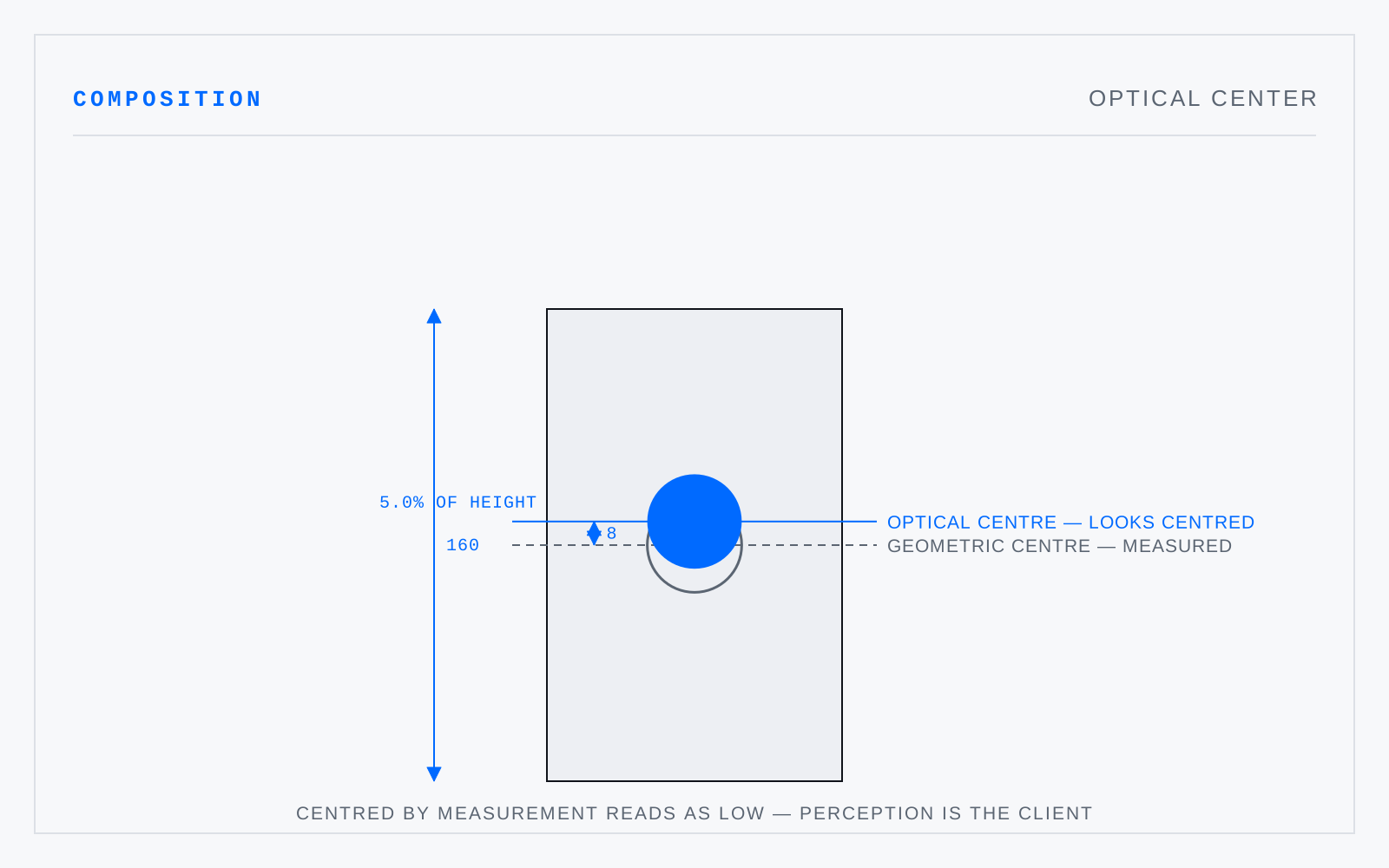
In practice
The same disagreement as optical alignment in type: measurement and perception diverge, and perception is the client. Nobody has ever complained that a title was mathematically wrong.
Not to be confused with
- AlignmentThe sharing of an edge or an axis by elements not otherwise connected. Alignment creates an implied line the eye follows and structure it can trust, and it is binary: elements align or they do not. Near-alignment is the most common and most visible error in layout.
- BalanceThe distribution of visual weight about an axis or a centre so that no part of the field seems to fall. It is judged, not measured. Bilateral balance works across an axis, radial balance around a point, asymmetrical balance by trading a small dense element against a large quiet one.