Design Nomenclature / Composition
Symmetry
Also called bilateral symmetry, mirror symmetry
- Composition
- Form & Geometry
- 2D & 3D
This entry has not been translated yet and is shown in English.
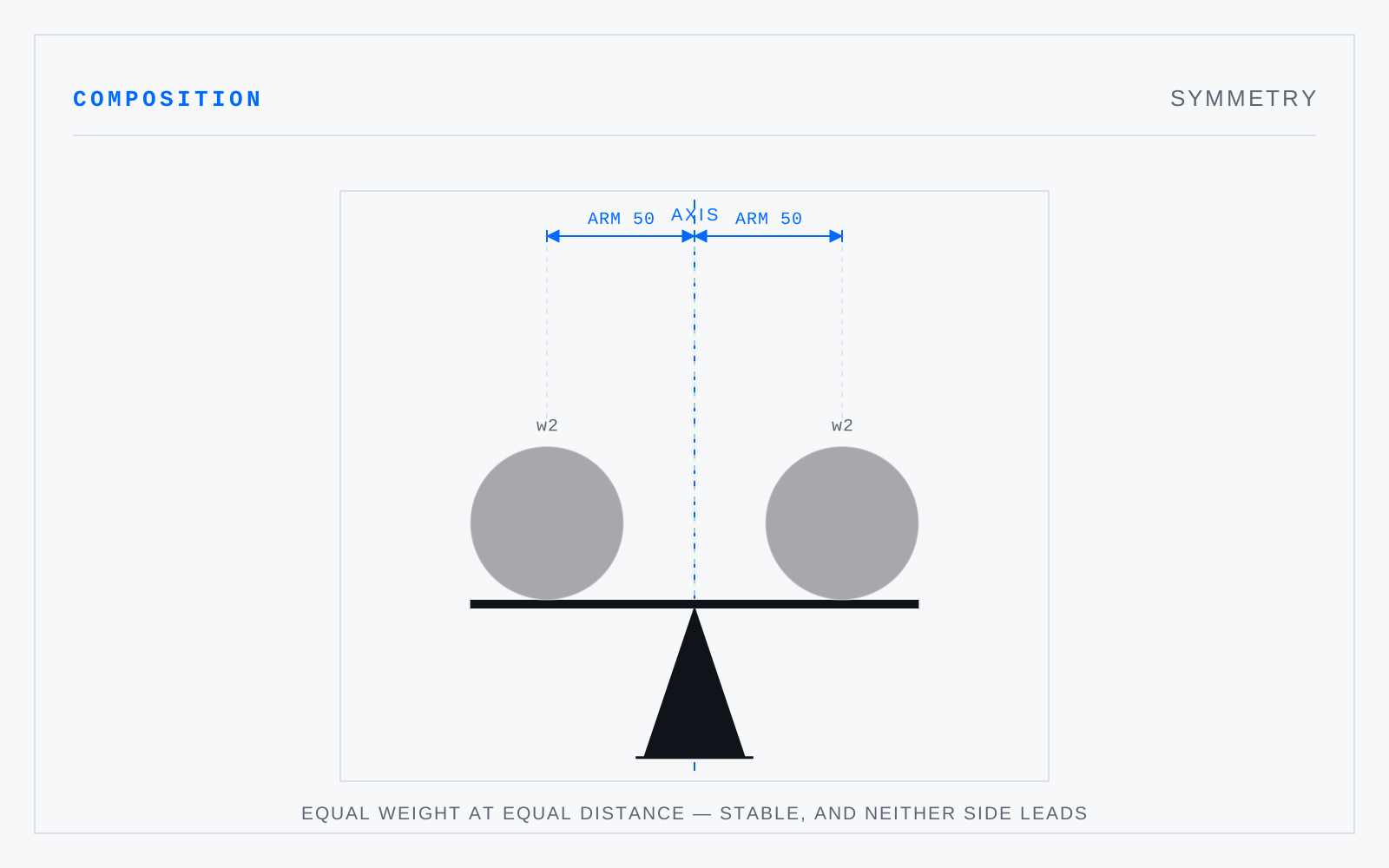
Correspondence of parts across an axis, a centre, or a translation. As a compositional principle it buys immediate stability and reads as order, formality, or stillness; it also flattens hierarchy, since parts that mirror each other cannot easily rank each other. Vertical-axis symmetry is detected fastest.
In practice
Composition uses the word loosely for anything centred. Geometry means a specific operation — reflection, rotation, glide — that leaves a form unchanged. Don't argue across the two.
Not to be confused with
- BalanceThe distribution of visual weight about an axis or a centre so that no part of the field seems to fall. It is judged, not measured. Bilateral balance works across an axis, radial balance around a point, asymmetrical balance by trading a small dense element against a large quiet one.
- AsymmetryComposition without correspondence across an axis, balanced instead by trading weight against distance — a small dense element far from centre against a large quiet one near it. It costs more judgment than symmetry and returns more hierarchy, which is the trade the New Typography made explicit.