Design Nomenclature / Light & Optics
Contact shadow
Also called occlusion shadow, contact occlusion
This entry has not been translated yet and is shown in English.
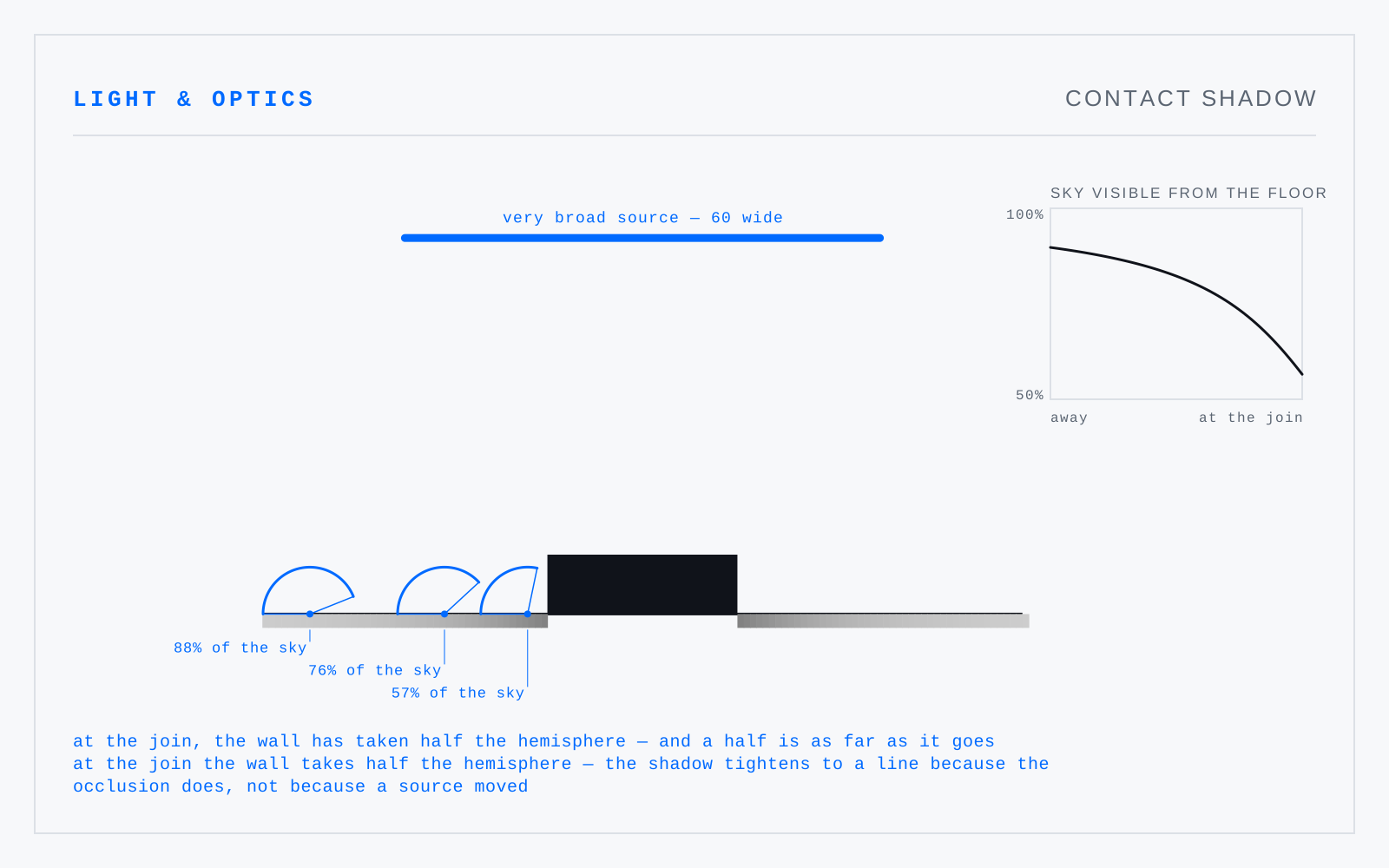
The tight dark shadow in the crevice where two surfaces meet, produced because almost none of the surrounding hemisphere is visible from that point. It is the cue the eye uses to decide whether an object rests on a surface or floats a little above it.
In practice
Occlusion shadow is used loosely for the same darkening, but that phrase also names what an ambient-occlusion pass produces — which is an approximation, not a shadow of any source.
Not to be confused with
- Cast shadowThe shape an occluder subtracts from another surface's illumination. Unlike a form shadow it has a projected outline governed by the geometry between blocker and receiver: it sharpens as the two approach contact and softens as they separate, regardless of the object's own shading.
- Ambient occlusionThe fraction of the hemisphere above a point blocked by nearby geometry — a purely geometric visibility term, no light involved. As a material channel it attenuates ambient diffuse in creases. Physically it is a coarse stand-in for the interreflection a GI solver computes properly, so under real GI it double-darkens.