Design Nomenclature / Digital Model Making
DPI
Also called dots per inch, dot pitch
This entry has not been translated yet and is shown in English.
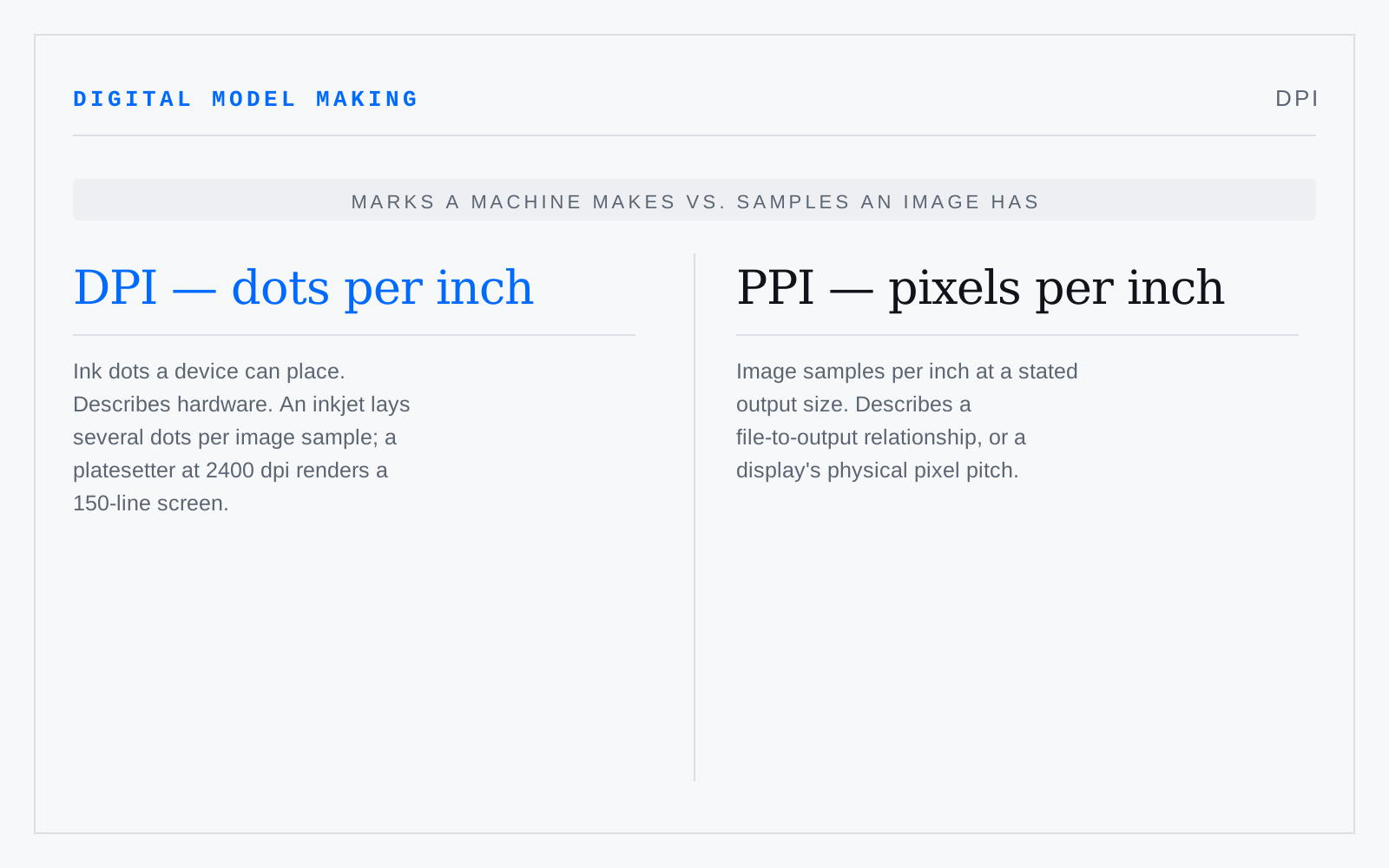
Dots of ink per inch that a printing device can place. It describes hardware. A platesetter at 2400 dpi renders a 150-line halftone screen; an inkjet lays several dots per image sample. It is a property of an output process, not of a file — a file's dpi tag is only a suggested reproduction size.
In practice
Used for everything anyway, including screens, which have neither dots nor ink. Everyone will know what you meant and the number will still be wrong for what you were specifying.
Not to be confused with
- PPIImage samples per inch at a stated reproduction size, or the physical pixel pitch of a display. It describes a relationship between a file and an output, never the file alone: a 300 ppi image is 300 ppi only at the size it was specified for. Print it twice as wide and it is 150.
- ResolutionAmbiguous by use. The word names pixel dimensions (4096 by 4096), sampling density (300 ppi), and sometimes an output size in inches — three different quantities, of which any two determine the third. An image has no physical size until a density is chosen, so “high resolution” is not a property of a file.
Origin
From platemaking and impact printing, where a device really did place discrete dots per inch. The word survived the move to screens intact and meaningless, which is the whole source of the dpi/ppi confusion.