Design Nomenclature / Surface & Material
Retroreflection
Also called retroreflective, cat's eye, reflex reflection
This entry has not been translated yet and is shown in English.
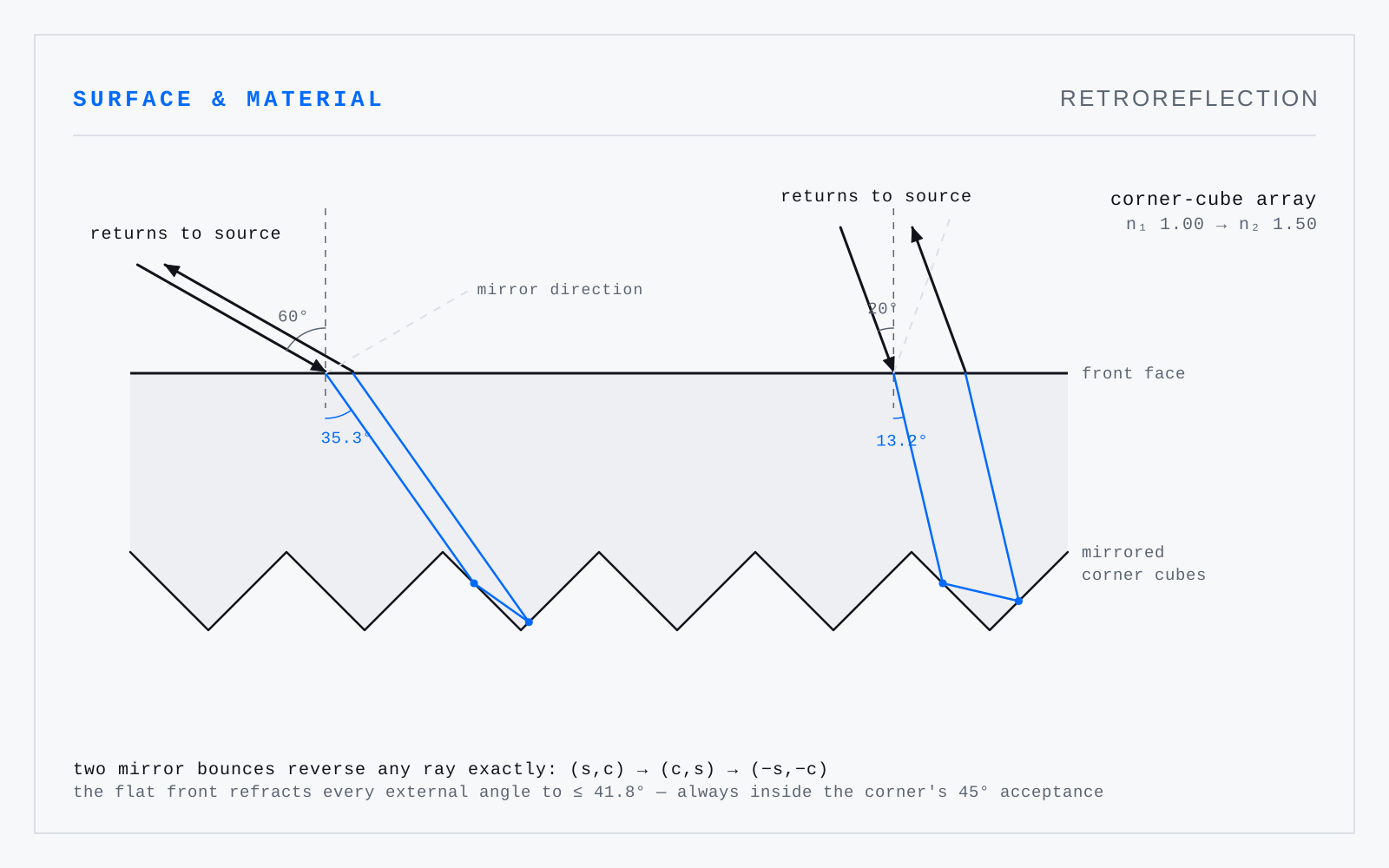
Reflection that returns light toward its source across a wide range of incidence angles, achieved with corner-cube prisms or embedded glass beads rather than any property of the base material. Road signs, bike reflectors, safety tape, and rear-projection screens depend on it, as does every animal eye with a tapetum.
In practice
The reason a sign photographs blown out under flash and looks ordinary to someone standing next to the camera.
Not to be confused with
- GlossThe degree to which a surface reflects specularly rather than diffusely — and, unusually for this vocabulary, an actually measured quantity: a gloss meter reads gloss units at a fixed angle, 60° by default, 20° for high gloss, 85° for near-matte. High gloss returns a legible image of the room.
- IridescenceColor that shifts with viewing angle, produced by thin-film interference: light reflecting off the top and bottom faces of a film only a wavelength or so thick arrives out of phase and cancels selectively. Soap bubbles, oil on water, beetle elytra, anodized titanium. Structural — there is no pigment in it.