Design Nomenclature / Light & Optics
Specular reflection
Also called mirror reflection, regular reflection, law of reflection
This entry has not been translated yet and is shown in English.
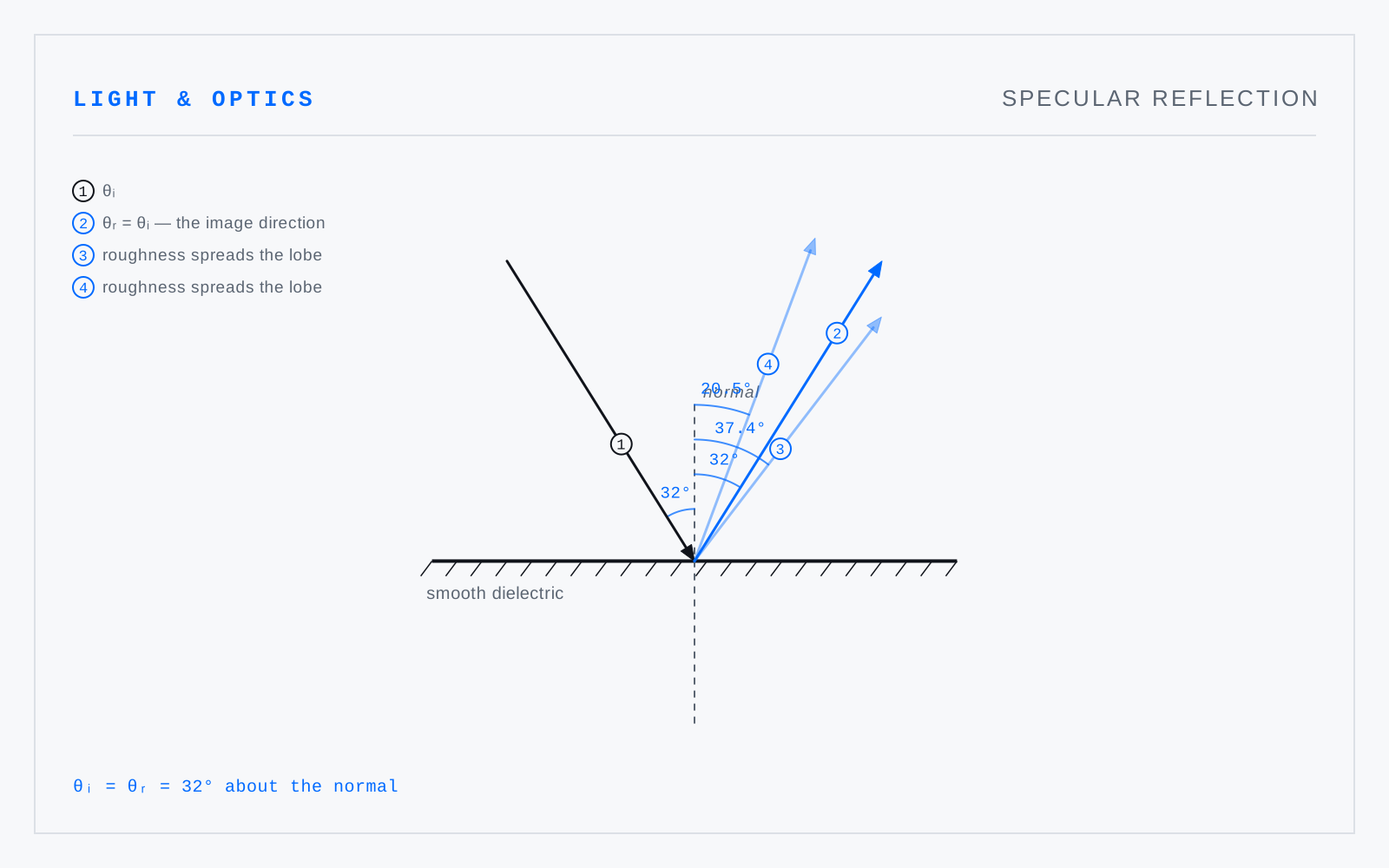
Reflection in which the outgoing angle equals the incoming angle about the surface normal, so the surface returns an image of what faces it rather than a wash. Perfect at a mirror; spread into a lobe by microfacet roughness, which is what turns a reflection into a highlight.
In practice
The mechanism, not the artifact — a specular highlight is only what you see when the lobe happens to catch a light source. Every dielectric reflects specularly at every angle; the Fresnel term decides how much, and never whether.
Not to be confused with
- Specular highlightThe reflected image of the source itself in a glossy surface — sharp and small on a polished one, spread and dim on a rough one, since roughness scatters the same energy across a wider lobe. Its position moves with the viewer, which is what separates it from shading.
- RefractionThe bending of light as it crosses between media of differing index, because its phase velocity changes; Snell's law fixes the new angle from the ratio of the two indices. It is what makes a submerged rod look broken and what gives a lens any power at all.