Design Nomenclature / Color
Color temperature
Also called correlated color temperature, CCT, warmth, colour temperature
- Color
- Light & Optics
- 2D & 3D
This entry has not been translated yet and is shown in English.
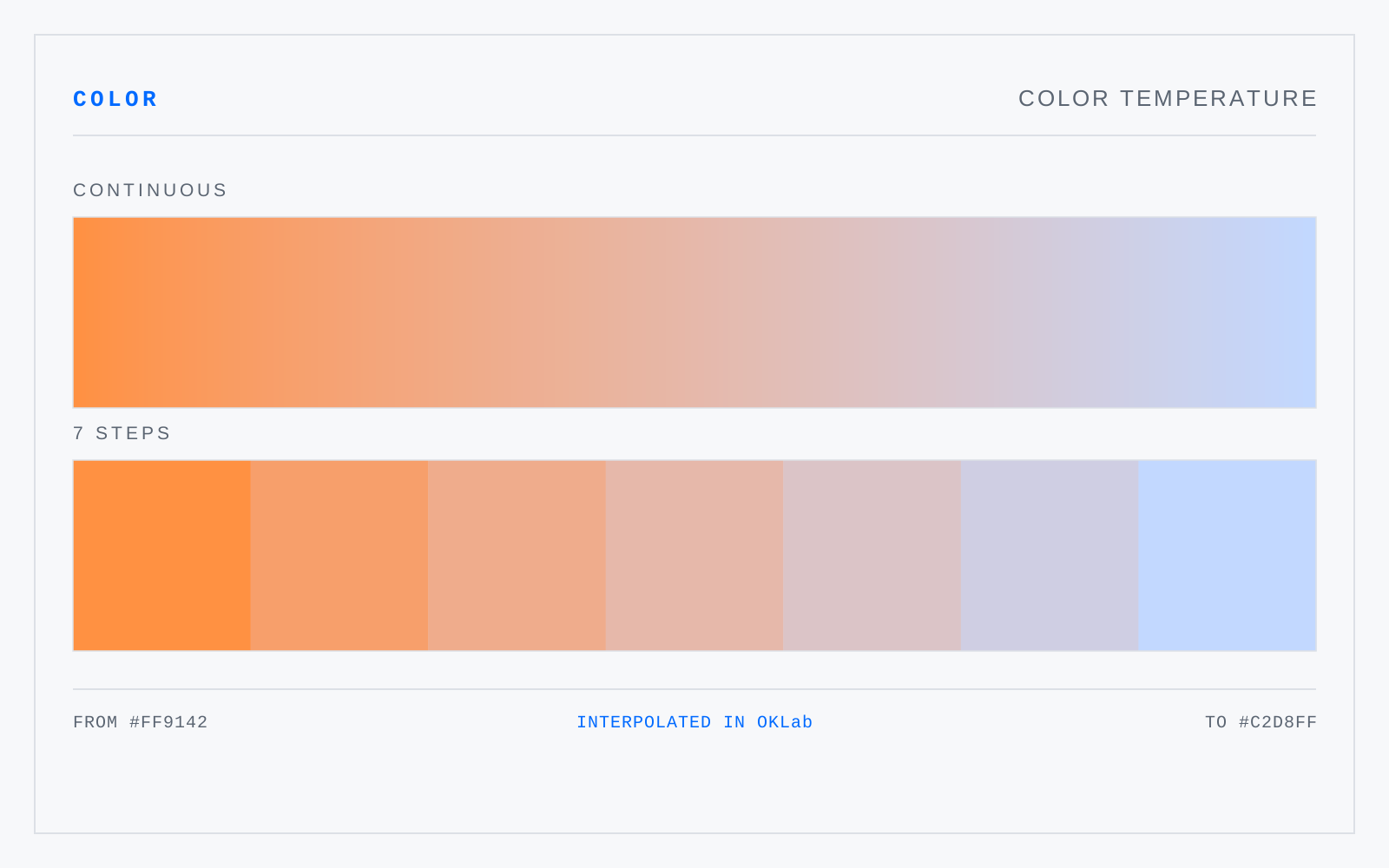
The temperature of a blackbody radiator whose color matches the light in question, given in kelvin. It runs backwards from intuition: 2700K is warm orange, 6500K cool blue. Only sources near the Planckian locus have a true color temperature; LEDs and fluorescents get a correlated one, which hides any green or magenta tint the number never reports.
In practice
Designers also use warm and cool as a relative judgment about any hue, not only about illuminants. Both senses are current; only the kelvin one is measurable.
Not to be confused with
- Contrast of temperatureDifference read as warm against cool. It is relative, never absolute: a blue-leaning red is cool beside a scarlet and warm beside any blue. Warm hues advance and cool ones recede, which makes temperature the cheapest way to build depth on a flat surface without touching value.
- White pointThe chromaticity a space agrees to call neutral: D65 for sRGB and Display P3, D50 for print and ICC's profile connection space. It is a choice rather than a measurement of anything absolute, and mismatching it is how images pick up a cast on the way from screen to press.
- KelvinThe temperature of the blackbody whose emission a source's colour most nearly matches — 1,900 K for candlelight, 5,500 for midday sun, 6,500 for the D65 white point. Higher numbers are bluer, which inverts the everyday sense of warm and cool.