Design Nomenclature / Light & Optics
White balance
Also called grey balance, white point selection, colour balance
- Light & Optics
- Color
- 2D & 3D
This entry has not been translated yet and is shown in English.
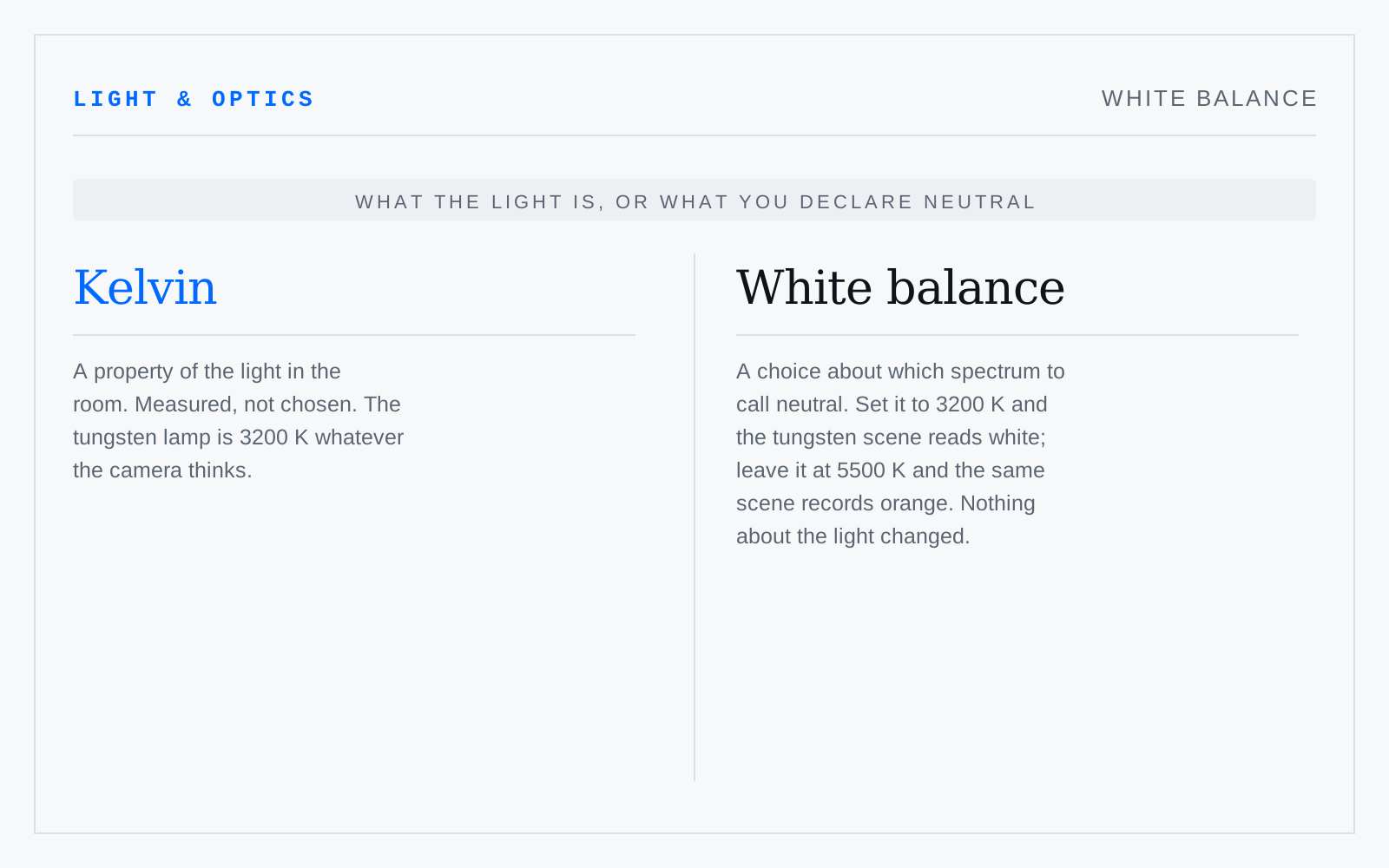
The decision about which spectrum in a scene should record as neutral, and the per-channel scaling that makes it so. It models the eye's own chromatic adaptation in software: get it wrong and everything tints, get it deliberately wrong and a scene turns cold on purpose.
In practice
Photographers name it by the illuminant being cancelled — daylight balance warms a tungsten scene. The setting describes the light corrected for, not the look that results.
Not to be confused with
- KelvinThe temperature of the blackbody whose emission a source's colour most nearly matches — 1,900 K for candlelight, 5,500 for midday sun, 6,500 for the D65 white point. Higher numbers are bluer, which inverts the everyday sense of warm and cool.
- Color temperatureThe temperature of a blackbody radiator whose color matches the light in question, given in kelvin. It runs backwards from intuition: 2700K is warm orange, 6500K cool blue. Only sources near the Planckian locus have a true color temperature; LEDs and fluorescents get a correlated one, which hides any green or magenta tint the number never reports.