Design Nomenclature / Color
Duotone
Also called tritone, quadtone, two-ink
This entry has not been translated yet and is shown in English.
A monochrome image rendered with two inks mapped to different stretches of the tonal range — typically a black holding the shadows and a second color carrying the midtones. The point is tonal range, not tinting: two plates preserve detail in the darks that a single flat ink flattens into mud.
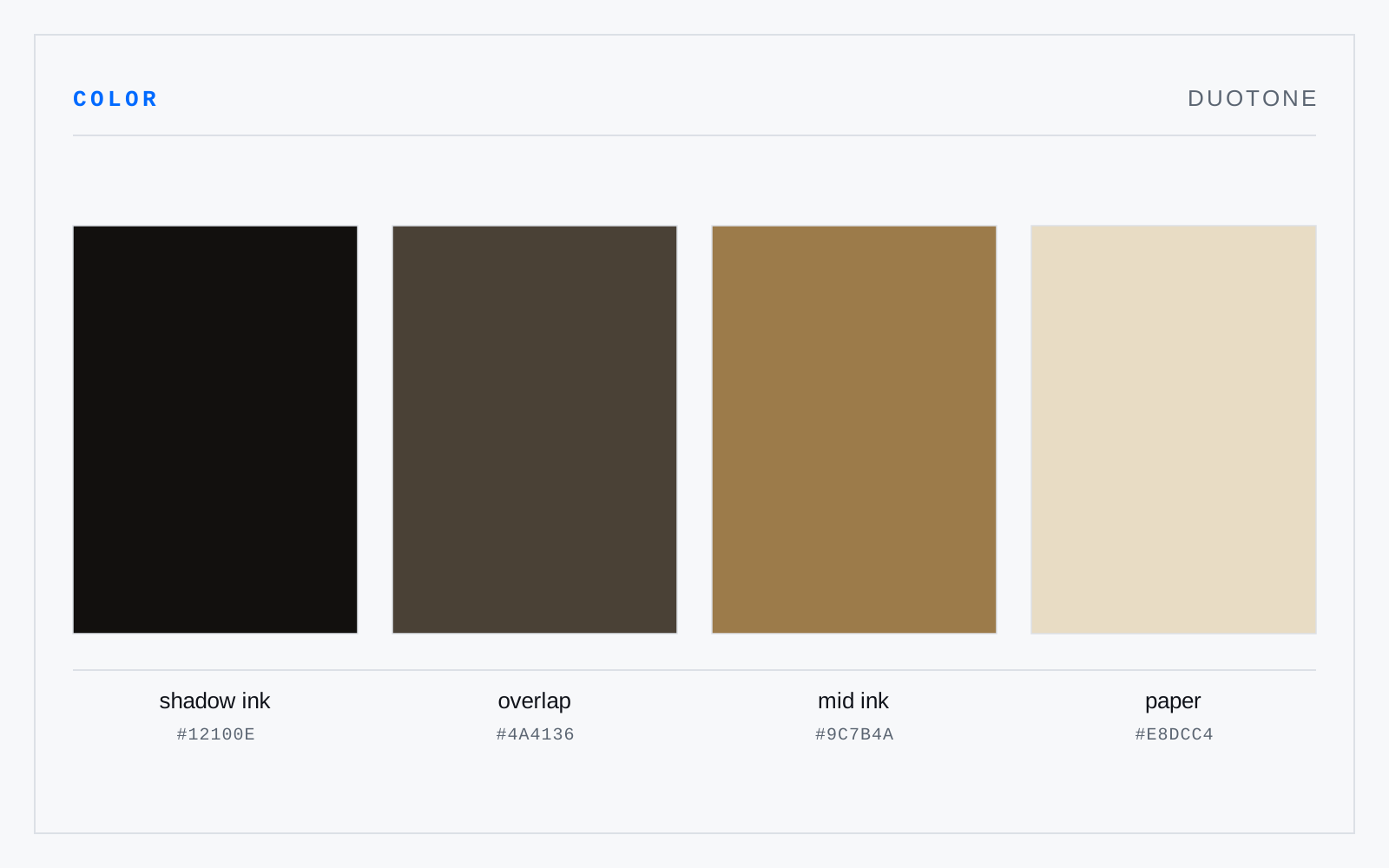
In practice
The web sense has drifted to mean any two-color gradient map, often with no shadow ink at all. Tritone and quadtone extend the same logic with three and four plates.
Not to be confused with
- HalftoneContinuous tone simulated by dots of varying size on a fixed grid, because a press can lay ink or not lay ink and nothing in between. Apparent value comes from the proportion of paper covered and the eye does the averaging. Screen frequency and angle decide whether it reads as tone, as pattern, or as moiré.
- Spot colorAn ink mixed to a specification and printed from its own plate rather than simulated out of process screens. Spot buys colors process cannot reach — metallics, fluorescents, a clean deep blue — and absolute consistency across a run, at the price of one more plate for each one.
- MonochromaticA scheme built from one hue, varied only in value and chroma. It cannot fail on harmony, since there is no second hue to disagree with, and so it fails instead on monotony — monochromatic work lives or dies on the value spread it is willing to use.