Design Nomenclature / Color
NCS
Also called Natural Colour System, Natural Color System
This entry has not been translated yet and is shown in English.
The Swedish standard, built on Hering's opponent theory rather than on measurement: a color is described by how much it resembles the six elementary percepts — white, black, yellow, red, blue, green. S 1050-Y90R reads as 10% blackness, 50% chromaticness, a yellow leaning ninety percent of the way to red.
In practice
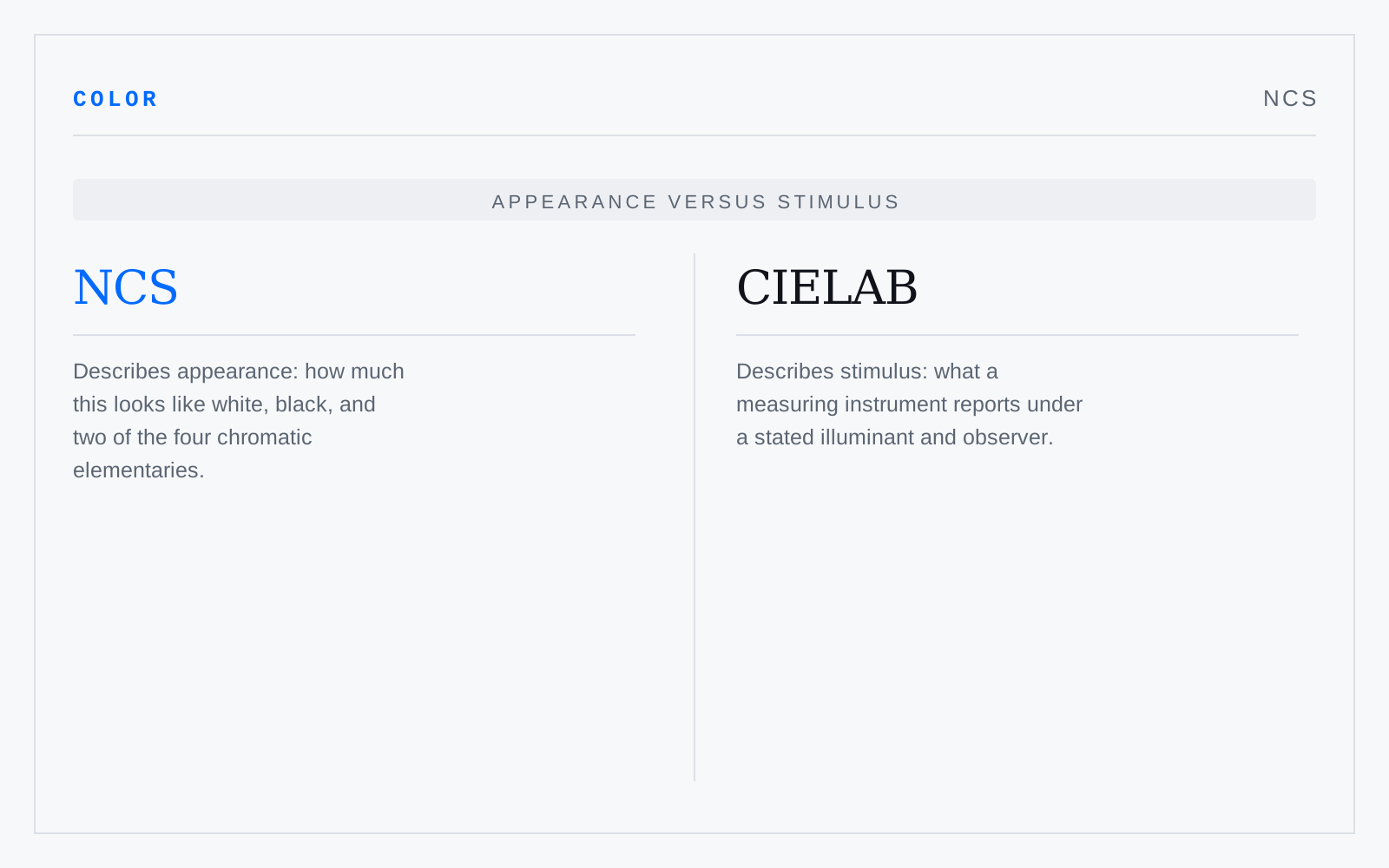
Dominant in Northern European architecture and paint specification. It describes appearance rather than stimulus, so a notation is not directly convertible without a measured sample.
Not to be confused with
- Munsell systemAlbert Munsell's 1905 ordering of color by hue, value, and chroma, notated as 5R 4/14. The achievement was perceptual spacing settled by eye and then by measurement: one step of value should look like one step anywhere in the solid, which is exactly why the solid comes out lumpy rather than a tidy sphere.
- CIELABA device-independent opponent space — L* for lightness, a* green to red, b* blue to yellow — built so equal numeric distances approximate equal perceived differences. Its polar form, LCh, restates a* and b* as chroma and hue angle. Both inherit a documented flaw: the blue region bends, so hue drifts along a ramp that should hold it.